Lagos’ New Agege Food Hub Shows What Sustainable Urban Infrastructure Can Look Like
 ONYINYECHI NWAIGBA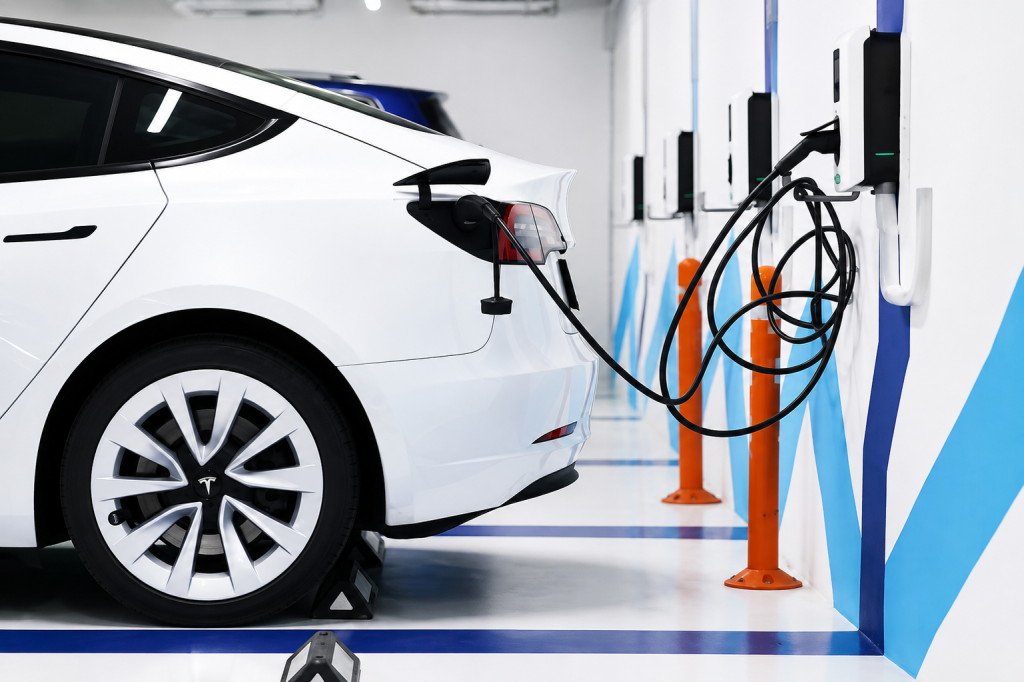
For a city as large and complex as Lagos, food security is not simply about producing more food.
It is also about how food moves.
From the farm to the aggregator, from the aggregator to the market, and eventually to the household, every stage of the journey can influence how much consumers pay, how much farmers earn and how much food is lost along the way.
That is why the commissioning of the new Lagos Fresh Food Hub in Pen Cinema, Agege, deserves attention beyond the opening of another market.
The 7,000-square-metre facility brings together trading spaces, dry and cold storage, a seafood section, parking and 10 electric vehicle charging points, creating a more structured environment for farmers, traders, retailers, institutional buyers and consumers.
At first glance, the inclusion of EV charging points may appear like a small detail in a much larger food infrastructure project.
But it points to something more interesting: the possibility of designing urban infrastructure where economic development, food security and environmental sustainability are considered together.
Beyond building another market
Lagos has one of the largest and most demanding food markets in Africa.
Yet much of the food consumed in the state is produced outside its borders. According to Governor Babajide Sanwo-Olu, more than 70 per cent of the food consumed in Lagos comes from outside the state and travels through long and fragmented supply chains before reaching consumers.
That creates several challenges.
Food may travel long distances before reaching the city. Poor storage can lead to losses. Transportation costs can increase prices. Limited cold-chain infrastructure can affect the quality and shelf life of perishable products. And fragmented distribution systems can make it harder to respond quickly when supply is disrupted.
The Agege hub is designed to address some of these problems by bringing several parts of the food distribution process into a more organised system.
The facility has about 4,000 square metres of trading space, dry storage capacity of approximately 800 metric tonnes and cold storage capacity of about 300 metric tonnes. It is also designed to accommodate between 350 and 400 vendors.
That matters because sustainable food systems are not built only on farms.
They depend on what happens after the harvest.
Reducing waste is part of sustainability
When sustainability is discussed, the conversation often focuses on renewable energy, carbon emissions and climate change.
Those issues are important.
But sustainability also means using resources efficiently.
If food is produced successfully but a significant amount is lost before reaching consumers because of inadequate storage, transportation or handling, the environmental and economic resources used to produce that food are also being wasted.
Cold storage can therefore have an important role in the food system.
For products such as vegetables, fruits, meat and seafood, maintaining appropriate storage conditions can extend shelf life and reduce spoilage.
The Agege hub’s dedicated cold-storage facilities are therefore more than a convenience for traders. They form part of the infrastructure required to make the food supply chain more resilient and efficient.
And when food losses are reduced, there is potential for benefits to move across the value chain from farmers and traders to consumers.
Bringing sustainability into everyday infrastructure
Then there is the EV component.
The Agege hub includes 10 electric vehicle charging points, making it one of the more interesting elements of the project from a sustainability perspective.
Lagos has been investing in electric mobility as part of its broader transportation transition, but the significance here is not simply that electric vehicles can now be charged at a food hub.
It is that sustainability infrastructure is being incorporated into a facility whose primary purpose is economic and social.
That is an important shift in how cities can approach development.
Rather than treating climate action as a separate project that exists alongside economic development, cities can begin to integrate it into the infrastructure people use every day.
Food markets, transport terminals, warehouses, industrial areas and logistics centres can all become part of the sustainability conversation.
The charging points at Agege may be a relatively small component of the facility today, but they represent the kind of thinking that could become increasingly important as electric mobility grows.
But infrastructure alone is not enough
There is, however, an important lesson here.
Building sustainable infrastructure is only the first step.
Its impact will ultimately depend on how effectively the infrastructure is used.
For the EV charging points, that means asking how many electric vehicles will use them, whether they are accessible to commercial operators and whether the surrounding transport ecosystem is ready to support greater EV adoption.
For the food hub, the questions are equally important.
Will farmers genuinely have better access to markets?
Will traders benefit from improved storage and logistics?
Will food losses decline?
Will the cost of moving food through the city fall?
And perhaps most importantly for Lagos residents, will these improvements eventually contribute to more stable and affordable food prices?
These are the measures that will determine whether the project delivers lasting impact.
A stronger food system can support livelihoods
There is another dimension that deserves attention: livelihoods.
A food hub is not simply a physical structure. It is an economic ecosystem.
Farmers need reliable markets for their produce. Aggregators need efficient collection and distribution systems. Traders need appropriate spaces to operate. Retailers need consistent supply. Consumers need access to food that is safe, available and reasonably priced.
The Lagos State Government says the Mushin Fresh Food Hub, which forms part of the wider network, has recorded more than ₦4 billion in transactions across 228 market days, with more than 850 registered vendors and over 7,000 direct and indirect jobs created.
If similar economic activity can be developed around Agege, the benefits could extend beyond food distribution.
They could support small businesses, create jobs and strengthen local economic activity.
This is where the project becomes relevant from a social impact perspective.
Sustainability is not only about reducing environmental harm. It is also about creating systems that allow people and communities to participate meaningfully in economic activity.
Connecting farmers to consumers
Lagos is also trying to address another longstanding problem in agriculture: the gap between production and guaranteed demand.
The state launched its Produce for Lagos Programme in 2025 alongside a ₦500 billion Offtake Guarantee Fund, with the objective of creating more predictable markets for farmers.
The idea is straightforward.
When farmers have greater certainty that there will be a market for their produce, they are better positioned to plan production, invest and reduce distress sales.
The food hub network is intended to complement this approach by providing physical infrastructure closer to where food is ultimately consumed.
That creates the possibility of a more connected system from production to aggregation, storage, distribution and retail.
And that is far more significant than simply constructing another market.
The bigger sustainability question
The Agege hub also raises an important question about how African cities should think about sustainable development.
Lagos is growing rapidly.
As the population expands, pressure on food systems, transportation, waste management, energy and infrastructure will also increase.
The answer cannot be to address each problem in isolation.
A city may build more roads without fixing inefficient food distribution. It may promote electric vehicles without developing the charging infrastructure needed to support them. It may increase food production without investing in storage and logistics.
The more sustainable approach is to look at how these systems interact.
The Agege food hub provides a small but interesting example of that thinking.
A facility designed to improve food distribution now also includes infrastructure that supports cleaner mobility.
Storage infrastructure can help reduce food losses.
Organised trading spaces can improve the business environment for traders.
Better logistics can potentially reduce inefficiencies across the supply chain.
And stronger connections between farmers, markets and consumers can contribute to greater food-system resilience.
The real test begins now
The commissioning of the Agege Fresh Food Hub is a promising development, but its success should not be measured by the size of the facility or the number of features it contains.
The real test will be what happens after the cameras leave.
Can the hub reduce food losses?
Can it improve market access for farmers?
Can it create opportunities for traders and small businesses?
Can better storage and distribution contribute to more stable food prices?
Can the EV charging infrastructure encourage greater adoption of cleaner transport within the food and logistics ecosystem?
And can the model be replicated across other parts of Lagos?
These questions matter because sustainable development is ultimately about outcomes, not announcements.
For Lagos, the opportunity is bigger than one 7,000-square-metre facility in Agege.
It is the opportunity to demonstrate that infrastructure designed for food security can also support livelihoods, efficiency and the transition towards a cleaner urban economy.
The Agege hub may therefore be more than a new place to buy and sell food.
If implemented effectively, it could become an example of what happens when cities stop treating sustainability, economic development and social impact as separate conversations and start building them into the same system.
Read also: Nigeria Approves Tax Waivers for Nearly 4,000 Electric Vehicles as EV Transition Gathers Pace
[give_form id="20698"]