Nigeria Approves Tax Waivers for Nearly 4,000 Electric Vehicles as EV Transition Gathers Pace
 ONYINYECHI NWAIGBA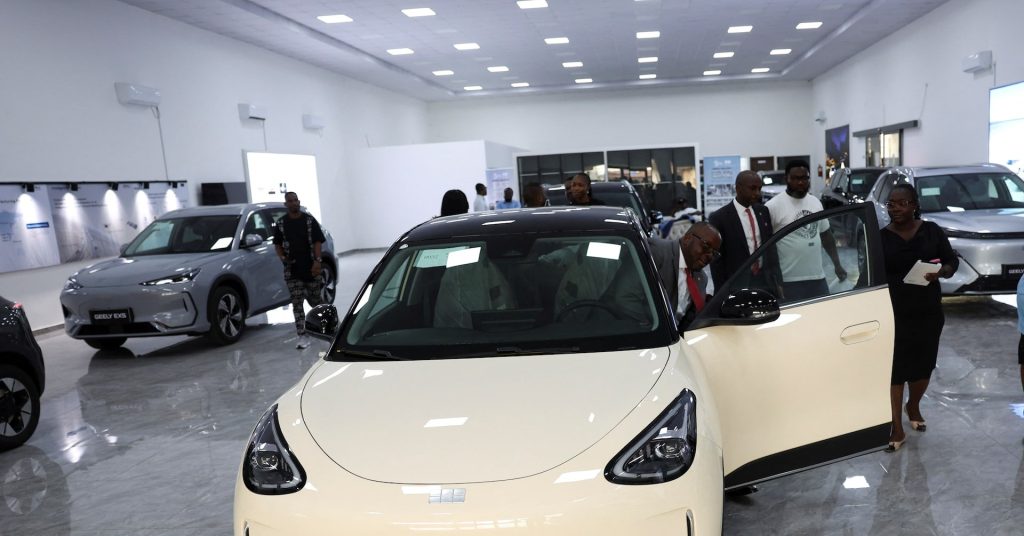
Nigeria is stepping up efforts to accelerate the adoption of electric vehicles, with the Federal Government approving tax waivers for nearly 4,000 electric vehicles imported into the country during the first half of 2026.
The approvals form part of a broader government push to encourage cleaner transportation, reduce the cost of alternative mobility and support the development of Nigeria’s emerging electric vehicle market.
The policy also comes with a wider ambition. Under Nigeria’s Energy Transition Plan, electric vehicles are expected to account for 60 per cent of the country’s vehicle fleet by 2050. Yet, as the latest figures show, the country remains at the early stages of that transition, with electric vehicles estimated to represent less than one per cent of the national vehicle fleet.
The growing gap between Nigeria’s ambition and its current infrastructure raises an important question: can tax incentives alone drive a meaningful transition to electric mobility?
A Policy Push for Cleaner Transportation
The tax waivers are part of a new government programme designed to encourage the importation and adoption of cleaner vehicles while supporting local vehicle assembly.
Nigeria has increasingly used fiscal incentives to make electric mobility more attractive to consumers and businesses.
Electric vehicles were previously exempted from Value Added Tax, while import duties have also been reduced as part of efforts to lower the cost of bringing eligible clean-energy vehicles into the country.
Under the latest incentives, eligible battery-electric vehicles and certain extended-range electric vehicles can benefit from exemptions from import duty and VAT, subject to government requirements. Some electric motorcycles and tricycles are also covered by the wider clean-transport policy.
The objective is straightforward: reduce some of the financial barriers that make electric vehicles more expensive than conventional petrol and diesel alternatives and encourage a gradual shift towards cleaner transportation.
But making electric vehicles more affordable is only one part of building an electric mobility ecosystem.
Nearly 4,000 Vehicles, but a Much Bigger Ambition
The approval of tax waivers for nearly 4,000 vehicles represents an important early indicator of growing interest in electric mobility.
However, the figure remains small compared with the size of Nigeria’s automotive market.
Industry estimates cited by Reuters suggest that electric vehicles currently account for less than one per cent of vehicles on Nigerian roads, with the market still dominated by petrol and diesel-powered vehicles and used imports.
That makes the government’s 2050 target particularly ambitious.
Moving from a market where EV adoption remains below one per cent to one where electric vehicles represent 60 per cent of the national fleet would require far more than tax exemptions.
It would require sustained investment in charging infrastructure, electricity generation, distribution networks, vehicle financing, battery technology, maintenance services, local manufacturing and consumer education.
It would also require policies that make electric mobility practical for ordinary Nigerians, rather than limiting adoption to wealthier motorists and commercial operators who can afford the higher upfront cost of newer vehicles.
The Electricity Problem
Perhaps the biggest challenge facing Nigeria’s EV ambitions is also the most fundamental one: electricity.
Electric vehicles need reliable power to operate at scale, yet Nigeria continues to struggle with inadequate and inconsistent electricity supply.
The national grid supplies around 4,000 megawatts to a population of more than 200 million people, leaving households and businesses heavily dependent on petrol and diesel generators to supplement grid electricity.
That reality creates a difficult contradiction.
Nigeria wants to reduce dependence on fossil fuels in transportation, but many of the businesses and facilities that could support electric mobility still depend on fossil-fuel generators when grid electricity is unavailable.
Charging stations, dealerships and battery-swapping operators are among the businesses already having to navigate this challenge.
The question is therefore not simply whether Nigerians can afford electric vehicles.
It is whether the country can build an electricity system capable of supporting them reliably.
Charging Infrastructure Remains a Major Gap
Access to charging infrastructure is another major obstacle.
A policy brief reviewed by Reuters estimated that Nigeria had only about 48 public electric vehicle charging stations as of late 2025, with most concentrated in Lagos and Abuja. South Africa, by comparison, had more than 500 public charging stations.
The disparity highlights the scale of the infrastructure challenge.
For an EV owner, the decision to switch from a petrol or diesel vehicle is not based only on the purchase price. Drivers also need confidence that they can recharge their vehicles conveniently when travelling or working.
In the absence of a reliable public charging network, many Nigerian EV owners have had to rely primarily on home charging.
That option can work for private vehicle owners with access to relatively reliable electricity or alternative power sources, but it becomes more difficult for commercial transport operators who depend on their vehicles throughout the day.
For mass adoption to become realistic, charging infrastructure will need to expand alongside the number of electric vehicles entering the country.
Electric Mobility Could Create New Economic Opportunities
Despite the challenges, Nigeria’s transition to electric mobility could create opportunities beyond reducing emissions.
A growing EV market can support new businesses across vehicle assembly, battery production, charging infrastructure, software, maintenance, financing and energy services.
It could also create opportunities for Nigerian engineers, technicians and entrepreneurs to develop specialised skills around electric mobility.
The government’s clean-transport strategy increasingly places emphasis on local assembly and developing domestic capacity rather than relying entirely on imported vehicles.
That distinction is important.
If Nigeria simply becomes a market for imported electric vehicles, much of the economic value created by the transition could remain outside the country.
A stronger domestic EV ecosystem, on the other hand, could create jobs, attract investment and support Nigerian businesses entering emerging areas of the automotive and energy sectors.
The transition could therefore become an industrial opportunity as well as an environmental one.
Why Electric Motorcycles Could Lead the Transition
Nigeria’s electric mobility story may also develop differently from that of countries where private electric cars dominate the market.
Electric motorcycles and three-wheelers could prove particularly important because of their lower entry costs and the direct savings they can offer commercial operators.
Millions of Nigerians depend on motorcycles and tricycles for transportation and income generation, making operating costs an important consideration.
Battery-swapping networks are already emerging as an alternative to conventional charging. Companies such as MAX and Spiro are investing in battery-swapping systems that allow riders to replace depleted batteries with charged ones instead of waiting for a vehicle battery to recharge.
For commercial riders, this could make electric mobility more practical.
Instead of requiring access to a charging point for several hours, a rider can exchange a depleted battery and return to work quickly.
Such models could also help address some of the challenges created by unreliable electricity by allowing batteries to be charged centrally when power is available.
The Environmental Question
The environmental case for electric vehicles is one of the main reasons governments around the world are encouraging their adoption.
Electric vehicles produce no tailpipe emissions, which can help improve air quality, particularly in densely populated urban areas.
For Nigeria, where traffic congestion and vehicle emissions contribute to urban air pollution, cleaner transport could have benefits beyond climate policy.
However, the full environmental impact of electric mobility also depends on how the electricity used to charge vehicles is generated.
Nigeria’s electricity system remains heavily reliant on gas, while households and businesses frequently turn to petrol and diesel generators during outages.
This means the country’s EV transition cannot be separated from its broader energy transition.
Cleaner transportation will deliver stronger environmental benefits when it is supported by cleaner and more reliable electricity.
The two transitions therefore need to move together.
Making the Transition Work for More Nigerians
Another important consideration is affordability.
Electric vehicles remain relatively expensive compared with many used petrol and diesel vehicles available in Nigeria.
Tax waivers can reduce some of the upfront cost, but additional measures may be required to make electric mobility accessible to a wider segment of the population.
Financing options, charging infrastructure, battery warranties, maintenance services and consumer awareness will all influence adoption.
There is also a need to ensure that the transition does not create a new form of inequality in which cleaner transportation becomes accessible primarily to high-income Nigerians while lower-income households continue to bear the costs of expensive and inefficient transport.
A successful transition should therefore consider not only the number of EVs on Nigerian roads, but also who has access to them and who benefits from the economic opportunities they create.
From Tax Incentives to an EV Ecosystem
The approval of tax waivers for nearly 4,000 electric vehicles is a significant step in Nigeria’s effort to accelerate cleaner transportation.
It demonstrates that the government is willing to use fiscal policy to influence the market and encourage investment in emerging mobility technologies.
But tax incentives cannot, on their own, deliver Nigeria’s 2050 electric mobility ambition.
The country will need reliable electricity, a much larger charging network, affordable financing, stronger local manufacturing capacity and policies that support both consumers and businesses.
It will also need to ensure that the transition creates opportunities for Nigerian workers and companies rather than simply increasing the country’s dependence on imported vehicles and technology.
Nigeria’s electric mobility transition has therefore reached an important stage.
The government has begun creating incentives for adoption. The next challenge is building the infrastructure and economic ecosystem that can make that adoption sustainable.
Nearly 4,000 tax waived electric vehicles may represent only the beginning.
The real test will be whether Nigeria can turn that early momentum into a cleaner, more accessible and economically inclusive transportation system.
[give_form id="20698"]