CSR Reporters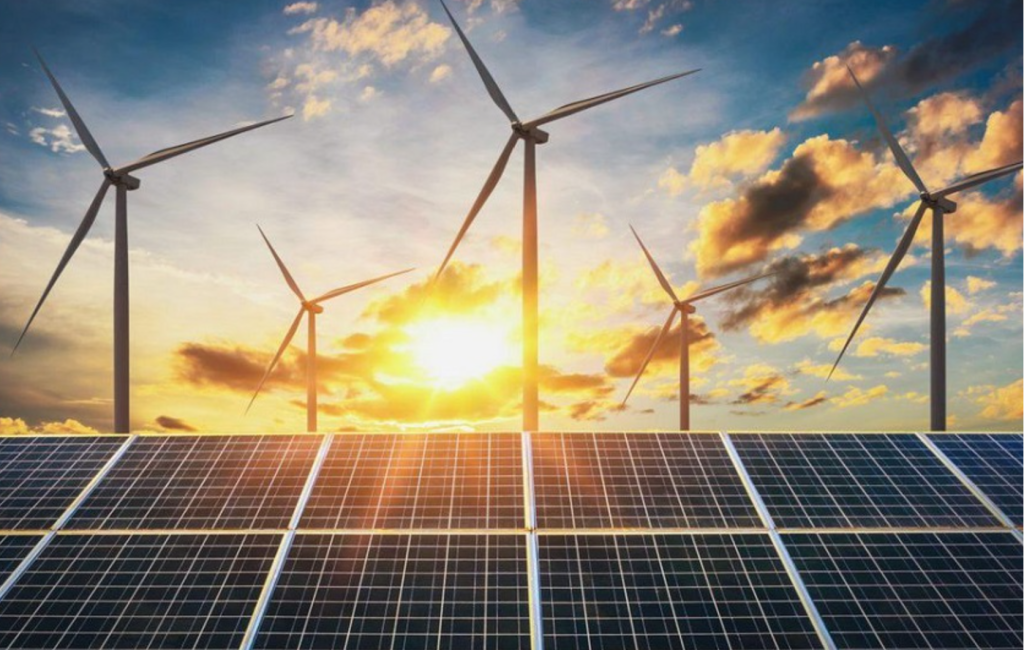
Nigeria’s shift towards renewable energy is expected to help address the country’s persistent electricity challenges while reducing dependence on fossil fuels.
But as the transition gathers pace, a new study is drawing attention to a question that is becoming increasingly important: who benefits from the transition, and who bears its costs?
Research published in Cambridge Prisms: Energy Transitions finds that Nigeria’s renewable energy transition is delivering meaningful social and environmental benefits, including improved lighting, longer business and school hours, livelihood opportunities and reductions in local air and noise pollution.
At the same time, the study identifies a range of unresolved social and environmental concerns, including displacement, land-use conflicts, electronic waste, cultural disruption and gender-based vulnerabilities.
The findings do not suggest that Nigeria should slow down its renewable energy ambitions.
Instead, they point to the need for the transition to become more inclusive, participatory and accountable.
For a country seeking to expand energy access while meeting its climate goals, that distinction matters.
The Promise of a Cleaner Energy Future
Nigeria’s energy transition is being driven by two major challenges: the need to expand access to reliable electricity and the need to reduce dependence on fossil fuels.
The country’s Energy Transition Plan sets a pathway towards universal energy access by 2030 and net-zero emissions by 2060, with renewable energy expected to play a central role.
The scale of the ambition is significant. Nigeria’s transition pathway envisages deploying about 5.3 gigawatts of solar capacity annually until 2060, while the government estimates that implementing the plan will require about $410 billion in additional investment.
Projects are already being developed across the country, including solar mini-grids and standalone renewable energy systems designed to reach communities that remain underserved by the traditional electricity grid.
The World Bank-backed DARES programme, for example, is expected to provide new or improved electricity access to more than 17.5 million Nigerians through distributed renewable energy solutions.
These investments have the potential to transform communities.
But the study suggests that the benefits of cleaner energy cannot be considered separately from the way projects are planned and implemented.
When Clean Energy Creates New Challenges
The research examined Nigeria’s renewable energy transition through the concept of energy justice.
At its core, energy justice asks whether the benefits and burdens of energy systems are fairly distributed and whether the people affected by energy decisions have a meaningful voice in those decisions.
The researchers found that renewable energy projects can deliver important benefits while simultaneously creating new forms of vulnerability.
Among the concerns identified were displacement, land-use conflicts, cultural disruption, electronic waste and gender-related vulnerabilities.
This is particularly important in communities where land is closely connected to livelihoods, culture and identity.
A renewable energy project may bring electricity to a community, for example, but if the development process results in people losing access to land without adequate consultation, compensation or livelihood restoration, the project can create a different form of hardship.
The technology may be clean.
The development process may not necessarily be fair.
The Problem With Measuring Success Only by Megawatts
Energy projects are often measured using technical indicators.
How much electricity was generated?
How many households were connected?
How many megawatts were installed?
How much investment was attracted?
These figures matter.
But the researchers argue that they do not tell the whole story.
The study found that while energy justice principles appear in Nigeria’s policies, their implementation remains uneven. Community participation can be tokenistic, benefits may be short-lived or unevenly distributed, vulnerable groups may not receive adequate recognition and mechanisms for addressing harm can be weak or absent.
This raises an important question for policymakers and investors:
What should count as success when measuring a renewable energy project?
If a project delivers electricity but leaves affected households without adequate compensation or meaningful participation, can it truly be considered sustainable?
If communities receive short-term benefits but lose livelihoods in the process, who accounts for that cost?
These questions are increasingly important as Nigeria attracts more investment into renewable energy.
Communities Cannot Be an Afterthought
One of the strongest lessons from the study is the importance of meaningful community participation.
Communities should not simply be informed about renewable energy projects after major decisions have already been made.
They should have opportunities to participate in decisions that affect their land, livelihoods and environment.
That means consultation needs to happen before projects are finalised, rather than being treated as a procedural requirement.
It also means recognising that communities are not homogeneous.
Women, young people, farmers, indigenous groups and other vulnerable populations may experience the same project differently.
A process that appears inclusive on paper may still exclude people whose voices are less powerful.
For renewable energy projects to deliver lasting social value, those differences need to be recognised from the beginning.
Land and Livelihoods Matter
The issue of land is particularly important.
Large-scale renewable energy infrastructure requires space, whether for solar installations, transmission infrastructure, access roads or other supporting facilities.
Where land is acquired without adequate attention to existing livelihoods, the social consequences can extend far beyond the physical footprint of a project.
Farmers may lose productive land.
Families may lose access to resources.
Communities may experience disruption to established ways of life.
The study points to the need for stronger restorative mechanisms, including long-term livelihood restoration, environmental monitoring and community empowerment.
This changes the conversation around compensation.
A payment made at the beginning of a project may not be enough if the affected community continues to experience economic or social losses years later.
Responsible development should therefore consider what communities need to remain economically viable after a project is established.
Renewable Energy Still Delivers Real Benefits
It is important not to lose sight of the positive findings.
The study does not argue that Nigeria’s renewable energy transition is failing.
In fact, it documents significant benefits.
Experts interviewed for the research reported improved lighting and night-time safety, extended business and school hours, improved agricultural and livelihood opportunities, and reductions in localised air and noise pollution.
These outcomes demonstrate why the transition remains necessary.
For communities that have lived with unreliable electricity for years, access to renewable energy can change everyday life.
A shop can stay open longer.
A student can study at night.
A health facility can operate essential equipment.
A farmer can process or preserve agricultural products.
A small business can reduce its dependence on generators.
These are not simply energy-sector outcomes.
They are improvements in livelihoods, education, health and community wellbeing.
The challenge is ensuring that these benefits do not come at an unfair cost to the same communities the transition is intended to support.
E-Waste Is the Next Conversation
Another issue raised by the study is electronic waste.
The rapid expansion of solar technologies means more solar panels, batteries, inverters and other electronic equipment will eventually reach the end of their useful lives.
If Nigeria expands renewable energy infrastructure without developing systems for collection, recycling, safe disposal and responsible equipment management, today’s clean-energy investments could contribute to tomorrow’s waste problem.
This is an area where both government and the private sector have a significant role to play.
Renewable energy companies should consider the full lifecycle of their products — not only installation and operation.
That means thinking about what happens when batteries fail, panels are replaced and equipment reaches the end of its useful life.
A genuinely sustainable energy system must account for the entire lifecycle of the technology.
What This Means for Businesses and Investors
The findings also carry important lessons for companies investing in Nigeria’s energy transition.
Environmental, Social and Governance considerations cannot stop at carbon reduction.
A company can build a low-carbon project and still face ESG risks if it fails to properly engage affected communities, protect livelihoods or address environmental impacts.
This makes social due diligence increasingly important.
Before a renewable energy project begins, developers and investors need to understand who uses the land, who may be affected, what livelihoods could be disrupted and how communities will participate in decision-making.
They also need mechanisms for responding when things go wrong.
For companies committed to responsible investment, community engagement should therefore be treated as part of project design rather than an additional CSR activity after construction begins.
The Role of CSR
The findings also create an important space for corporate social investment.
Companies operating within renewable energy and infrastructure value chains can support communities beyond providing electricity.
They can invest in skills development, local employment, education, healthcare and livelihood restoration.
They can support women and other groups who may face disproportionate impacts from energy projects.
They can also help communities build the skills required to maintain and benefit from new energy infrastructure.
For foundations and other CSR actors, this provides an opportunity to move from short-term community donations towards longer-term investments that strengthen local resilience.
The strongest approach is one that allows communities to become participants in the energy transition rather than simply recipients of it.
What a Just Transition Should Look Like
Nigeria needs renewable energy.
It needs more electricity.
It needs to reduce dependence on fossil fuels.
And it needs to address the climate and environmental pressures associated with its current energy system.
But the transition cannot be considered successful simply because more solar panels are installed or more renewable capacity comes online.
A just transition must also answer difficult questions about participation, land, livelihoods, compensation, gender, environmental protection and accountability.
The researchers conclude that Nigeria’s transition remains ongoing but is not yet substantively just, pointing to weaknesses across procedural, distributional, recognition and restorative dimensions.
That is perhaps the most important message from the research.
Nigeria does not have to choose between clean energy and social justice.
The goal should be to achieve both.
The Transition Must Work for the People
Nigeria’s renewable energy ambitions represent a major opportunity.
Millions of people still need reliable electricity. Businesses need affordable power to grow. Communities need cleaner energy alternatives. And the country needs to reduce emissions while building a more resilient economy.
But the people living where these projects are developed must remain part of the equation.
A successful energy transition should leave communities with more than electricity.
It should leave them with stronger livelihoods, better opportunities, greater participation and confidence that development is happening with them rather than simply to them.
As Nigeria attracts more investment into renewable energy, that principle will become increasingly important.
The country’s clean energy future should not simply be measured by how quickly it can move away from fossil fuels.
It should also be measured by how fairly the benefits are shared, how responsibly the costs are managed and how meaningfully communities are included in shaping the future they will live with.
That is what can turn an energy transition from merely green into a genuinely just and sustainable one.
[give_form id="20698"]