TCN Boosts Lagos Power Capacity: What the Apapa and Ijora Upgrades Mean for Businesses and Communities
 Csr reporters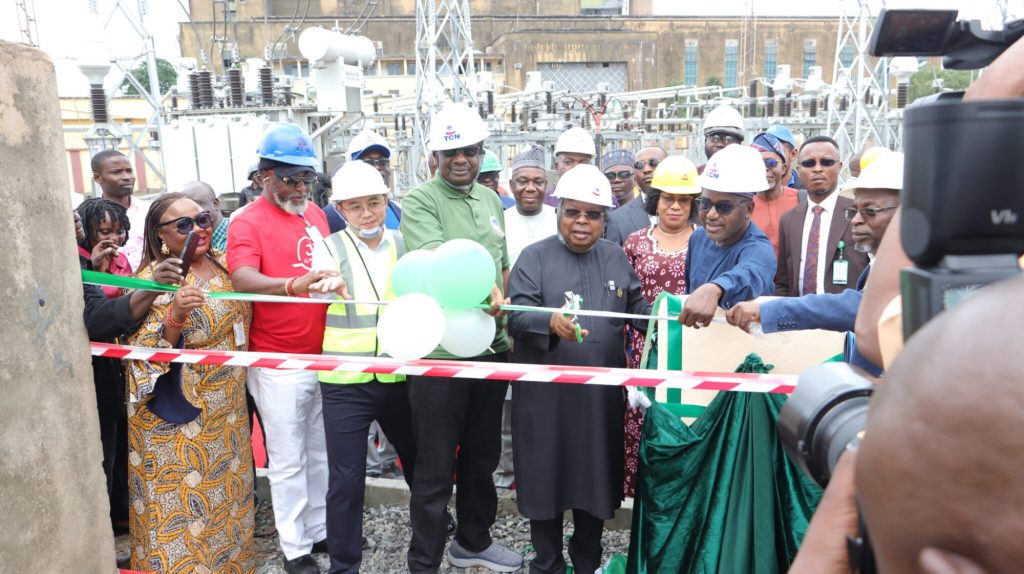
Lagos has received a major boost to its electricity transmission infrastructure following the commissioning of upgraded transmission substations at Ijora and Apapa Road, adding 208 megawatts (MW) of bulk transmission capacity to the network.
The projects, delivered by the Transmission Company of Nigeria (TCN) with support from development partners, are expected to increase the amount of electricity available for onward distribution to major commercial, industrial and residential areas across the Lagos corridor.
For a city whose economy depends heavily on reliable electricity, the significance goes beyond transformers and substations.
Electricity is a foundation for businesses to operate, industries to produce, healthcare facilities to function, schools to provide services and households to maintain everyday activities.
Strengthening the infrastructure that moves available electricity to where it is needed is therefore an important part of Nigeria’s wider development conversation.
A 208MW Addition to Lagos’ Transmission Capacity
The Ijora and Apapa Road projects have significantly expanded the capacity of two important transmission substations in Lagos.
At the Ijora 132/33kV Transmission Substation, two new 100MVA transformers increased installed capacity from 90MVA to 230MVA.
At the Apapa Road 132/33kV Transmission Substation, two new 60MVA transformers and modern Gas Insulated Switchgear (GIS) increased capacity from 60MVA to 180MVA.
Together, the projects add 208MW of bulk transmission capacity.
That additional capacity is expected to support the Eko Electricity Distribution Company (EKEDC) in supplying customers across several important areas.
The Apapa Road upgrade will support power distribution to areas including Apapa Causeway, Ijora, Amukoko, Ajegunle, Apapa Wharf and Tin Can Island, while the Ijora project is expected to strengthen supply around Ijora, Costain, Oyingbo, Customs and adjoining communities.
Why Transmission Capacity Matters
Nigeria’s electricity challenge is often discussed in terms of generation.
But having electricity generated is only one part of the process.
Power must also be transmitted through the national grid and distributed to consumers.
When transmission infrastructure is constrained, available electricity may not reach areas where demand is high.
This is one of the issues the latest projects are designed to address.
The Federal Government has said the investments are intended to strengthen the transmission system’s ability to deliver available power to areas where it is needed, particularly as demand continues to grow alongside population, commercial activity and industrial development.
For Lagos, that is particularly important.
The state is home to a large concentration of businesses, industries, ports, commercial centres and residential communities, creating significant demand for electricity.
As these activities expand, infrastructure must also keep pace.
The Apapa Economic Corridor
The Apapa area makes the investment especially significant.
Apapa is home to major port and industrial activities, alongside businesses, warehouses, logistics operators and communities.
Reliable electricity is important to many of these activities, from manufacturing and storage to logistics and commercial operations.
The upgraded Apapa Road substation is expected to increase the quantum of bulk power available to EKEDC for onward distribution across the corridor.
For businesses operating in and around Apapa, stronger transmission infrastructure can help create better conditions for productivity.
It does not, however, mean that every business or household in the area will automatically receive uninterrupted electricity.
The additional transmission capacity still has to work alongside generation and distribution infrastructure before the benefit reaches individual consumers.
That distinction is important.
What It Could Mean for Businesses
For businesses, electricity is not simply an operating expense.
It can determine production capacity, working hours, equipment utilisation and the cost of delivering goods and services.
Businesses that experience unreliable grid electricity often have to rely on alternative power sources, increasing their operating costs.
Stronger transmission infrastructure can help reduce one of the constraints within the electricity supply chain by allowing more bulk power to move through the network.
If this capacity is effectively matched with available generation and adequate distribution infrastructure, businesses could benefit from improved access to electricity over time.
For industrial clusters, the potential impact is even greater.
More dependable power can support production, improve planning and create a more favourable environment for investment.
Communities Also Stand to Benefit
The impact of electricity infrastructure is not limited to large businesses.
Residential communities around Ijora, Amukoko, Ajegunle, Apapa and other areas are also part of the electricity supply network affected by the upgrades.
Reliable electricity can influence household expenses, education, digital access, healthcare and general quality of life.
For students, dependable power can provide more opportunities to study and access digital learning.
For health facilities, electricity supports equipment, refrigeration and other essential services.
For households, improved electricity availability can reduce dependence on petrol and diesel generators.
These benefits may appear small individually, but collectively they contribute to healthier and more productive communities.
An Infrastructure Investment With Development Implications
The projects also demonstrate why investment in critical infrastructure should be viewed through a broader development lens.
The Ijora project was supported by the World Bank, while the Apapa Road project was sponsored by the Japan International Cooperation Agency (JICA) in partnership with TCN.
Development financing of this kind can help governments address infrastructure gaps that require significant capital and long-term planning.
But the ultimate measure of success should not be the number of transformers installed or the capacity added.
It should be what those investments make possible.
Can businesses operate more efficiently?
Can communities access more reliable electricity?
Can health and education facilities function more effectively?
Can dependence on expensive alternative power sources be reduced?
And can stronger infrastructure help attract new investment and economic activity?
Those are the outcomes that will determine the long-term value of the projects.
Why Grid Stability Matters for Sustainability
There is also a sustainability dimension to improving electricity infrastructure.
Nigeria’s heavy dependence on petrol and diesel generators is partly a response to unreliable grid supply.
Where grid electricity becomes more available and dependable, households and businesses may have less need to rely on generators for every aspect of their operations.
That can potentially reduce fuel consumption, operating costs and emissions.
However, stronger transmission infrastructure alone does not automatically create a cleaner electricity system.
The sustainability benefits will also depend on the country’s generation mix and the continued growth of renewable energy.
Still, improving the ability of the grid to efficiently transmit available electricity remains an important part of building a more resilient energy system.
The CSR and Social Impact Connection
For the private sector, electricity infrastructure may not look like a conventional CSR intervention.
But businesses depend on functioning communities and infrastructure to create long term value.
Reliable power supports employment, education, healthcare, entrepreneurship and local economic activity.
This means companies can also contribute to the broader energy-access conversation through targeted investments.
Corporate foundations and businesses can support solar power for schools and health centres, energy-efficiency programmes, community infrastructure and clean-energy initiatives.
They can also support programmes that help communities and small businesses make productive use of improved electricity access.
The strongest social impact, however, comes when these interventions are designed around measurable community needs rather than treated as one-off projects.
Read also: Lagos’ New Agege Food Hub Shows What Sustainable Urban Infrastructure Can Look Like
More Than New Transformers
The commissioning of the Ijora and Apapa Road projects is an important development for Lagos’ electricity infrastructure.
But it is also a reminder that solving Nigeria’s power challenge requires progress across the entire electricity value chain.
Generation must continue to grow.
Transmission infrastructure must be strengthened.
Distribution networks must be able to deliver available power effectively.
And investment must continue in areas where demand is rising.
The latest projects address one important part of that equation.
With an additional 208MW of bulk transmission capacity, TCN has strengthened the infrastructure serving some of Lagos’ most commercially active areas.
The next question is how effectively that additional capacity translates into electricity reaching businesses, households and essential services.
What Success Should Look Like
For Lagos residents and businesses, the real impact of the projects will not be measured in MVA or MW.
It will be experienced through more reliable electricity, lower dependence on alternative power sources, stronger business productivity and better-performing community services.
For the government and its development partners, that means implementation and network performance will matter just as much as the infrastructure investment itself.
Nigeria’s power challenge has never been solved by capacity announcements alone.
The country needs sustained investment, effective maintenance, stronger coordination across the electricity value chain and policies that encourage both public and private investment.
The Ijora and Apapa Road upgrades are a step in that direction.
And if the additional transmission capacity is effectively utilized, the benefits could extend beyond the electricity sector supporting businesses, strengthening communities and creating better conditions for Lagos’ continued economic growth.
For a city that remains central to Nigeria’s commercial and industrial activity, strengthening the infrastructure behind its electricity supply is not simply a power sector intervention.
It is an investment in the people, businesses and communities that keep the economy moving.
[give_form id="20698"]