When Corporate Responsibility Meets the Waste Problem
 ONYINYECHI NWAIGBA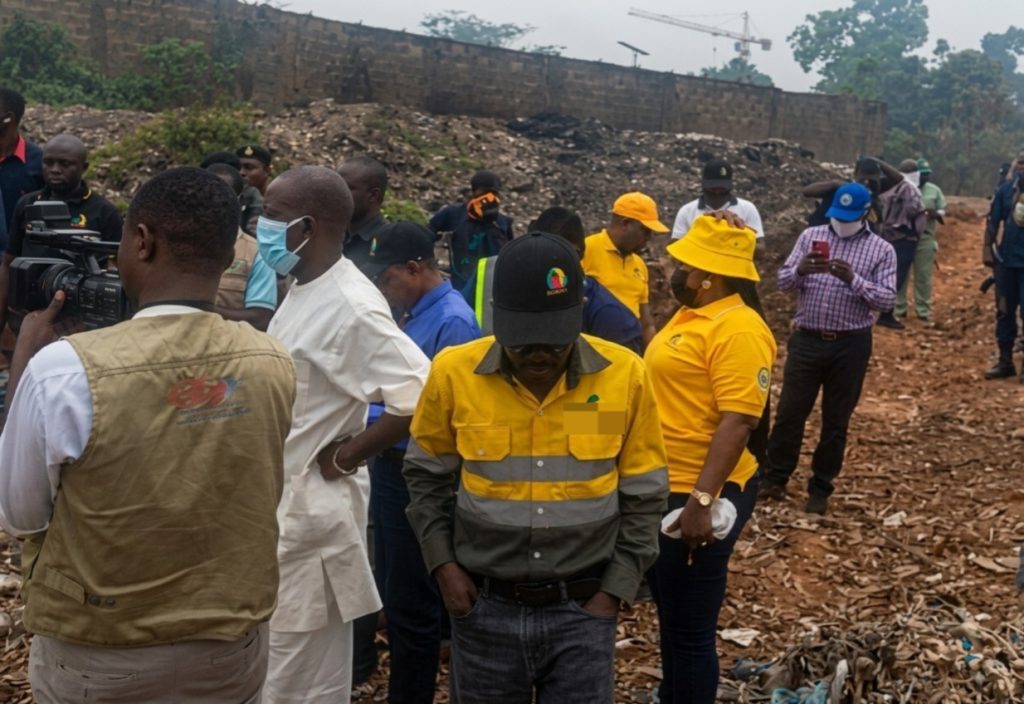
A company can support its community.
It can donate equipment, provide clean water, organise medical outreaches and contribute to local development.
But corporate responsibility becomes a much bigger conversation when the way a company operates is itself alleged to be creating an environmental risk.
That is the question raised by the recent sealing of Quantum Packaging Nigeria Limited, a paper-processing company in Agbara, Ogun State, by the Ogun State Waste Management Authority (OGWAMA).
According to OGWAMA, the company was sealed over allegations that it operated an unauthorised dumpsite and engaged in open-air waste burning, practices the authority says contravene Ogun State environmental laws.
The development is more than another enforcement story.
It offers a useful reminder of what the “E” in ESG actually means.
Environmental responsibility is not only about planting trees, sponsoring clean-up exercises or supporting climate campaigns.
It also begins with what happens inside a company’s own operations.
The Allegations Behind the Enforcement
Quantum Packaging Nigeria Limited is located along the Lusada-Igbesa Road in Agbara, one of Ogun State’s major industrial areas.
OGWAMA said the company came under surveillance after an earlier visit to the facility allegedly revealed improper waste disposal.
According to the authority, waste was being dumped within the company’s premises instead of being handed over to government-accredited waste collectors.
The agency said the company was warned to stop the practice.
However, subsequent surveillance allegedly revealed a larger dumpsite on an extensive area close to the factory, alongside what OGWAMA described as open-air burning of waste.
The state subsequently sealed the facility.
OGWAMA said the alleged activities posed risks to the environment and public health, particularly because of the dangers associated with uncontrolled waste burning.
The company is expected to remain sealed until it shuts down the alleged illegal dumpsite and develops a remediation plan to clear the accumulated waste.
It is important to stress that these are regulatory allegations, not a court determination of wrongdoing.
But the enforcement action itself raises questions that businesses across Nigeria should pay attention to.
CSR Is More Than What Happens Outside the Factory
Corporate social responsibility is often associated with what companies do for communities.
A company sponsors a scholarship programme.
Another provides boreholes.
A bank funds entrepreneurship.
A manufacturer supports a healthcare initiative.
These interventions matter.
But there is another side of corporate responsibility that receives less attention: how the company manages the environmental and social consequences of its own operations.
That includes waste.
For a paper-processing and packaging business, waste management is not an occasional issue. It is part of the operational reality of the business.
The responsibility therefore goes beyond supporting a community once or twice a year.
It includes having systems that ensure waste is properly collected, treated, recycled or disposed of without creating unnecessary harm.
That is where environmental responsibility becomes practical.
It is not simply something written in a sustainability report.
It is something that should be visible in the factory, the supply chain and the communities around the business.
The Paper and Packaging Industry Has a Particular Responsibility
Paper and packaging play an important role in Nigeria’s economy.
They support manufacturing, retail, food production, logistics and countless other industries.
But the sector also sits directly within conversations around waste, recycling and the circular economy.
Packaging eventually becomes waste.
The question is what happens next.
Can materials be recovered?
Can they be recycled?
Can waste streams be separated?
Can businesses reduce the amount of waste generated in the first place?
And when materials can no longer be reused, are they being disposed of through authorised channels?
These questions are becoming increasingly important as Nigeria grapples with growing volumes of waste and limited waste-management infrastructure.
For companies operating within this ecosystem, environmental responsibility should therefore be embedded into the business model rather than treated as an afterthought.
A Company Can Do Good and Still Have Environmental Questions to Answer
There is an interesting dimension to the Quantum Packaging story.
The company’s own website highlights a number of community and environmental initiatives, including free eye screening, a community electricity project and a borehole donation intended to provide clean water to the Jagun community.
Those initiatives are worth recognising.
They demonstrate that the company has undertaken activities intended to support communities around it.
But this is precisely why the current development is worth discussing from a CSR perspective.
Corporate responsibility is not either-or.
A company can contribute positively to communities and still need to address questions about its operational environmental practices.
In fact, the two should reinforce each other.
A business that invests in clean water for a community should also want to ensure that its own operations do not threaten local environmental quality.
A company that supports environmental initiatives externally should ideally maintain strong environmental controls internally.
That is the difference between philanthropy and comprehensive corporate responsibility.
Why Enforcement Matters
There is also a governance lesson here.
Environmental rules only have meaning when businesses are expected to comply with them and regulators are willing to enforce them.
OGWAMA said the enforcement action against Quantum Packaging forms part of a wider effort to tackle indiscriminate waste disposal, illegal dumpsites and open-air burning across Ogun State.
Interestingly, the Quantum case is not happening in isolation.
Earlier in August, OGWAMA also sealed Dahua Paper Company Limited over allegations of operating an illegal dumpsite and burning waste.
In that case, the authority alleged that waste was being pushed towards a river, raising concerns about contamination of water sources used by nearby communities.
The pattern suggests that environmental enforcement is becoming a more visible issue for companies operating in Ogun’s industrial corridors.
That should not necessarily be viewed simply as government versus business.
Effective regulation can also create a more predictable environment for responsible companies.
When environmental standards are consistently applied, businesses that invest in proper waste management are less likely to find themselves competing against companies cutting costs through irresponsible disposal practices.
What Should Responsible Waste Management Look Like?
For companies, responsible waste management should begin with understanding what their operations actually generate.
The first step is waste reduction.
Can unnecessary materials be eliminated?
Can production processes be redesigned to generate less waste?
The second is segregation and recovery.
Materials that can be reused or recycled should not automatically end up as general waste.
The third is proper disposal.
Where waste cannot be recovered, companies need authorised systems for its collection and final disposal.
And then there is monitoring.
It is not enough to have a waste-management policy sitting in an office.
Businesses need to know whether contractors are actually doing what they have been paid to do and whether waste is ending up where it is supposed to.
For larger manufacturers, this can also form part of broader environmental management systems, with measurable targets around waste reduction, recycling and resource efficiency.
That is where ESG becomes more than a corporate buzzword.
The Circular Economy Opportunity
There is also an opportunity hidden within the problem.
Waste is not always simply waste.
For many industries, discarded materials can become inputs into another production process.
Paper and cardboard, for instance, can be recovered and recycled into new products.
A stronger circular economy approach could therefore help companies reduce disposal costs, conserve resources and create additional business opportunities.
It could also support jobs in collection, sorting, recycling and material recovery.
For Nigeria, where unemployment and environmental challenges exist side by side, this presents an opportunity to connect environmental responsibility with economic development.
Instead of asking only:
“How do we get rid of this waste?”
companies can increasingly ask:
“What value can we recover from this waste?”
That is a much more sustainable question.
The Bigger Lesson for Nigerian Businesses
The Quantum Packaging case should not be reduced to the image of a sealed factory.
The bigger lesson is about the changing expectations around corporate responsibility.
Businesses are increasingly expected to demonstrate that their operations are not creating avoidable harm to the communities and environments in which they operate.
And this is particularly important in industrial communities.
Factories create jobs.
They contribute to local economies.
They pay taxes and support supply chains.
But communities also deserve clean air, safe water and a healthy environment.
Responsible business means finding a way to achieve both.
That is why environmental compliance should not be treated as a burden that businesses deal with only when regulators arrive.
It should be part of how companies define good performance.
Beyond the CSR Photo Opportunity
Nigeria has no shortage of corporate social responsibility activities.
There are donations, empowerment programmes, scholarships, medical outreaches and community projects happening across the country.
And they deserve recognition.
But CSR becomes more meaningful when companies look at the whole picture.
How do we treat the communities around our factories?
How do we manage the resources we use?
What happens to the waste we generate?
Are our employees and surrounding communities protected?
Are we complying with environmental regulations?
And when something goes wrong, are we prepared to correct it?
Those questions may not always make the most attractive photographs.
But they are central to responsible business.
The sealing of Quantum Packaging is therefore a reminder that corporate responsibility does not begin when a company writes a cheque to a community.
It begins with how the company conducts its business every day.
For Nigerian companies, the message is clear: supporting communities is important, but protecting the environment in which those communities live is part of that responsibility too.
And for regulators, consistent enforcement will remain essential to ensuring that environmental standards are not merely rules on paper.
At CSR Reporters, we believe the conversation around corporate responsibility must include both sides, the good companies are doing and the difficult questions their operations sometimes raise.
Because sustainable business is not just about giving back.
It is also about doing business responsibly in the first place.
[give_form id="20698"]