Nigeria’s Population Is an Asset But Only If We Invest in People
 ONYINYECHI NWAIGBA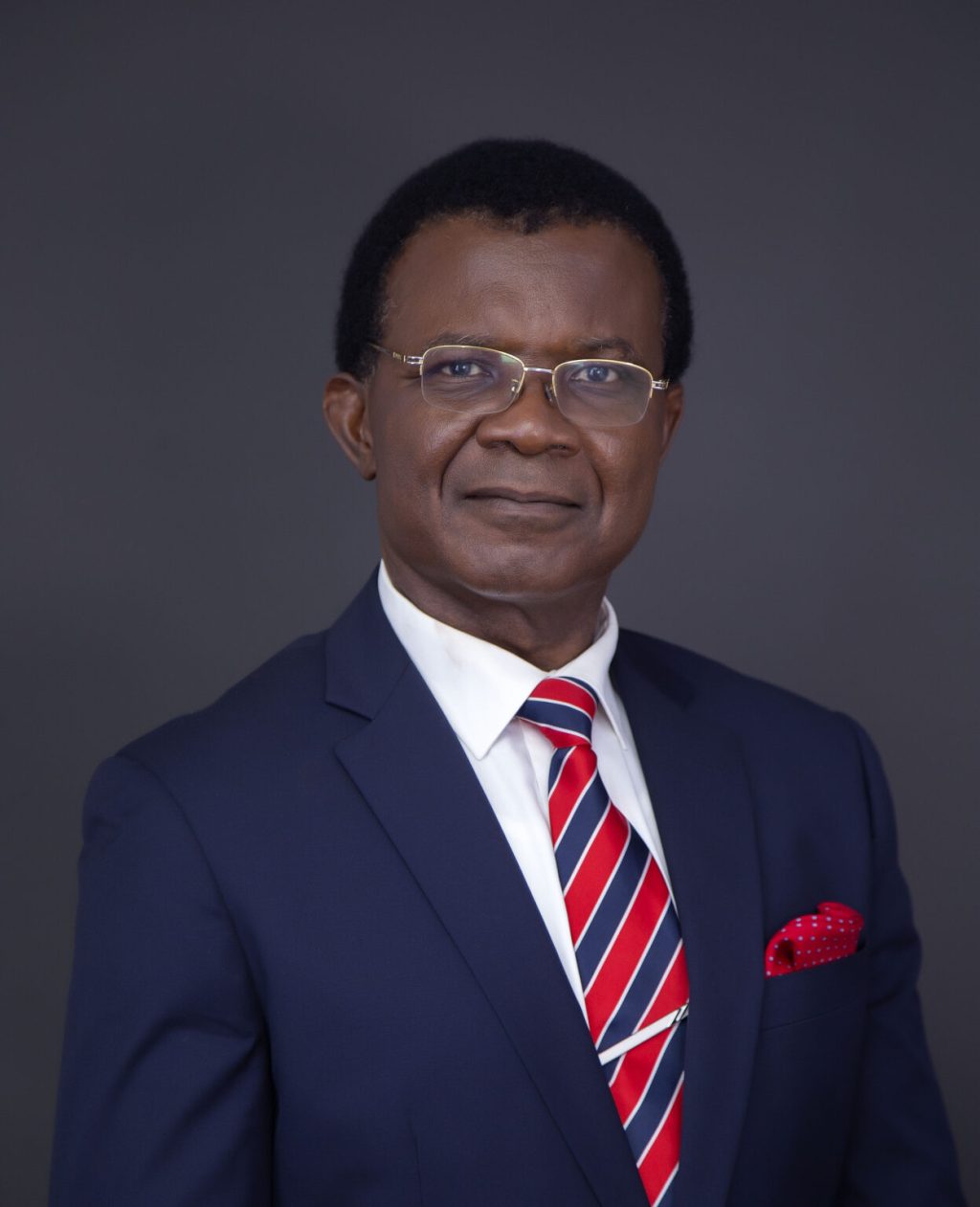
Nigeria’s large population is often presented as one of the country’s biggest economic advantages.
More people means a larger consumer market, a bigger potential workforce and greater room for businesses to grow. For manufacturers, entrepreneurs and investors, the size of Nigeria’s domestic market can create opportunities that smaller economies simply cannot offer.
But population size, on its own, does not create prosperity.
People need the knowledge, skills, health, opportunities and economic conditions to turn their potential into productivity.
That was the message from Transgreen Nigeria Limited’s Managing Director and Chief Executive Officer, Pastor Cyprian Orakpo, who recently called for greater investment in education and human capital development if Nigeria is to turn its population into an economic asset.
Orakpo made the remarks during his 60th birthday celebration in Lagos, where he also unveiled the O’Care Foundation for the Needy. The Manufacturers Association of Nigeria also backed the call for stronger investment in human capital.
The argument touches a much bigger question for Nigeria: What happens when a country has millions of people with potential, but not enough investment to help that potential translate into productive livelihoods?
Population is not the same as human capital
Nigeria’s population can be a powerful economic resource.
A large population creates demand for goods and services. It provides businesses with a potentially sizeable workforce and creates a domestic market capable of supporting industries at scale.
But the economic value of that population depends heavily on what people are able to contribute.
An unemployed graduate with no relevant skills, a young person who has left school without adequate foundational learning, or a small business owner without access to the knowledge and resources needed to grow is not automatically part of a productive workforce simply because they are part of a large population.
This is where human capital becomes important.
Human capital is not simply about getting people into classrooms. It is about developing the capabilities that allow people to participate meaningfully in the economy.
That includes quality education, technical and vocational skills, digital skills, entrepreneurship, healthcare and pathways into decent work.
Orakpo argued that an educated and enlightened population would create greater room for innovation, entrepreneurship and industrial development. He warned that without adequate education and economic opportunities, Nigeria’s population could become a liability rather than an advantage.
That distinction is critical.
Nigeria does not only need more people who have attended school. It needs people who have acquired knowledge and skills that can translate into economic participation.
The education question goes beyond classrooms
For years, education has largely been discussed as a social-sector issue.
But it is also an economic issue.
The quality of a country’s education system influences the quality of its workforce, the capacity of businesses to innovate and the ability of young people to find meaningful employment.
For companies, this matters directly.
Manufacturers need skilled workers. Technology companies need digitally capable employees. Banks need financially and technologically literate customers and workers. Small businesses need entrepreneurs who understand finance, marketing, operations and technology.
In other words, the private sector cannot completely separate its growth prospects from the quality of the human capital around it.
This is why calls for investment in education should not be viewed only through the lens of government spending.
There is also a role for companies, foundations and other institutions to support skills development, scholarships, vocational training, mentorship, digital inclusion and pathways into employment.
That is where the conversation begins to intersect with corporate social responsibility.
CSR cannot stop at giving
For organisations operating in Nigeria, investing in people can take many forms.
A company may support a school, but the bigger question is whether the intervention improves learning outcomes.
It may sponsor a skills programme, but the real measure of impact should include whether participants acquire employable skills, secure jobs, start businesses or increase their income.
It may provide entrepreneurship grants, but sustainable impact requires asking whether beneficiaries have the knowledge, market access and support needed to keep those businesses alive.
This is an important shift in how social impact should be viewed.
The question should not only be “How much did we give?”
It should increasingly be “What changed because we gave?”
That distinction separates one-off philanthropy from impact-driven intervention.
The private sector has a role to play
Government remains central to education and human capital development. No amount of corporate philanthropy can substitute for a functional public education system or effective national policy.
But the private sector is also an important stakeholder.
Businesses depend on people — as employees, customers, entrepreneurs, suppliers and members of the communities where they operate.
That creates a strong business case for investing in human capital.
Companies can support education and skills development through apprenticeships, internships, scholarships, vocational training, teacher development, digital skills programmes and partnerships with educational institutions.
They can also make their own workplaces part of the solution by investing in employee learning and development.
For a young Nigerian who acquires a skill that leads to employment or a sustainable business, the impact goes beyond that individual.
It can affect household income, dependants, consumption, community stability and, ultimately, the wider economy.
That is the multiplier effect of human capital investment.
But education alone will not solve the problem
There is another important part of this conversation.
People can be educated and skilled and still struggle if the environment around them does not allow them to use those skills.
Orakpo also highlighted infrastructure challenges, including poor roads, port-related difficulties and inefficient customs processes, as obstacles facing manufacturers.
That point is important because human capital and economic infrastructure have to work together.
A skilled young person needs an economy capable of creating opportunities.
An entrepreneur needs access to markets, finance, infrastructure and reliable systems.
A manufacturer needs workers with the right skills, but also electricity, transportation infrastructure, efficient logistics and a business environment that makes production viable.
This means Nigeria’s human capital conversation cannot exist in isolation.
Education must connect to employment.
Skills must connect to markets.
Entrepreneurship training must connect to finance and customers.
And investment in people must happen alongside investment in the systems that allow people to thrive.
O’Care Foundation adds another dimension
The launch of the O’Care Foundation for the Needy during Orakpo’s birthday celebration also brings the conversation closer to community-level intervention.
According to the report, the foundation plans to support vulnerable Nigerians in several areas, including helping people who remain in correctional facilities because they cannot pay court-imposed fines, assisting patients who are unable to settle medical bills, providing food support and offering micro-support to small businesses.
It also plans to support institutions including schools for people with special needs, schools for the blind and orphanages.
These interventions address a different but equally important side of development.
Not everyone begins from the same starting point.
For some people, a relatively small financial intervention can remove a major barrier: an unpaid hospital bill, inability to access food, lack of capital for a small business or an unresolved financial obligation keeping someone in a correctional facility.
This is where philanthropy and CSR can make an immediate difference.
But the long-term objective should still be to understand why those vulnerabilities exist in the first place.
Helping someone today matters.
Building systems that reduce the number of people who need that help tomorrow matters even more.
Nigeria needs both relief and opportunity
There is sometimes a false choice between philanthropy and structural change.
Nigeria needs both.
People facing immediate hardship need support. At the same time, the country needs policies and investments that address the conditions producing that hardship.
A food bank can help a family today.
Skills training can help someone earn tomorrow.
Quality education can influence an entire generation.
And a stronger economy can create opportunities for millions of people.
The most effective social-impact strategy should therefore be able to see both the immediate need and the bigger picture.
Turning population into productivity
Nigeria’s population is not automatically an asset or a liability.
It is potential.
What that potential becomes depends on investment and opportunity.
If young Nigerians have access to quality education, relevant skills, healthcare, decent work and an enabling business environment, population can become productivity.
If millions remain excluded from quality education, employment and economic participation, population growth can deepen existing pressures.
That is why the conversation around Nigeria’s population should move beyond numbers.
The real question is not simply how many Nigerians there are.
It is what Nigerians are able and empowered to do.
For government, that means treating human capital as a core economic investment rather than an afterthought.
For businesses, it means recognising that communities are not just markets but potential employees, entrepreneurs, suppliers and partners.
For CSR and philanthropic organisations, it means moving beyond visibility and measuring whether interventions actually improve people’s lives.
And for the wider development community, it means connecting education to skills, skills to livelihoods and livelihoods to sustainable economic participation.
Nigeria has the people.
The bigger challenge is ensuring that enough of those people have the opportunity to become productive, innovative and economically empowered.
Because the country’s greatest economic asset may not simply be the size of its population.
It may be what that population is given the opportunity to become.
[give_form id="20698"]