Ajaokuta After Four Decades: What Would It Take to Turn Nigeria’s Steel Dream Into Industrial Reality?
 ONYINYECHI NWAIGBA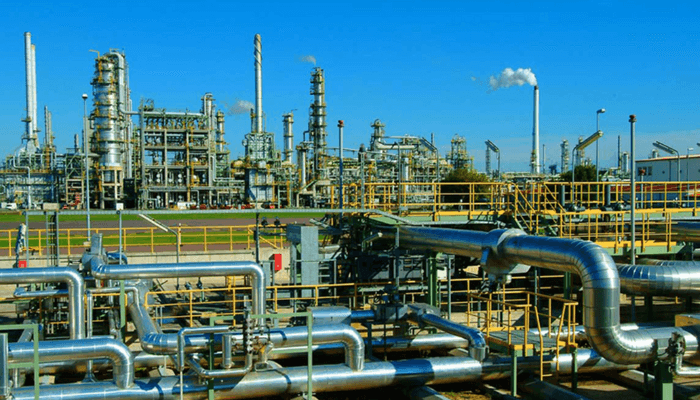
Nigeria’s more than ₦1 trillion steel import bill is renewing questions about the economic cost of leaving Ajaokuta Steel largely inactive and what its revival could mean for jobs, manufacturing and local value creation.
Nigeria’s steel story has long been one of enormous potential followed by prolonged disappointment.
For decades, the Ajaokuta Steel Company Limited has stood as one of the clearest symbols of Nigeria’s unfinished industrial ambitions. Conceived as a major integrated steel complex capable of supporting manufacturing and infrastructure development, the facility has remained largely inactive while Nigeria continues to rely heavily on imported steel products.
Now, the scale of that dependence is once again attracting attention.
Nigeria spent more than ₦1 trillion on iron and steel imports in 2025, according to data cited from the National Bureau of Statistics. That figure represents a significant increase from the roughly ₦526 billion annual average recorded over the preceding six years.
The numbers raise a question that goes beyond trade statistics:
What is the cost of leaving a strategic industrial asset like Ajaokuta underutilised while the country spends heavily importing the products it was designed to help produce?
More Than an Import Bill
Steel is not simply another commodity that Nigeria imports.
It is an input into construction, manufacturing, transportation, infrastructure and several other areas of the economy. A stronger domestic steel industry could therefore influence much more than the steel market itself.
Nigeria’s Ministry of Steel Development identifies local metal production for domestic, industrial and infrastructure development as one of its core objectives. The ministry also highlights the importance of the metals sector to employment, technology transfer and industrial development.
This is where Ajaokuta becomes a broader sustainability and development issue.
When a country imports a significant portion of the materials required for its infrastructure and manufacturing activities, value that could potentially be created domestically is transferred elsewhere.
A functioning domestic steel value chain could, in principle, create opportunities across mining, transportation, engineering, fabrication, manufacturing and other supporting industries.
For Nigerian businesses, particularly manufacturers and smaller companies operating within industrial value chains, local access to reliable inputs could also reduce some of the risks associated with import dependence, foreign exchange pressures and international supply disruptions.
The challenge, however, is that restarting Ajaokuta cannot simply be about switching on an old plant.
The Real Cost of an Idle Industrial Asset
Ajaokuta’s decades-long history illustrates a deeper problem in public-sector industrial development: the cost of an unfinished project does not stop when construction stops.
There is the money already invested.
There is the opportunity cost of the years in which the facility has not contributed at its intended scale.
There is also the cost to businesses and industries that have had to operate within an economy where a major domestic steel producer has not become the industrial anchor it was envisioned to be.
And there is the lost opportunity to develop generations of technical expertise around a large-scale integrated steel industry.
The Ministry of Steel Development itself acknowledges the long history of challenges surrounding Nigeria’s steel development. Its stated mandate includes building a sustainable and competitive steel industry capable of supporting the country’s industrial and economic growth.
That makes the Ajaokuta question larger than whether the plant can produce steel.
It is also about whether Nigeria can successfully convert public investment into productive economic assets.
Revival Requires More Than Political Promises
The revival of Ajaokuta has featured prominently in Nigeria’s political and economic conversations for years.
But another announcement, another committee or another promise will not be enough.
The Federal Ministry of Steel Development has indicated that a comprehensive technical and financial audit of Ajaokuta is underway. The exercise is intended to provide a transparent, data-driven basis for decisions about the plant’s future.
That is potentially an important step.
Before significant new capital is committed, Nigeria needs clarity about the plant’s current technical condition, what infrastructure can realistically be restored, what must be replaced, how much rehabilitation would cost and what production model would make the operation commercially sustainable.
The ministry has also referenced the findings of a 2018 technical audit, which it says found the general status of the plant to be robust, subject to normal deterioration of replaceable components, while recommending automation of manual control systems.
But technical viability is only one part of the equation.
A sustainable Ajaokuta also needs reliable raw-material supply, energy, transportation infrastructure, competent management, transparent procurement, access to markets and a governance structure that can withstand the political pressures that have complicated the project over the years.
The Value Chain Matters
One of the biggest mistakes Nigeria could make is to view Ajaokuta as an isolated factory.
Steel production works best when it is connected to a wider industrial ecosystem.
That means the relationship between iron ore mining, processing, steel production, rail transportation, fabrication and manufacturing needs to function.
The Federal Ministry of Steel Development has specifically identified the importance of rail infrastructure connecting the Itakpe and Ajaokuta complexes, noting its potential to improve the movement of raw materials and finished products and strengthen the wider steel value chain.
This is important because industrialisation is rarely created by one facility alone.
A successful steel industry could create demand for engineers, technicians, transport operators, maintenance companies, fabricators, suppliers and other businesses.
It could also provide a foundation for downstream manufacturing.
That is where the potential social impact becomes significant.
Jobs, Skills and Local Enterprise
Ajaokuta’s revival is often discussed in terms of production capacity and import substitution.
But the employment dimension deserves equal attention.
A modern steel ecosystem would require specialised technical skills across engineering, metallurgy, automation, maintenance, logistics and manufacturing.
That creates an opportunity to connect industrial policy with skills development.
Technical institutions and vocational training programmes could be aligned with the needs of the sector. Young Nigerians could gain practical experience in areas that support not only Ajaokuta but the wider manufacturing economy.
Small and medium-sized businesses could also participate in the supply chain.
The Ministry of Steel Development identifies the promotion and support of SMEs in the metals sector among its responsibilities.
This means the success of Ajaokuta should not ultimately be measured only by how many tonnes of steel the plant produces.
A more meaningful measure would be how many businesses it supports, how many skilled jobs it creates, how much domestic value it generates and how effectively it contributes to Nigeria’s industrial capacity.
A Sustainability Question, Not Just a Steel Question
There is a tendency to think of sustainability primarily through environmental issues.
But sustainable development also involves building economic systems that can create opportunity and remain productive over the long term.
A functional domestic steel industry could contribute to that objective by strengthening local production capacity and supporting infrastructure and manufacturing.
At the same time, any revival must meet modern environmental and efficiency standards.
The goal should not simply be to bring an old industrial facility back to life exactly as it was designed decades ago.
It should be to develop a modern, efficient and commercially viable steel operation capable of competing in today’s market while meeting appropriate environmental, safety and quality standards.
That distinction matters.
Reviving Ajaokuta for the sake of saying it has been revived would not be enough.
Nigeria needs an industrial asset that can actually produce value.
What Happens Next?
The current technical and financial audit could provide an important opportunity to finally move the Ajaokuta conversation from political rhetoric to evidence-based decision-making.
The government will eventually have to answer several difficult questions.
What exactly is required to restart production?
How much will rehabilitation cost?
Who will finance it?
Who will manage it?
Where will the raw materials come from?
How will energy supply be guaranteed?
What markets will absorb the output?
How will local businesses participate in the value chain?
And perhaps most importantly, what governance structure will ensure that the mistakes of the past are not repeated?
These questions may not generate the excitement of another grand announcement, but they are the questions that determine whether Ajaokuta becomes productive again.
From National Symbol to National Asset
For more than four decades, Ajaokuta has represented what Nigeria could have built.
The ₦1 trillion-plus steel import bill adds another dimension to that story: what the country continues to spend while that potential remains largely unrealised.
But the next chapter does not have to be another story about abandoned promises.
If the ongoing assessment is followed by transparent decision-making, credible investment, strong governance and a deliberate effort to connect steel production to Nigeria’s wider manufacturing ecosystem, Ajaokuta could still become an important part of the country’s industrial future.
The opportunity is bigger than producing steel.
It is about creating jobs, strengthening local enterprise, developing technical skills, supporting infrastructure and retaining more value within the Nigerian economy.
After more than 40 years, perhaps the most important question is no longer why Ajaokuta failed to deliver.
It is whether Nigeria is finally prepared to do what is required to make the asset deliver—and ensure that its next chapter is defined by production, accountability and lasting economic impact.
[give_form id="20698"]