ONYINYECHI NWAIGBA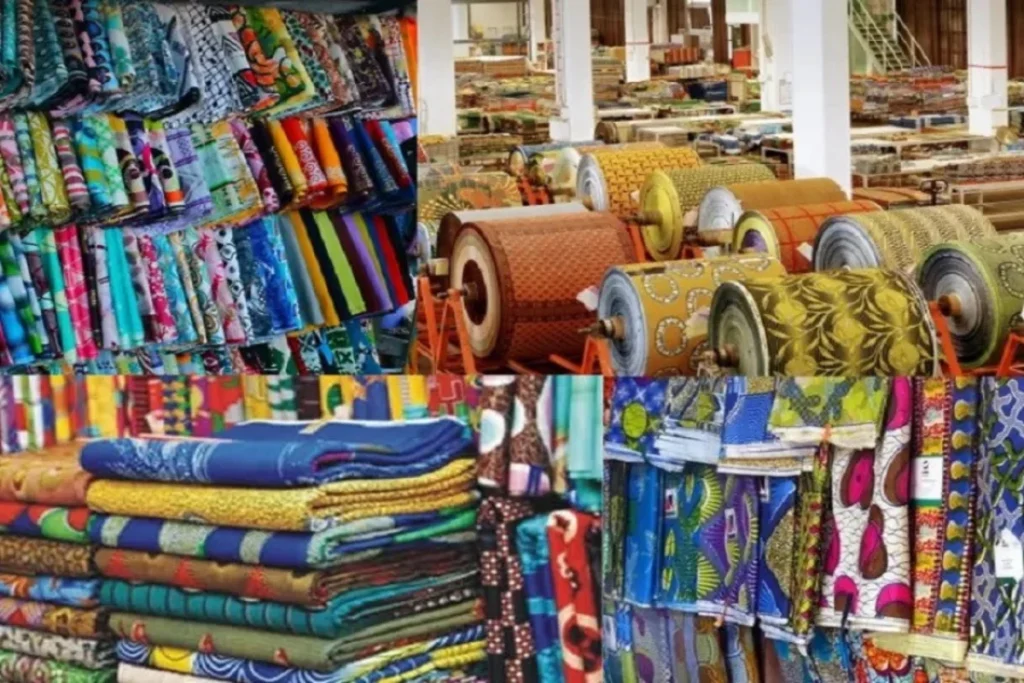
Nigeria’s textile, apparel and footwear industry is facing another setback, with the subsector recording its ninth consecutive quarter of contraction and raising fresh questions about the future of local manufacturing, jobs and economic inclusion.
According to the latest Gross Domestic Product (GDP) figures from the National Bureau of Statistics (NBS), the subsector contracted by 1.23% year-on-year in real terms in the second quarter of 2026. The latest decline extends a contraction streak that began in the second quarter of 2024, with the industry recording negative real growth in every quarter since then.
The decline is not happening in isolation. The subsector’s contribution to Nigeria’s real GDP fell to 1.77% in Q2 2026, down from 1.87% in the same period of 2025. Its nominal output also declined slightly, from N1.514 trillion in Q2 2025 to N1.506 trillion in Q2 2026.
For an industry that sits at the intersection of manufacturing, agriculture, fashion, trade and employment, nine consecutive quarters of contraction should be viewed as more than another economic statistic.
It is a warning about the sustainability of a value chain that once supported thousands of businesses and workers across Nigeria.
A Sector Losing Ground
Nigeria’s textile industry has struggled for years with a combination of structural and economic challenges, including inadequate infrastructure, high production costs, access to finance, unreliable power supply, imported textiles and weak local value chains.
The latest figures suggest that these problems remain unresolved.
The subsector contracted by 1.41% in Q2 2024 before recording deeper declines of 3.09% and 3.39% in Q3 and Q4 respectively. Although the pace of contraction moderated in parts of 2025, the industry remained in negative territory throughout the year and continued the trend into 2026.
This prolonged decline matters because the textile industry is not simply about fabric production.
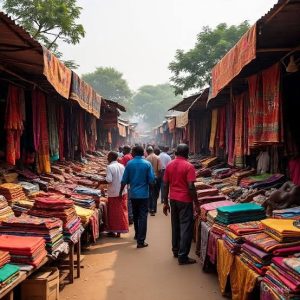
It connects farmers producing cotton to textile mills, manufacturers, fashion designers, tailors, retailers, logistics companies and exporters. When one part of that chain weakens, the consequences can spread across the wider economy.
The continued dependence on imported textile products makes the situation even more concerning. Nigeria imported textile and textile-related products worth about N1.06 trillion in 2025, while textile exports reportedly fell sharply during the same period.
That imbalance points to a deeper challenge: Nigeria has a huge domestic market for fashion and clothing, but much of the value generated from that demand is still tied to products made elsewhere.
What Happens to Jobs?
Perhaps the biggest concern is the human impact.
A struggling textile industry means fewer opportunities for factory workers, artisans, garment manufacturers, designers, cotton farmers and the thousands of small businesses that depend on the fashion and apparel ecosystem.
Recent industry data also shows how much productive capacity remains unused. Textile, apparel and footwear manufacturers operated at only 53.05% of installed capacity in 2025, leaving nearly half of their productive potential idle.
For a country battling unemployment, underemployment and the need to create sustainable livelihoods for a growing young population, idle industrial capacity represents more than lost production.
It represents lost opportunities.
Every textile factory that operates below capacity is potentially employing fewer people, buying fewer raw materials and contributing less to surrounding communities.
This is where the textile crisis becomes a corporate responsibility and economic inclusion issue.
Import Dependence Cannot Be the Long-Term Answer
Nigeria’s growing appetite for imported textiles also exposes the weakness of its domestic production ecosystem.
The country has a large fashion market and a vibrant creative industry, yet local manufacturers continue to face competition from imported fabrics and finished products.
The answer, however, cannot simply be to shut out imports without fixing the domestic system.
In June 2026, the Senate called for a ban on textile imports. Industry stakeholders subsequently warned that an outright ban could have unintended consequences for the wider fashion and garment ecosystem, which provides livelihoods for millions of Nigerians.
A sustainable approach would require more than restrictions.
Nigeria needs competitive local manufacturers capable of producing quality textiles at prices businesses and consumers can afford.
That means addressing electricity costs, access to long-term financing, machinery, transportation, raw materials, skills development and the availability of cotton.
Without those foundations, protectionist policies risk protecting an industry that is still unable to meet market demand.
There Is Still a Path to Recovery
The picture is not entirely bleak.
There are already efforts aimed at rebuilding Africa’s textile value chain.
Afreximbank, ARISE IIP and Rieter launched the Africa Textile Renaissance Plan, backed by a proposed $5 billion financing framework to develop up to 500,000 metric tonnes of African cotton transformation capacity over three to five years. The initiative also targets significant job creation and a reduction in Africa’s dependence on imported textiles.
For Nigeria, initiatives of this scale could create opportunities across cotton production, spinning, weaving, garment manufacturing and exports if the right ecosystem is developed around them.
The opportunity is especially important because Nigeria does not lack demand.
What it lacks is enough competitive domestic production to capture more of the value created by that demand.
Government Must Move From Policy to Implementation
Nigeria has introduced several policies over the years aimed at reviving manufacturing and supporting local production. The challenge has often been consistency and implementation.
The latest Manufacturers’ CEOs Confidence Index showed some improvement in manufacturers’ confidence during Q2 2026, with the Manufacturers Association of Nigeria pointing to recent policy measures as contributing to improved sentiment.
But confidence alone will not revive factories.
The government must create an environment where manufacturers can plan beyond the next quarter. That means predictable policies, reliable infrastructure, access to affordable financing and stronger enforcement against illicit trade and counterfeit products.
There is also a need to connect industrial policy with agriculture.
A thriving textile industry requires a thriving cotton value chain. If cotton is produced locally but processed elsewhere, or if manufacturers cannot access sufficient quality raw materials, Nigeria will continue to lose value along the chain.
The Private Sector Has a Role Too
The responsibility for rebuilding the industry cannot rest entirely with government.
Businesses across the fashion, retail, banking and manufacturing sectors can play a role by strengthening local supply chains, investing in skills, supporting small producers and creating markets for locally manufactured inputs.
Financial institutions can also help by developing patient financing products suited to manufacturers, rather than treating industrial businesses like short-term trading ventures.
Large fashion and retail brands, meanwhile, can create stronger procurement relationships with Nigerian manufacturers and SMEs.
Corporate responsibility should increasingly include how businesses contribute to the resilience of the ecosystems in which they operate.
The Bigger Question
Nigeria’s textile industry has already survived years of decline.
The question now is whether the country is prepared to turn the current crisis into an opportunity for industrial renewal.
Nine consecutive quarters of contraction should not be treated as just another line in the GDP report.
Behind the numbers are factories operating below capacity, businesses struggling to remain competitive, workers whose livelihoods depend on manufacturing and billions of naira flowing into imported products.
Reviving the sector will require more than another policy announcement.
It will require coordinated investment in infrastructure, skills, finance, cotton production, manufacturing capacity and market access.
Nigeria has the population, the fashion market and the entrepreneurial talent to build a competitive textile industry.
What remains to be demonstrated is whether government and the private sector can build the conditions that allow that potential to translate into productive factories, sustainable jobs and a stronger local value chain.
For an industry that has spent nine quarters shrinking, the next policy decision may determine whether Nigeria finally begins rebuilding — or simply watches another part of its manufacturing base disappear.
[give_form id="20698"]