ONYINYECHI NWAIGBA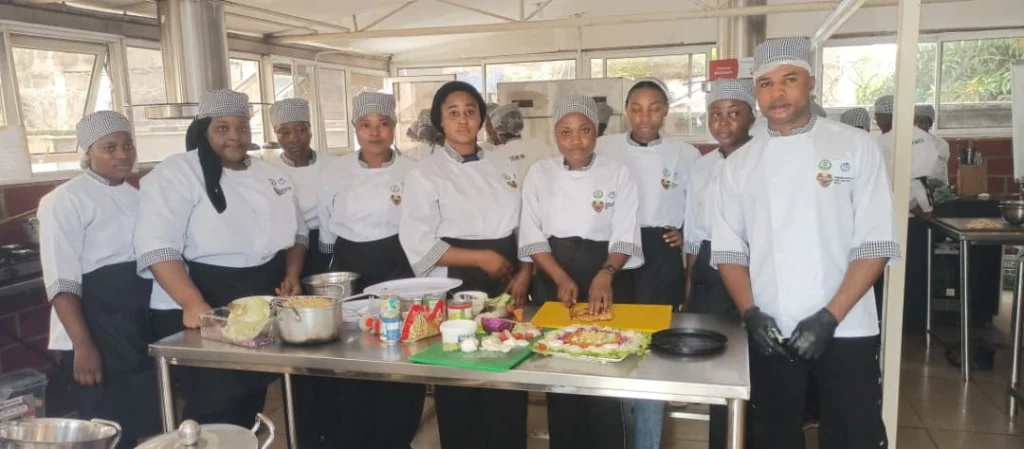
The Federal Government has sponsored free culinary arts and hospitality training for Nigerian youths as part of efforts to expand access to practical skills, support entrepreneurship and create pathways into employment.
The program, supported by the Federal Ministry of Education through a World Bank-sponsored initiative, is being implemented to equip young Nigerians with skills that can be applied directly in the workplace or used to establish small businesses.
The initiative was highlighted during a student cook-off competition in Abuja by Khadija Fashina, Chief Executive Officer of Masterminds Academy for Tourism, Culinary Arts and Hospitality (MATCH), which is involved in the training.
According to Fashina, beneficiaries of the program received the training at no cost, with the Federal Government covering their participation. She said the program was designed to give young people practical skills that could improve their livelihoods and open opportunities for employment and entrepreneurship.
For a country where many young people continue to navigate a difficult transition from education into sustainable work, the emphasis on practical skills is significant. A qualification alone does not necessarily translate into employment, particularly where available jobs do not match the skills people possess.
This makes vocational and technical training an important part of the broader conversation around youth employability.
From Training to Livelihoods
One of the more important aspects of the program is its focus on what happens after training.
Fashina said some beneficiaries from an earlier cohort who obtained Level Two certification in baking and confectionery had gone on to establish businesses, secure employment and, in some cases, employ other people.
These reported outcomes point to a wider role for skills development. When vocational training is connected to actual market opportunities, it can move beyond classroom learning and become a pathway into income generation.
For someone trained in baking, catering or hospitality, employment in an established business is one possible outcome. Another is the creation of a small catering service, bakery, food delivery business or hospitality-related enterprise.
The second pathway is particularly relevant to Nigeria’s entrepreneurship landscape, where many small businesses are built around practical skills and personal expertise.
However, the transition from training to sustainable enterprise requires more than technical ability.
Access to equipment, working capital, customers, professional networks and business knowledge can determine whether a newly acquired skill becomes a source of stable income or remains an unused qualification.
That is why the sustainability of programs like this should be measured not only by the number of people trained, but also by what happens to beneficiaries months and years after graduation.
Why Practical Skills Matter
The Federal Ministry of Education’s wider Technical and Vocational Education and Training (TVET) initiative reflects a similar approach.
The program describes its objective as equipping young Nigerians with practical skills for employment and entrepreneurship. It offers tuition-free training across areas including hospitality, fashion, beauty, digital media, solar installation, automobile repair and other trades.
The ministry’s broader technical and vocational education structure also includes programs focused on entrepreneurship and skills-to-enterprise development, while its World Bank-assisted IDEAS project is aimed at improving skills development for both formal and informal sectors.
This suggests that vocational education is increasingly being treated not simply as an alternative to conventional academic education, but as part of the country’s workforce and economic development strategy.
The culinary and hospitality sector provides a useful example of how this can work.
A young person who acquires professional culinary skills can potentially participate in several parts of the value chain, from restaurants and hotels to catering, food production, event services and hospitality management.
The sector can therefore create opportunities at different levels, including for people who may not have followed a traditional university-to-office career path.
Beyond Employment: The Entrepreneurship Question
The program also places entrepreneurship at the centre of its objectives.
This is important because the success of youth skills development cannot be measured solely by the number of people who secure formal employment. Some trainees may instead use their skills to build micro or small enterprises.
But entrepreneurship support needs to extend beyond telling young people to “start a business.”
A trained chef, for instance, may understand food preparation but still need knowledge of pricing, bookkeeping, food safety, customer acquisition, branding, procurement and inventory management to run a sustainable food business.
Professional guidance therefore becomes an important part of the equation.
Felix Osaghae, Vice-Chairperson of the Abuja Chapter of the Institute for Tourism Professionals of Nigeria, also stressed the importance of professional guidance and adherence to industry standards in ensuring that beneficiaries put their training to effective use.
This is where skills programmes can have a deeper impact when training is connected to mentorship, industry exposure and access to markets.
Preserving Nigeria’s Culinary Heritage
The conversation around culinary training also extends beyond jobs and business.
Chiamaka Nwakalor-Egemba, founder of Dish La Afrique and keynote speaker at the event, called for greater documentation of indigenous Nigerian recipes and traditional cooking techniques.
She argued that documenting local meals, preparation methods and the cultural stories attached to them could help preserve Nigeria’s culinary heritage for future generations.
This adds another dimension to culinary education.
Nigeria’s food culture is diverse, but traditional knowledge can easily be lost when recipes and techniques are passed down informally without documentation. Professionalizing the culinary industry could therefore create opportunities not only for employment and entrepreneurship but also for preserving and promoting indigenous food culture.
Nwakalor-Egemba also encouraged chefs to work together to document indigenous recipes and promote locally sourced Nigerian ingredients.
For a sector connected to agriculture, tourism, hospitality and entertainment, the potential economic impact extends beyond the kitchen.
Turning Skills Into Sustainable Impact
Free training removes one of the major barriers to participation: the cost of acquiring a professional skill.
But removing the cost of training is only the first step.
The longer-term impact will depend on whether beneficiaries can access opportunities to practice their skills, find employment, secure customers or obtain the resources required to start businesses.
This is particularly important when public resources are invested in skills development. Training numbers can provide an immediate measure of reach, but employment outcomes, business survival, income growth and job creation offer a clearer picture of lasting impact.
The Federal Government’s current TVET initiative acknowledges this broader pathway by combining free tuition with hands-on training, certification, job-placement support and, for eligible programmes, start-up assistance and business loans.
For culinary and hospitality trainees, similar links between training and the wider industry could help ensure that skills acquired in classrooms and training kitchens translate into economic opportunities.
The objective should ultimately be more than producing trained graduates. It should be about creating people who can participate meaningfully in the economy, whether as employees, entrepreneurs or employers.
A Wider Lesson for Youth Development
The culinary program illustrates a broader point about youth development in Nigeria: skills acquisition becomes more meaningful when it is connected to real economic opportunities.
For young Nigerians facing a competitive employment market, practical training can provide an additional route into the workforce. For businesses, a stronger pool of trained workers can help address skills gaps. For communities, successful small businesses can generate income and employment beyond the original beneficiary.
But sustaining these outcomes requires continued attention to what happens after training.
As more public and development resources are directed toward technical and vocational education, tracking those outcomes will be critical. How many graduates find work? How many start businesses? How many businesses remain operational? How many additional jobs are created? And what support do graduates need to move from training into sustainable livelihoods?
Those questions can help shift the conversation from how many young people were trained to what changed because they were trained.
For Nigeria’s youth, that difference matters.
The Federal Government’s free culinary and hospitality training is therefore part of a larger conversation about how practical education can connect young people to work, entrepreneurship and economic participation. Its lasting value will ultimately depend on how effectively those newly acquired skills are connected to the opportunities that exist beyond the training room.
[give_form id="20698"]