CSR Reporters Editorial Team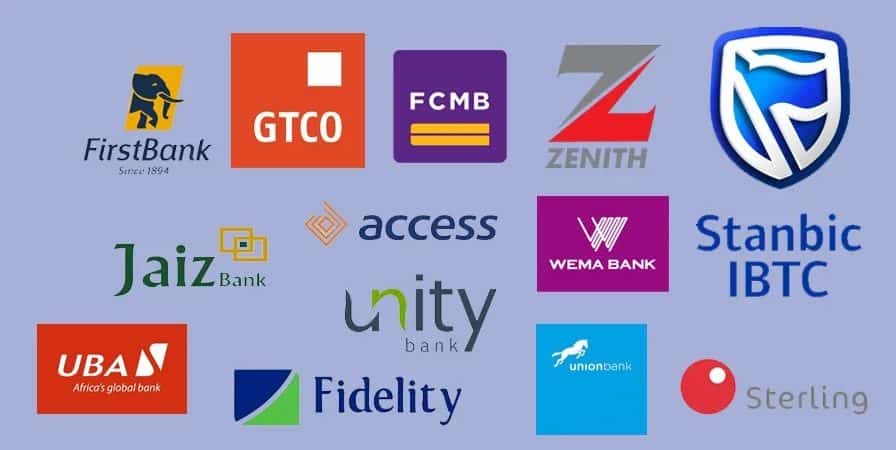
RANKED: Top 8 Verified CSR Disclosure Quality Among Nigerian Banks
Every Nigerian bank now describes itself as a champion of sustainability. Almost none can prove it the way they prove solvency — with a named framework, quantified metrics, and an independent signature attesting the numbers are real. This edition of RANKED applies the same evidentiary bar CSR Reporters uses across our editorial coverage: commendable disclosure requires a named standard (IFRS S1/S2, GRI, SASB, TCFD) and, where claimed, a named third-party assurance provider. Reputation, award wins, and self-description do not qualify. Eight banks met that bar clearly enough to rank; two more publish sustainability reports but lack confirmed assurance data as of this edition and are noted rather than ranked.
Methodology
Nigeria’s Financial Reporting Council designated four early adopters of the ISSB’s IFRS S1 and IFRS S2 standards ahead of the 2028 mandatory deadline: Fidelity Bank, Access Bank, Seplat Energy, and MTN. This ranking evaluated the ten largest NGX-listed banks by total assets against three criteria: (1) the named sustainability disclosure framework(s) used, (2) whether the report was formally assured by an independent third party, and (3) the specificity and verifiability of quantified metrics reported. Banks reporting under GRI alone, without IFRS S1/S2 alignment or named assurance, ranked lower than those meeting both. Two frequently-cited banks — Stanbic IBTC and FCMB — were excluded from ranking, not because their disclosure is poor, but because this edition could not confirm IFRS S1/S2 adoption or a named assurance provider for either from public sources; both are candidates for a future update once verified.
1. Access Holdings Plc
Access Holdings is one of only four confirmed Nigerian early adopters of IFRS S1 and S2, and its FY2025 Sustainability Report is prepared under both standards with complementary reference to GRI and SASB — a rare three-framework stack. The report carries a dedicated Assurance Report section, and CSR-in-Action, Nigeria’s AA1000AS-licensed assurance provider, has assured Access Bank’s sustainability disclosures for five consecutive years, the longest continuous third-party assurance relationship found in this survey. The numbers back the framework: the Group grew its green asset portfolio to ₦92.14 billion in 2025, up from ₦72.32 billion in 2024, deployed ₦72.3 billion under its Sustainable Finance Framework, and cut operational emissions by 28.47% to 49,352 tonnes of CO2 equivalent, aided by solar retrofits across 263 branch locations and 323 solar-powered ATMs.
2. Zenith Bank Plc
Zenith published its first standalone sustainability report prepared under IFRS S1 and S2 for FY2025, explicitly labelled “Assured” with assurance statements included — a milestone the bank’s Founder and Chairman, Jim Ovia, framed as capping an eleven-year sustainability reporting journey. The FY2025 report quantifies the shift with real specificity: 1,861 SMEs supported with ₦15.98 billion in loans, a 741% year-on-year increase; ₦355.8 million disbursed to women-owned businesses; 397,440 MWh of renewable energy consumed; and a 14.3% cut in Scope 2 emissions. The one gap: the report’s named assurance provider was not confirmed from public excerpts reviewed for this edition and should be verified before citing it by name.
3. Fidelity Bank Plc
Fidelity holds a genuine first: it was the first Nigerian bank to publish an ISSB-compliant Sustainability and Climate Report, released in mid-2024 for FY2023, ahead of GTCO, Zenith, and UBA. It did not stand still afterward — its FY2024 report voluntarily adopted the EU’s European Sustainability Reporting Standards (ESRS) alongside IFRS S1/S2, an unusual move for a Nigerian issuer with no EU listing obligation to do so. Fidelity has set a public decarbonization target of a 33.6% cut in operational emissions by 2028, en route to net-zero by 2050, and became a signatory to both the UNEP FI Principles for Responsible Banking and the UN Women’s Empowerment Principles in 2023.
4. Sterling Financial Holdings (Sterling Bank)
Sterling’s FY2024 Sustainability Report carries the broadest framework citation found in this survey — the Nigerian Sustainable Banking Principles, GRI Standards, IFRS S1 and S2, the UN Global Compact, the Sustainable Development Goals, TCFD, NGX Sustainability Disclosure Guidelines, IFC Performance Standards, the Equator Principles, and the GHG Protocol, all cited in a single report with a named Independent Assurance Report section. KPMG has served as Sterling’s external assurer in prior reporting cycles under ISAE 3000. Under its HEART sustainability framework, Sterling grew its sustainability-focused investment book by 39% to ₦331.7 billion in FY2025, expanded its solar-powered ATM network to 55% coverage, solarized 72 branches, and cut its overall carbon footprint by 9.98% — alongside a 117.2% jump in profit before tax to ₦68.5 billion, showing the sustainability spend did not come at the expense of the balance sheet.
5. First HoldCo (formerly FBN Holdings)
First HoldCo’s FY2025 report marks the Group’s first-time voluntary adoption of IFRS S1 and S2 — a notable move for Nigeria’s oldest bank, historically slower than peers on sustainability disclosure. The Group was named Nigeria’s Best Bank for ESG at the 2025 Euromoney Awards, backed by tangible figures: over ₦270 billion in fresh capital injected into First Bank of Nigeria, a FirstMonie agent-banking network expanded past 313,000 agents, and 20,000 trees planted under its green future initiative. As a first-time adopter, the depth of independent assurance behind these figures is still developing and worth revisiting in a future edition.
6. Wema Bank Plc
Wema is the smallest bank on this list by assets, but it reached a Tier-1-level assurance milestone earlier than several larger peers: its 2022 sustainability report, prepared under GRI Standards, received the bank’s first-ever third-party assurance from KPMG. That report quantified a 750-metric-tonne cut in carbon emissions through solar-powered branches, a 60-branch recycling programme collecting over 15,000 kg of recyclables, and more than ₦300 million in collateral-free loans disbursed to female entrepreneurs through its SARA by Wema initiative. Confirming whether that KPMG assurance relationship has continued into more recent reporting years would strengthen this placement further.
7. GTCO
GTCO’s FY2025 disclosures are detailed and credible — 2.58% of its facilities now run entirely on renewable energy, and the Group opened over 379,866 new accounts in Nigeria as part of its financial inclusion push, alongside a historic listing on the London Stock Exchange, the first for a West African financial institution. What keeps GTCO below the assured cohort is the absence, in sources reviewed for this edition, of a named third-party assurance provider or an explicit statement of IFRS S1/S2 adoption. The disclosure exists; the verification layer that would move it into the top tier does not yet have a public paper trail.
8. United Bank for Africa (UBA)
UBA is the clearest laggard among Nigeria’s Tier-1 banks on this measure. Its FY2025 disclosures remain GRI-based only, and the Group has stated it will voluntarily adopt IFRS S1 and S2 starting only in the 2026 financial year — well behind Access, Zenith, and Fidelity. Its most recent confirmed external assurance dates back to its 2022 Sustainability Report, assured by Ernst & Young; no comparably named assurance has been confirmed for FY2023, FY2024, or FY2025 reporting in sources reviewed here. UBA’s underlying numbers are not absent — 20,490 seedlings planted in 2025, a 350% year-on-year increase, and ₦1.98 billion in CSR spend through the UBA Foundation — but without a current, named assurance signature behind them, the figures carry less evidentiary weight than those of banks ranked above it.
Not Ranked, Pending Verification
Stanbic IBTC Holdings has published nine consecutive sustainability reports since 2013, including a 2023 report built on a double-materiality framework, but no confirmed IFRS S1/S2 adoption or named assurance provider for the Nigerian entity specifically was located for this edition. (Its Kenyan sister company, Stanbic Holdings Plc, adopted IFRS S1/S2 for FY2025 — a distinct entity that should not be conflated with the Nigerian operation.) FCMB’s recent sustainability reporting and assurance status could not be confirmed from sources reviewed and remains a gap to close before a future edition.
Why This Ranking Matters
The gap between Nigeria’s best- and least-assured banks is not cosmetic. An assured report under IFRS S1/S2 or GRI means an independent party has checked the numbers; an unassured report means the bank is grading its own homework. As the FRC’s 2028 mandatory compliance deadline approaches, the banks at the top of this list — Access, Zenith, and Fidelity in particular — are not simply ahead on paperwork. They are the ones for whom sustainability claims can currently survive outside scrutiny. That is the same standard CSR Reporters applies across our coverage, and it is the standard the rest of the sector still has to meet.
Want to talk to us?
Email: enquiries@csrreporters.com
Call or WhatsApp: +234 803 401 2198, +234 803 209 8499, +234 903 329 6374, +234 903 254 1168
[give_form id="20698"]