Can Africa Develop Its Own ESG Measurement Standards? The Case for an African Framework That Measures What Truly Matters
 Eche Munonye, Founder and Chief Strategist, CSR Reporters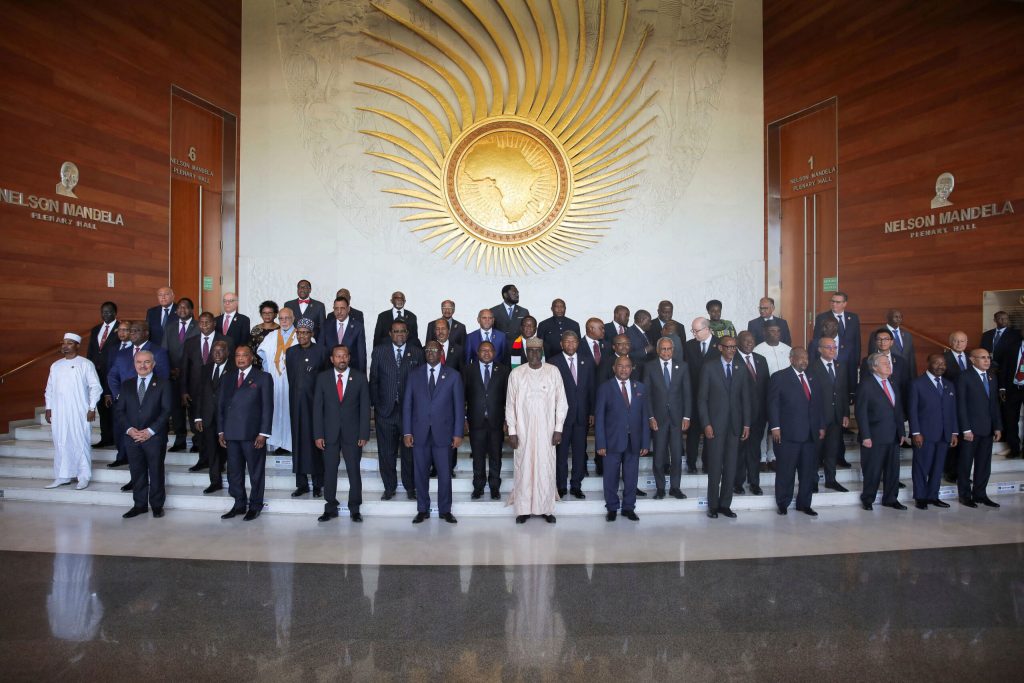
Can Africa Develop Its Own ESG Measurement Standards? The Case for an African Framework That Measures What Truly Matters
Africa is adopting global sustainability disclosure standards, but a deeper question remains: do the frameworks used to judge corporate responsibility adequately capture the continent’s development priorities, community-level outcomes and environmental realities?
Environmental, social and governance (ESG) has become an increasingly important language of corporate accountability. Investors use it to understand risks. Regulators use it to strengthen disclosure. Companies use it to explain their sustainability commitments, while development institutions rely on related frameworks to assess progress towards economic, social and environmental goals.
Yet, beneath the growing adoption of ESG reporting lies a question Africa can no longer afford to leave unanswered: Who defines what responsible business looks like in Africa, and who determines how that responsibility should be measured?
The question is not an argument against international sustainability standards. Global frameworks have helped establish common expectations, improve disclosure and make sustainability-related information more comparable across markets. For African companies seeking international investment, participating in global supply chains or accessing sustainable finance, that comparability matters.
But disclosure and development impact are not identical. A company may report its emissions, workforce composition, governance structures and community investment expenditure while leaving an important question unanswered: what has actually changed for the people and environments affected by its operations?
That distinction is especially important in African economies, where businesses operate amid significant development needs, infrastructure gaps, climate vulnerability, informal economic activity and varying institutional capacities.
Africa therefore needs to consider whether the continent should develop a home-grown ESG measurement framework—not to reject global standards, but to ensure that the measurement of corporate responsibility reflects both international expectations and African realities.
The problem is not global standards. It is what they are designed to measure.
The global sustainability reporting landscape has developed considerably. The International Sustainability Standards Board (ISSB), established by the IFRS Foundation, has introduced IFRS S1 and IFRS S2 to provide a global baseline for sustainability-related financial disclosures, with a focus on information relevant to investors and other providers of capital.
The Global Reporting Initiative (GRI), meanwhile, provides standards for reporting an organisation’s impacts on the economy, environment and people. Other frameworks and instruments address specific issues, including climate-related risks, human rights, governance, environmental management and sustainable finance.
These frameworks serve different purposes. Treating them as interchangeable would be a mistake.
The ISSB’s investor-focused approach asks how sustainability-related risks and opportunities affect an organisation’s prospects. GRI’s impact-oriented approach helps organisations report their effects on people, the environment and the economy. Neither should automatically be treated as a complete measure of a company’s contribution to national development or the effectiveness of its community investment.
This distinction matters because Africa’s corporate accountability debate extends beyond the information required by capital markets.
Consider a manufacturer that reports lower energy consumption and improved resource efficiency. These are valuable achievements. But what do the disclosures reveal about the company’s use of local suppliers, the quality of jobs it creates, the safety of its operations, the management of industrial waste in neighbouring communities or the long-term effectiveness of its social investments?
Some of these issues may already be addressed by existing reporting standards, depending on the framework and the organisation’s material impacts. The problem is not that international standards necessarily ignore them. It is whether the indicators, evidence and assessment methods applied in practice are sufficiently comprehensive to answer the questions African stakeholders need answered.
The case for an African framework must therefore begin with a careful distinction between reporting what companies disclose, evaluating how they perform and measuring the outcomes of their actions.
Africa is already building the foundations
The proposition that Africa needs to develop its own sustainability measurement capacity should not be mistaken for a claim that the continent has done nothing.
In August 2025, the African Development Bank announced the validation of a continental Sustainable Finance Taxonomy through its African Financial Alliance on Climate Change platform. The process involved more than 60 institutions from the financial and real sectors, following a year-long consultation. The taxonomy provides common definitions for activities considered to contribute to sustainable development, helping financial institutions identify and direct capital towards eligible activities. African Development Bank, 12 August 2025.
This is significant because it demonstrates that African institutions can collaborate on common sustainability-related classifications. It also offers a foundation for reducing fragmentation in sustainable finance.
However, a taxonomy is not the same as an ESG measurement standard. A taxonomy classifies activities according to defined criteria; an ESG measurement framework evaluates performance using indicators, evidence, benchmarks and assessment rules. One can support the other, but neither replaces the other.
There is also an important development in the relationship between African institutions and international standard-setters. In May 2024, the IFRS Foundation and the African Development Bank announced a partnership to support sustainability-related financial disclosure across Africa through capacity building and technical assistance. The initiative was designed to help regulators, policymakers and financial institutions build the capabilities needed to apply ISSB standards. IFRS Foundation, May 2024.
Meanwhile, the African Organisation for Standardisation (ARSO) and the International Institute for Sustainable Development have been working together since 2024 to strengthen African sustainability standards and their alignment with international requirements. ARSO, 28 May 2026.
These initiatives point towards a more constructive approach than simply calling for Africa to abandon existing frameworks. The continent already has institutions working on sustainable finance, standardisation and disclosure. The next question is whether these efforts can contribute to a broader, coherent framework for measuring corporate performance and impact.
What makes the African context different?
Africa is not a single economy, and there is no single African sustainability experience. The conditions facing a mining company in Zambia, an agricultural exporter in Kenya, an oil and gas operator in Nigeria and a financial institution in South Africa are not identical.
Nevertheless, there are shared development priorities that deserve a more deliberate place in the way corporate responsibility is assessed.
The African Union’s Agenda 2063 identifies inclusive economic growth, decent work, human capital development, education, health, gender equality, environmental sustainability, climate resilience, good governance and capable institutions among the continent’s priorities. African Union, Agenda 2063.
These priorities provide a legitimate starting point for an African impact measurement framework. They do not mean that every company should be assessed against every development challenge. Rather, they suggest that the assessment of corporate responsibility should consider how a company’s activities, sector and geographic footprint relate to the outcomes that matter in the communities and economies where it operates.
For example, water stewardship in a water-stressed community may require more than reporting the volume of water consumed. Assessment may need to consider local water availability, competing demands, the effects of industrial extraction and the reliability of community water infrastructure where a company has made related commitments.
Similarly, a corporate education initiative should not be judged solely by the amount spent or the number of schools visited. Depending on the programme, relevant indicators could include attendance, retention, learning outcomes, access for disadvantaged children and whether benefits persist after funding ends.
Employment programmes could be assessed not only by the number of people trained, but also by job placement, income progression, the quality and durability of employment, and whether participants can use the skills acquired.
These examples illustrate the distinction between activity and outcome. They are proposed applications of an African measurement approach, not evidence that all current ESG frameworks fail to address such matters.
The opportunity is to make these distinctions more systematic, measurable and independently verifiable.
The danger of measuring what is easiest to disclose
One of the weaknesses of corporate sustainability assessment is the temptation to equate available information with meaningful impact.
Companies may readily report money spent, beneficiaries reached, training sessions delivered, trees planted or equipment donated. Such information can be useful, but it does not necessarily establish the quality, durability or additionality of the results.
A donated medical facility, for example, may represent a substantial investment. Yet its impact depends on whether it is adequately staffed, equipped, maintained and accessible to the people it was intended to serve.
A tree-planting campaign may produce an impressive headline figure. The environmental result depends on survival rates, species selection, site suitability and long-term maintenance.
A scholarship programme may support hundreds of students. Its wider value depends partly on completion rates, learning opportunities and subsequent pathways into employment or further education.
These distinctions are particularly important where corporate social responsibility is presented as evidence of broader sustainability performance. Philanthropy may contribute to social development, but it cannot by itself establish that a company manages its environmental footprint, respects human rights, maintains strong governance or addresses adverse impacts across its operations.
An African framework should therefore resist the idea that corporate generosity is a substitute for responsible business conduct. It should assess both the harm a company may cause and the positive contribution it can credibly demonstrate.
Nigeria offers a useful test case
Nigeria provides a practical illustration of the choices African countries face.
The Financial Reporting Council of Nigeria has published a roadmap and sustainability reporting guidelines to support the implementation of IFRS Sustainability Disclosure Standards. In January 2026, the Council invited public comments on its amended roadmap and Sustainability Reporting Guidelines No. 1 (SRG 01), 2025. The documents address preparedness, implementation and guidance for entities required to report under the roadmap. Financial Reporting Council of Nigeria, January 2026.
This is an important step towards a more structured disclosure environment. It also raises a wider policy question: once companies are required to provide sustainability-related information, how should stakeholders assess the evidence behind their claims and determine whether reported actions translate into meaningful outcomes?
Disclosure rules can improve the availability and comparability of information. They do not automatically resolve the challenges of inconsistent data, weak baseline measurements, limited independent verification or the difficulty of attributing social and environmental outcomes to a particular intervention.
For a country with significant differences in sectoral exposure, corporate capacity and community needs, a useful framework would need to distinguish between a company’s ability to disclose information and the quality of its underlying performance.
It would also need to avoid penalising smaller organisations simply because they lack the reporting budgets and technical teams available to large listed companies.
A phased approach, proportionate requirements and clear evidence rules could help Nigeria test such a model before advocating wider adoption across Africa.
What should a home-grown African ESG framework look like?
The most credible approach would not be to create an entirely separate reporting universe. It would be to establish a complementary African measurement layer, grounded in common principles but responsive to local conditions.
First, it should preserve international comparability. Companies operating across borders need to communicate with global investors, lenders, customers and regulators. A framework that duplicates or contradicts established disclosure standards could increase costs and weaken confidence.
Second, it should connect corporate performance to African development priorities. This would require clearly defined indicators covering relevant areas such as decent work, local economic participation, community health, education outcomes, water security, climate resilience and biodiversity. The indicators should be selected according to materiality and sector relevance, not applied indiscriminately to every company.
Third, it should establish evidence requirements. A reported outcome should be distinguishable from an aspiration, an activity or an unsupported estimate. Depending on the indicator, acceptable evidence could include administrative records, independently collected data, beneficiary interviews, field observations, geospatial information and third-party verification.
Fourth, it should incorporate affected stakeholders. Communities, workers, suppliers, civil society organisations and other relevant groups should have credible opportunities to provide information and challenge claims. Their participation should not replace technical measurement, but it can expose gaps that company-generated data may fail to reveal.
Fifth, it should be independently governed. Assessment criteria, scoring methodologies, conflicts-of-interest rules and procedures for correcting errors should be public. No company should be able to purchase a favourable assessment, and sponsorship should never determine a ranking or award outcome.
Finally, it should be affordable and practical. Smaller companies and local suppliers need accessible reporting tools, training and phased implementation. If the framework becomes so expensive that only the largest organisations can participate, it risks measuring reporting capacity rather than responsibility.
Who should own the framework?
This may be the most difficult question.
An African ESG measurement framework cannot credibly be built by a single media organisation, consultancy, regulator or development institution acting alone. It would need a coalition with the technical expertise, institutional legitimacy and independence to develop and maintain the system.
The African Union, regional economic communities, national regulators, ARSO, accounting and assurance bodies, universities, investors, civil society organisations and businesses could each contribute different capabilities. International standard-setters could help preserve compatibility with global reporting requirements.
But the governance structure must protect the framework from political interference and corporate capture. Companies being assessed should have opportunities to comment on methodology and correct factual errors, but they should not control their own scores. Governments should help create the enabling environment without turning the framework into a reputational instrument for favoured industries or national champions.
The process should begin with a published consultation paper, a clear definition of the framework’s purpose, a mapping of existing standards and a pilot involving different sectors and countries. Pilot findings should be published, including the limitations of the available data and the cost of implementation.
Only after that testing should institutions consider whether the framework is ready for wider regulatory or voluntary use.
The risk of creating another label
There is a legitimate concern that an African ESG framework could become another badge companies display without changing their conduct.
The sustainability landscape already contains reporting frameworks, certifications, taxonomies, indices, ratings and voluntary initiatives. Adding another label without a clear purpose would increase confusion rather than improve accountability.
A credible African system must therefore answer a simple question: what will it enable stakeholders to determine that they cannot reliably determine today?
If its only function is to generate another corporate score, its value will be limited. If it improves the quality of evidence, distinguishes disclosure from performance, incorporates affected communities and makes corporate impact more comparable across sectors and countries, it could fill a meaningful gap.
The distinction matters. A framework should not claim to measure everything a company does. It should specify what it measures, what evidence it requires, what it cannot establish and how its conclusions should be interpreted.
That discipline is essential if African assessments are to earn trust beyond the continent.
Africa must move from adoption to participation
The question of home-grown ESG measurement is ultimately about more than technical indicators. It concerns Africa’s role in shaping the global definition of responsible business.
The continent should not assume that global frameworks are unsuitable simply because they originated elsewhere. Nor should it assume that adopting internationally recognised standards automatically answers every question about local impact and accountability.
The more productive path is to identify where global disclosure standards provide an essential baseline, where existing impact frameworks can be applied more effectively, and where African-specific indicators or assessment methods are genuinely needed.
There is already evidence of progress in continental sustainable finance, standardisation and sustainability disclosure. The next challenge is to connect these developments to a transparent, evidence-based approach to measuring corporate performance and impact.
For CSR REPORTERS and other African institutions working at the intersection of sustainability, research, media and accountability, this is a significant opportunity to contribute to the debate. It requires more than advocacy. It requires technical research, pilot assessments, transparent methodologies and the willingness to publish results that may challenge corporate narratives as well as institutional assumptions.
Africa does not need an ESG framework that gives African companies an easier test. It needs one that asks the right questions, uses credible evidence and measures performance against the realities that matter.
The objective should not be to lower the bar or replace international standards. It should be to help shape a system in which global comparability and African development priorities reinforce one another.
That is how Africa can move from being primarily a user of sustainability standards to becoming a credible contributor to the standards by which responsible business is measured.
| DON’T JUST ANNOUNCE YOUR IMPACT. PROVE IT. CSR REPORTERS helps organisations verify, assess, document and communicate the real impact of their CSR and sustainability initiatives. Project Verification | Beneficiary Feedback | Impact Assessment | Impact Storytelling | Stakeholder Engagement Have an initiative worth documenting? Let us verify it. Document it. Tell the story. Talk to CSR REPORTERS enquiries@csrreporters.com 📞 Call/WhatsApp: 0803 401 2198 | 0903 329 6374 | 0905 024 4468 | 0803 209 8499 www.csrreporters.com |