CSR Reporters Editorial Team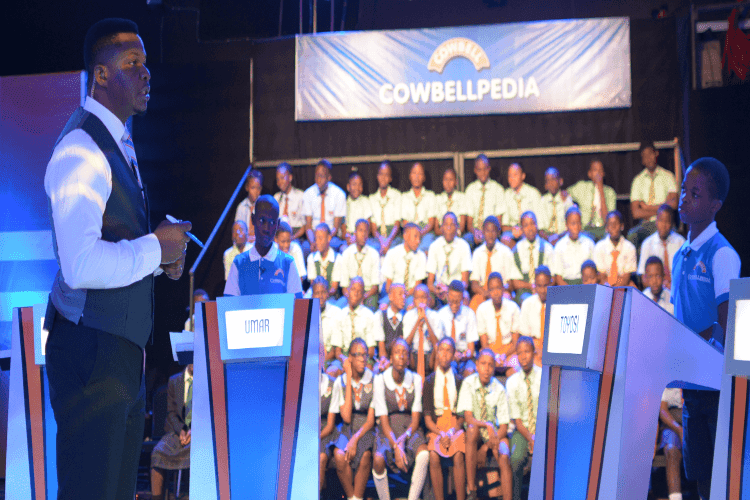
RANKED: Top 10 Companies Driving Education CSR in Nigeria
Education is the most popular cause in Nigerian corporate social responsibility, and one of the hardest to verify. Companies announce scholarships, competitions and school projects with confidence. What they rarely publish is what happened next: how many students finished, who they were, what they went on to do, and whether they would have enrolled anyway.
This ranking looks at ten companies with education initiatives that are visible in the public record. It orders them by how much of their claimed impact can actually be checked, not by how much they say they give. Where a company’s evidence is thin or absent, we still rank it, and we say plainly that the weakness lies in the lack of evidence, not necessarily in the programme itself.
The result is a provisional first edition. It rests on a desk review of public sources, and the companies named are invited to submit documentation that would improve their position in the next edition.
The Top 10 at a glance
| Rank | Company | Flagship education initiative | Tier |
| 1 | NLNG | Post-primary, undergraduate, postgraduate and IDP scholarships | B |
| 2 | Promasidor Nigeria | Cowbellpedia secondary school mathematics programme | A |
| 3 | NPDC (NNPC subsidiary) | Host-community undergraduate scholarships | B |
| 4 | UBA Foundation | National Essay Competition | B |
| 5 | Dangote Cement | Community scholarships | B |
| 6 | Nestlé Nigeria | Community Scholarship Programme (STEM) | B |
| 7 | TotalEnergies Nigeria | Catch Dem Young scholarship | B |
| 8 | Chevron Nigeria (NNPC JV) | University scholarship awards | C |
| 9 | Nigerian Breweries | Education support (CSR focus area) | C |
| 10 | Nigerian Agip Exploration (NNPC/NAE JV) | Postgraduate scholarship | C |
Tier A: company-reported, with independent endorsement. Tier B: company-reported programme details, no independent verification. Tier C: programme listed or claimed, no verifiable details found.
How we ranked
Companies were assessed against five criteria drawn from the CSR Reporters approach to impact accountability:
- Scale and reach: how many learners, schools or communities the programme reaches.
- Longevity: how long it has run, and whether it has survived changes in leadership and budgets.
- Depth and outcomes: whether results are tracked, such as completion, exam performance or employment, and not only the number of students funded.
- Independent verification: third-party endorsement, audited figures, or evidence from site visits and beneficiary accounts.
- Targeting: whether support widens access for those who lack it, or mainly rewards those already excelling.
Placement is a judgment-based ordering against these criteria. No numerical scores were assigned. Where two companies were close, the one with stronger independent evidence ranked higher.
Limits of this edition. This is a desk review. We made no site visits and have not yet received a right of reply from the companies. Many figures come from company websites and press coverage and several are years old. State-owned entities and joint-venture programmes are included as reported. Programmes are compared as they appear in public sources, which differ in detail and date.
The ranking
1. NLNG
Four-level scholarship programme | Evidence: Tier B
NLNG has the longest-running and broadest education programme on this list. Its undergraduate scheme began in 1998, and the company later added post-primary scholarships for pupils from host communities, overseas postgraduate awards and a scheme for internally displaced persons. It is the only company here whose programme spans every stage of schooling.
What is on record: NLNG’s own pages report 3,416 undergraduate beneficiaries, 342 post-primary beneficiaries (about N825.3 million spent) and 78 overseas postgraduates (about N1.308 billion spent). The undergraduate award is N150,000 a year, and intake was raised from 150 to 300 a year from 2018/2019.
What is missing: These figures date from around 2019 and are self-reported. NLNG’s pages have shown different totals at different times, which suggests a need for a single, dated, audited statement. There is no published data on graduation or what awardees did afterwards.
2. Promasidor Nigeria
Cowbellpedia secondary school mathematics programme | Evidence: Tier A
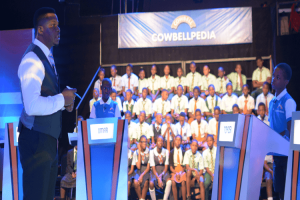
Promasidor, maker of Cowbell Milk, has sponsored a mathematics competition for secondary schools since 1998. In 2016 it brought the activity under the Cowbellpedia name and began asking mixed schools to field at least two girls per category. Winners have received N2 million each plus an overseas educational excursion. Its longevity and national spread make it one of the most visible education programmes in Nigeria.
What is on record: Reporting from 2018 says it runs in more than 200 centres across over 11,000 schools. The National Examinations Council has publicly praised the programme. It has also been recognised by the Lagos State Government (2014 CSR award) and by SERA CSR Awards with the Nigerian Institute of Public Relations Lagos chapter (Best Company in Education, 2016).
What is missing: We found no data on learning outcomes such as changes in mathematics results among participating schools. Award recognition is not independent verification. It is also a brand-sponsored television quiz, so the line between marketing and CSR deserves clear disclosure.
3. NPDC (NNPC subsidiary)
Host-community undergraduate scholarships | Evidence: Tier B
The Nigerian Petroleum Development Company has described education as the main thrust of its CSR policy. Its scholarship scheme selects indigent students from host communities through a pre-selection examination.
What is on record: In 2019 its managing director said more than 2,000 undergraduates in five Niger Delta states had received scholarships over five years, and more than 300 students sat the 2019 pre-selection examination across three centres.
What is missing: Spend figures, current beneficiary numbers and completion data are not public. As a state-owned subsidiary, NPDC sits awkwardly in a private-sector ranking, and we include it because of the scale of its claim.
4. UBA Foundation
National Essay Competition | Evidence: Tier B
The foundation of United Bank for Africa has run the National Essay Competition for senior secondary students for 16 consecutive years. The 2026 edition focuses on food security. Twenty finalists sit a physical test in Lagos, and the prizes are university grants, which links the award directly to access to higher education.
What is on record: The 2026 prize pool is reported as N41.5 million for five winners, with fourth and fifth place receiving grants for the first time. The programme sits alongside UBA’s Read Africa initiative.
What is missing: Direct reach is five winners a year. We found no figures on entries, regional spread or what winners do afterwards. Media reports give the prize pool as both N41 million and N41.5 million, and the foundation should publish a single figure.
5. Dangote Cement
Community scholarships | Evidence: Tier B
Dangote Cement says it runs scholarship programmes in all its operational communities. A scheme at its Ibese plant in Ogun State has awarded scholarships to 115 students, and company officials describe the awards as part of keeping good relations with host communities.
What is on record: The Ogun State award and company statements on community scholarships.
What is missing: There is no cumulative beneficiary count across plants, no published spend and no tracking of outcomes. The stated link to future employment and community relations makes it important to separate educational purpose from relationship management.
6. Nestlé Nigeria
Community Scholarship Programme | Evidence: Tier B
Nestlé Nigeria launched its Community Scholarship Programme in 2020 for students in host communities who study science and technology courses at accredited tertiary institutions. Applications for 2026/2027 are open, which shows the programme is current.
What is on record: More than 250 students supported over five years.
What is missing: The programme is small compared with others on this list, and no outcome data, spend figures or beneficiary profile is published.
7. TotalEnergies Nigeria
Catch Dem Young scholarship | Evidence: Tier B
The company describes Catch Dem Young as its major CSR programme. It supports gifted indigent students from 13 Egi communities in Rivers State. The company restarted the scheme in 2021 after appeals from chiefs and community leaders.
What is on record: The programme’s existence, its host-community focus and its 2021 restart.
What is missing: We found no beneficiary totals, spend or outcome data. A scheme described as a flagship should be able to say who it has helped.
8. Chevron Nigeria (NNPC JV)
University scholarship awards | Evidence: Tier C
Chevron Nigeria Limited, with its joint-venture partner NNPC, offers university scholarship awards to qualified Nigerian students from all states.
What is on record: A listed scholarship scheme.
What is missing: We found no beneficiary numbers, spend or independent evidence. Its placement reflects the absence of verifiable evidence, not necessarily an absence of impact. Its ranking will improve if it publishes independent evidence.
9. Nigerian Breweries
Education support | Evidence: Tier C
Nigerian Breweries lists education among its CSR focus areas and says it takes an increasingly active part in supporting it.
What is on record: A general statement of commitment.
What is missing: We found no named programme data, beneficiary figures or spend. Its placement reflects the absence of verifiable evidence, not necessarily an absence of impact. Its ranking will improve if it publishes independent evidence.
10. Nigerian Agip Exploration (NNPC/NAE JV)
Postgraduate scholarship | Evidence: Tier C
Nigerian Agip Exploration, on behalf of the NNPC/NAE joint venture, offers a postgraduate scholarship as part of its CSR programme for training and developing manpower.
What is on record: A listed scholarship scheme.
What is missing: We found no evidence of reach, spend or outcomes. Its placement reflects the absence of verifiable evidence, not necessarily an absence of impact. Its ranking will improve if it publishes independent evidence.
What the list tells us
- Oil and gas dominates. Five of the ten companies are oil and gas operators, and most of their schemes target host communities, which makes education part of the social licence to operate.
- Competitions are not access programmes. Promasidor and UBA reward top performers and build visibility, but they widen access for far fewer learners than scholarship schemes do.
- Inputs are counted, outcomes are not. Nearly every claim is about students funded or prizes awarded. Almost none reports completion, employment or learning gains.
- Award values go untested. A scholarship of N150,000 a year raises an obvious question about how much of the real cost of study it covers. No company on the list publishes that comparison.
- Evidence is thin even at the top. The leading entries still rely on self-reported, dated figures.
How to climb the next ranking
A company’s position can change quickly with better evidence. For companies at every level, and especially ranks 8 to 10, the following would improve placement in the next edition:
- Publish audited spend and current, dated beneficiary totals for each education programme.
- Publish named beneficiary lists, with consent, and track completion, results and employment.
- Commission independent assessment or invite a site visit by CSR Reporters.
- Disclose the programme against a recognised standard, and say how it relates to the company’s marketing.
Right of reply
Every company named is invited to submit documentation or corrections. Evidence received will be reflected in the next edition. Send material to enquiries@csrreporters.com.
| DON’T JUST ANNOUNCE YOUR IMPACT. PROVE IT. CSR REPORTERS helps organisations verify, assess, document and communicate the real impact of their CSR and sustainability initiatives. Project Verification | Beneficiary Feedback | Impact Assessment | Impact Storytelling | Stakeholder Engagement Have an initiative worth documenting? Let us verify it. Document it. Tell the story. Talk to CSR REPORTERS enquiries@csrreporters.com 📞 Call/WhatsApp: 0803 401 2198 | 0903 329 6374 | 0905 024 4468 | 0803 209 8499 |