AGRA and Mastercard Foundation Target 143,000 Nigerian Youth: Can Agribusiness Deliver Sustainable Jobs?
 ONYINYECHI NWAIGBA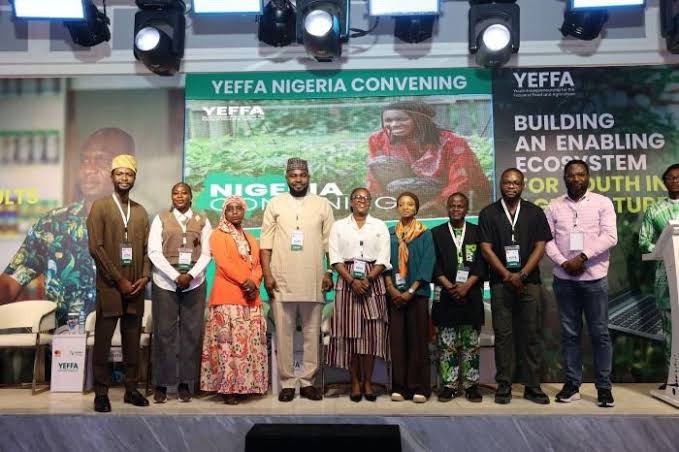
The six-year YEFFA programme will prioritize young women and agrifood businesses across six locations, but its success will depend on whether young entrepreneurs can overcome barriers to finance, markets, skills and post-harvest infrastructure.
Nigeria’s agricultural sector could become a stronger source of employment for young people, but turning that potential into sustainable livelihoods requires more than encouraging them to become farmers. Access to finance, reliable markets, practical skills and the infrastructure needed to preserve and sell produce remain critical to whether young agripreneurs can build businesses that survive beyond their early stages.
The Alliance for a Green Revolution in Africa (AGRA) and the Mastercard Foundation are seeking to address some of these challenges through the Youth Entrepreneurship for the Future of Food and Agriculture (YEFFA) programme, which targets 143,000 young Nigerians for dignified and fulfilling work across the agrifood sector.
The six-year initiative was introduced in Nigeria during a two-day convening in Abuja on October 7 and 8, 2026. It brought together young agripreneurs, government representatives, private-sector leaders and development partners to discuss the obstacles facing young people in agriculture and identify priorities for implementation.
Young women are expected to make up 70 per cent of the programme’s Nigerian beneficiaries, placing inclusion at the center of its employment ambitions.
The programme will operate in the Federal Capital Territory and Niger, Nasarawa, Kaduna, Ogun and Oyo states, focusing on maize, rice, soybean, horticulture and aquaculture value chains.
Its ambition is significant. However, the central question is not simply how many young people the programme intends to reach, but how many will gain the resources and opportunities to establish sustainable livelihoods and grow viable agribusinesses.
Why Youth Employment and Agriculture Need to Meet
Nigeria’s agricultural sector offers opportunities across production, processing, storage, transportation, distribution, marketing and technology. Yet young people can face considerable barriers when attempting to enter these areas or expand existing businesses.
For some, the challenge is the cost of acquiring land, equipment, seeds, fertilizer or livestock. Others struggle to find buyers, access suitable training or secure the capital needed to maintain operations between production and payment.
These difficulties can make agriculture appear risky, particularly to young people who lack collateral, established business networks or family resources to fall back on.
YEFFA seeks to widen access to dignified and fulfilling work by strengthening the systems that support youth participation in the agrifood economy. This approach is important because employment opportunities do not have to come exclusively from farming itself.
A young person may build a business supplying agricultural inputs, processing rice, growing vegetables, raising fish, transporting produce or connecting farmers with customers through digital platforms. Each activity can contribute to food supply and create opportunities for other people.
Nigeria’s programme priorities across maize, rice, soybean, horticulture and aquaculture provide several possible entry points for young entrepreneurs. The extent to which these opportunities become accessible will depend on the practical support available to participants.
Finance Is the First Major Test
At the Abuja convening, access to finance emerged as the leading concern among participating young agripreneurs.
A live digital poll found that 44 per cent of respondents identified financing as their top investment priority. Youth leadership and inclusion accounted for 20 per cent, while technology and innovation received 17 per cent.
These findings highlight a familiar challenge in agricultural enterprise development: having a viable business idea does not necessarily mean having the money to execute it.
Agribusinesses often require upfront investment, while returns may take weeks or months to materialize. Farmers must pay for inputs before harvesting, processors need equipment before increasing output, and traders require working capital to purchase produce. Unexpected weather conditions, fluctuating prices and delayed payments can further complicate cash flow.
Traditional lending arrangements may not adequately reflect these realities. Young entrepreneurs without substantial collateral or established credit histories can find it difficult to secure affordable financing.
During the programme discussions, participants called for patient financing tailored to the realities of agricultural businesses, including lower collateral requirements. The Managing Director and Chief Executive Officer of the Bank of Agriculture, Ayodeji Oludare Sotinrin, also pledged collaboration with AGRA and the Mastercard Foundation on a dedicated financing mechanism for YEFFA participants.
Such a mechanism could help address an important gap, but its practical value will depend on its eventual design.
Will financing be available as grants, loans or a combination of instruments? What eligibility conditions will apply? How affordable will repayment terms be, and will support reach entrepreneurs who are still developing their businesses?
These details matter because financing that is technically available but difficult to access may leave the most vulnerable entrepreneurs behind.
Why Mentorship and Market Access Matter Too
Interestingly, participants ranked mentorship and coaching ahead of affordable financing and practical skills training when asked to prioritize interventions that could strengthen their agribusinesses.
This finding suggests that young entrepreneurs need more than money to succeed. They also need guidance on managing costs, understanding customers, setting prices, maintaining records and making decisions that protect their businesses over time.
An entrepreneur who receives funding without the skills to manage it may struggle to generate enough revenue to sustain operations. Similarly, a farmer who increases production without securing buyers may be forced to sell at unfavorable prices or lose produce that cannot be stored properly.
Mentorship can help participants learn from experienced business owners and make more informed decisions. Practical training can help them improve production methods, financial management and product quality.
Market access is equally important. Young agripreneurs need connections to processors, distributors, retailers, institutional buyers and other businesses that can purchase their products consistently.
For YEFFA, connecting enterprise support to real market demand could help move beneficiaries beyond training and short-term activity towards more stable income generation.
The programme’s impact will be stronger if participants can demonstrate that they have built customer relationships, improved business performance and developed reliable routes to market.
Women’s Inclusion Must Go Beyond Participation Numbers
With young women expected to account for 70 per cent of the Nigerian beneficiaries, YEFFA has placed gender inclusion prominently within its targets.
This is important because women contribute to agricultural production, processing, trading and food distribution, yet may encounter additional obstacles when seeking finance, owning productive assets or accessing business networks.
A numerical target can help establish accountability, but representation alone does not guarantee equal opportunities.
Women participants will need access to the same quality of training, mentorship, financing and market connections required to build sustainable businesses. Programme design should also consider practical barriers that may affect participation, including mobility, care giving responsibilities, access to technology and the terms attached to financing.
Participants at the Abuja convening also called for deliberate inclusion of persons with disabilities and displaced young people. Their concerns underline the importance of designing support around different circumstances rather than assuming that all young entrepreneurs face identical challenges.
Transparent reporting on who receives support, what resources they access and what outcomes they achieve would help show whether the programme is delivering meaningful inclusion.
Post-Harvest Losses Could Undermine Business Growth
Another issue raised during the convening was the need to address post-harvest losses and improve infrastructure for handling agricultural produce.
For farmers and traders, producing or purchasing food is only part of the business. The produce must also be stored, transported and sold before its quality deteriorates.
Poor storage, inadequate processing facilities and limited aggregation infrastructure can reduce the amount of produce that reaches consumers in good condition. These losses affect business revenue, waste resources and can place additional pressure on food availability and prices.
Participants proposed shared, certified post-harvest and aggregation hubs that could help young entrepreneurs store produce, organize supply and connect with buyers. Other recommendations included agricultural insurance and the use of farm, market and financial data to help lenders and insurers better understand risks.
Such infrastructure could make a practical difference, particularly for young entrepreneurs who cannot afford to build their own storage or processing facilities.
However, facilities must be accessible, affordable and located where beneficiaries can use them. Their long-term operation also requires maintenance, reliable power where necessary, appropriate management and sufficient demand.
The programme will need to consider these operational realities if infrastructure investments are to remain useful after initial support ends.
Turning a Programme Target Into Measurable Results
YEFFA is part of a broader AGRA–Mastercard Foundation partnership supporting youth employment and more inclusive agrifood systems across Africa. Its Nigerian component provides an opportunity to address barriers affecting young entrepreneurs while strengthening the businesses and services that support food production.
But the target of 143,000 young people should be understood as an ambition, not evidence that the intended employment outcomes have already been achieved.
Measuring success will require clarity about what it means for a participant to be reached, trained, employed or supported into dignified and fulfilling work. These are different outcomes and should not be treated as interchangeable.
Useful measures could include the number of young people who secure employment, establish or expand businesses, access appropriate financing, increase revenue or maintain their livelihoods over time. Results should also be examined by gender, location and value chain to establish whether opportunities are reaching different groups.
The programme’s organizers will need to report on implementation progress and explain how lessons from participants are informing changes to the initiative. Young people should remain involved in decisions affecting the support they receive, rather than participating only at launch events or consultation meetings.
The next phase of YEFFA’s implementation will be particularly important in demonstrating how the priorities identified during the Abuja convening translate into operational plans and support on the ground.
Beyond Encouraging Young People to Farm
Nigeria does not only need more young people entering agriculture. It needs an agrifood economy in which they can build profitable businesses, access markets, develop relevant skills and earn reliable incomes.
YEFFA’s emphasis on finance, mentorship, inclusion and post-harvest infrastructure recognises that youth employment depends on the wider environment in which businesses operate.
If these components are coordinated effectively, the programme could help young Nigerians participate in agriculture as farmers, processors, service providers, innovators and entrepreneurs. It could also strengthen parts of the food system that connect production to consumers.
The real test, however, will be whether the programme’s commitments result in lasting opportunities rather than temporary participation.
For Nigeria’s young people, a sustainable livelihood means more than being introduced to an agricultural value chain. It means having the resources, knowledge and commercial relationships needed to keep working and growing.
The ambition to support 143,000 young Nigerians is an important starting point. Its lasting significance will depend on how many participants can turn that support into viable businesses, dignified employment and a stronger role in the country’s food system.
DON’T JUST ANNOUNCE YOUR IMPACT. PROVE IT.
CSR REPORTERS helps organizations verify, assess, document and communicate the real impact of their CSR and sustainability initiatives.
Project Verification | Beneficiary Feedback | Impact Assessment | Impact Storytelling | Stakeholder Engagement
Have an initiative worth documenting? Let us verify it. Document it. Tell the story.
Talk to CSR REPORTERS
enquiries@csrreporters.com
📞 Call/WhatsApp: 0803 401 2198 | 0903 329 6374 | 0905 024 4468 | 0803 209 8499
www.csrreporters.com