
CSR Personality of the Week: How Titilayo Oshodi Is Connecting Climate Action to Economic Growth
 csrreporters

For a city like Lagos, climate change is not an isolated environmental concern. It affects businesses, livelihoods, infrastructure and public spending. Flooding disrupts commercial activity, poor waste management creates health and environmental problems, while unreliable energy supply limits productivity. Yet, these challenges also present opportunities to rethink how the city creates economic value.
Titilayo Oshodi, Special Adviser to the Lagos State Governor on Climate Change and Circular Economy, is at the centre of this effort. Her work connects environmental responsibility with investment, enterprise development, job creation and infrastructure. Rather than treating climate action as an additional cost of development, she advocates making sustainability part of the state’s economic planning.
From Marketing and Entrepreneurship to Climate Leadership
Oshodi’s professional journey into climate governance was not conventional. A graduate of Economics from Olabisi Onabanjo University, she built experience in marketing communications, business development and entrepreneurship before entering public service.
She worked as Business Development Manager at Towncriers Limited and later established The Nook Café, a bistro and mobile bartending business. Her transition into public service followed her involvement in Governor Babajide Sanwo-Olu’s political campaign. She subsequently served as Senior Special Adviser on Administrative Matters and worked within the Office of the Chief of Staff.
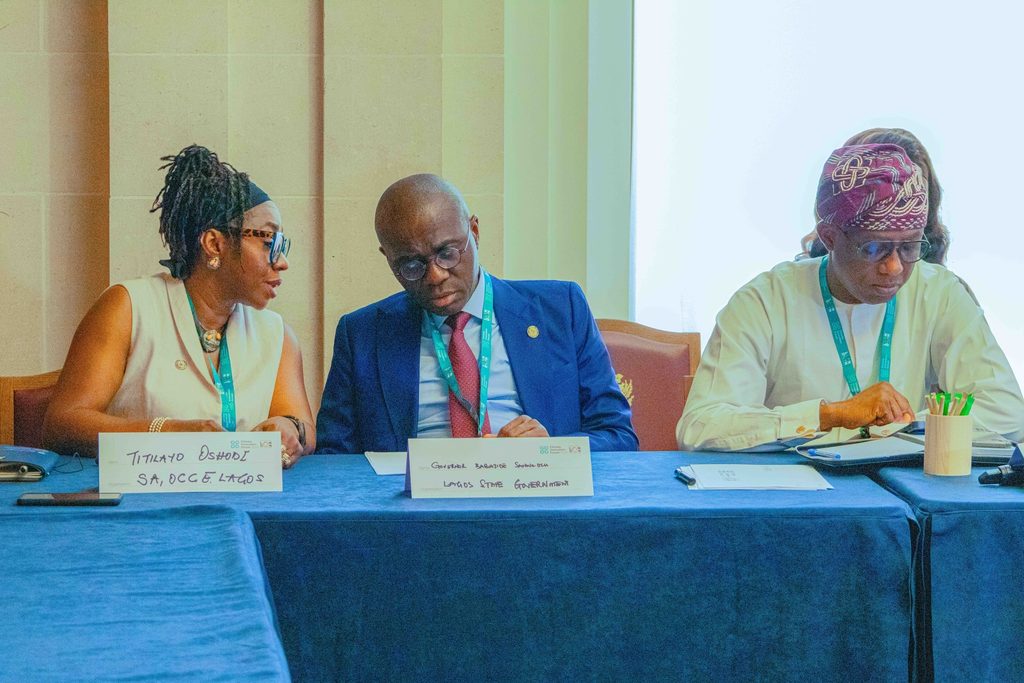
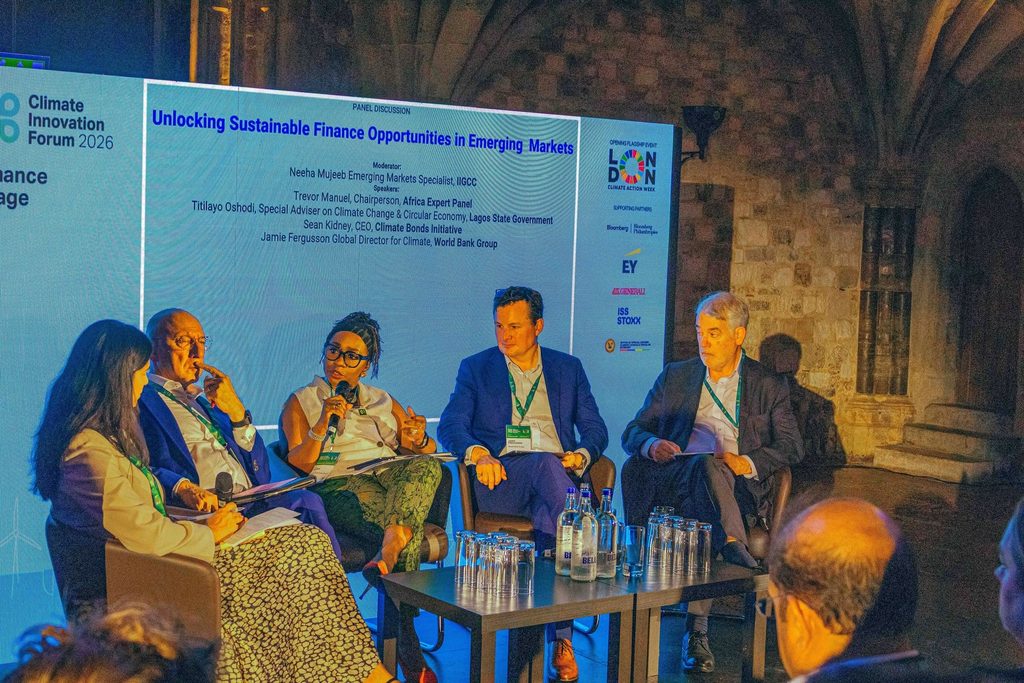
Her appointment to lead the state’s climate change and circular economy agenda introduced her to a different field. In an October 2025 profile published by THISDAY, Oshodi explained that climate change had not initially been among her professional interests. However, she embraced the opportunity and pursued further learning, including courses at Harvard Business School.
Her background offers an interesting perspective on her approach. Climate action requires more than technical policies and environmental awareness. It also needs effective communication, public participation and economic incentives that encourage people and businesses to change how they operate.
Turning Waste Into Economic Value
One of the clearest expressions of Oshodi’s approach is EcoCirculate, an initiative that encourages residents to exchange recyclable materials for incentives. The programme addresses a familiar Lagos problem. Much of the economic value in recyclable materials is lost when they are improperly disposed of or end up in landfills and waterways.
Through EcoCirculate, residents can exchange plastic bottles, cartons, metals, textiles and paper for incentives such as airtime, data and food items. Its seventh edition, held in Ojokoro in March 2026, attracted more than 500 residents. Reports indicate that the programme had facilitated the collection of nearly 39,000 tonnes of recoverable materials since its launch in 2024.

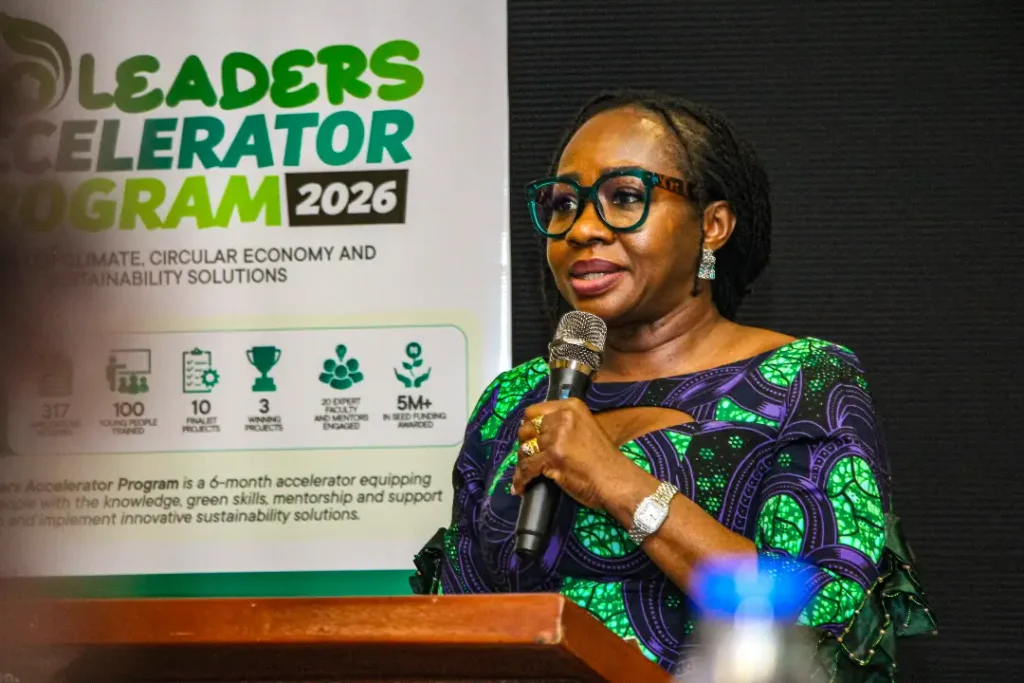
Beyond reducing waste, the initiative creates opportunities across the recycling value chain. Collectors, aggregators, recyclers and processing businesses can benefit when discarded materials are returned to productive use. Better organisation could also improve informal waste workers’ access to markets and create opportunities for small enterprises.
However, collection figures alone cannot establish long-term impact. Recyclable materials must reach processing facilities, find buyers and re-enter production. The programme’s success should therefore be measured by actual recycling outcomes and the livelihoods sustained.
Building Businesses Around Sustainability
Community participation alone cannot sustain a circular economy. Businesses must also find commercial reasons to participate. This is where the ECOnomy Lagos platform and ECOnomy Business Network become relevant. The initiatives seek to connect environmentally conscious enterprises with markets, funding opportunities and technical support.
The Office of Climate Change and Circular Economy reports that its business network connects more than 500 green businesses and entrepreneurs across Lagos.
The opportunities extend beyond recycling. Sustainable fashion, green technology, waste processing and resource recovery can create markets and employment. Nevertheless, small businesses need affordable financing, reliable infrastructure, consistent supplies and customers willing to pay for their products.
Oshodi’s approach recognises that sustainability becomes more attractive to businesses when it offers commercial value. This has implications for corporate responsibility. Companies can go beyond regulatory compliance and occasional community projects by reducing waste, improving resource efficiency and developing new products and revenue streams.
The challenge is creating an environment where these opportunities can grow into sustainable businesses rather than remain isolated initiatives.
Taking Lagos’ Climate Ambition to Investors
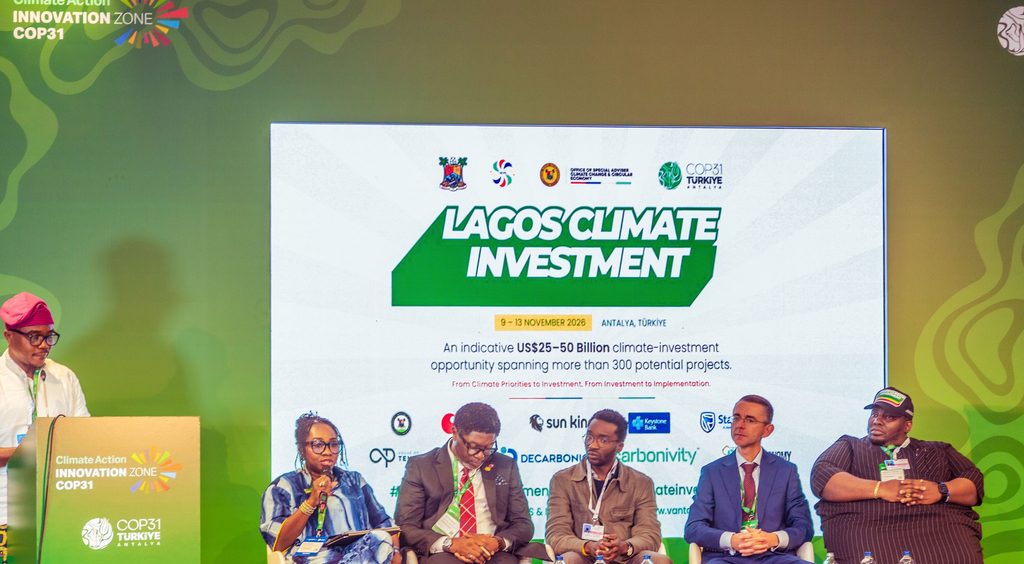
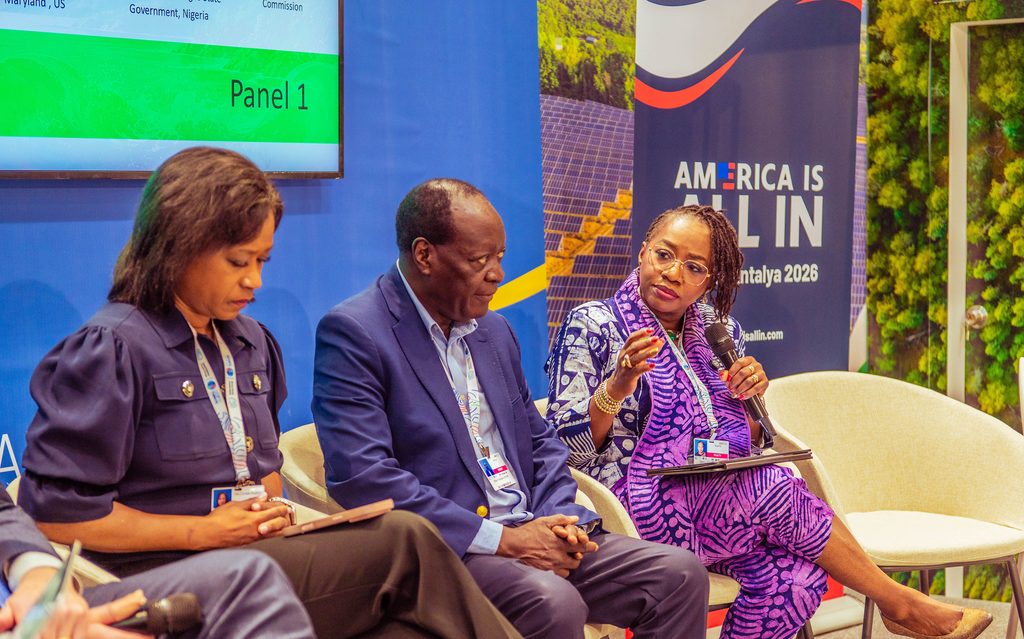
Oshodi’s responsibilities also extend into climate finance, which is increasingly important as African cities seek funding for resilient infrastructure. At COP31 in Antalya, Türkiye, Lagos presented an estimated investment opportunity of between $25 billion and $50 billion. This cuts across more than 300 potential climate projects.
The pipeline covers clean energy, clean cooking, water resources, flood mitigation, coastal protection, sustainable transportation, waste management, agriculture and green enterprise.
To coordinate these priorities, the state has developed a State-Determined Contributions Framework organised around five investment platforms. These cover clean energy and clean cooking; blue economy, water and climate resilience; circular economy and industrial decarbonisation; climate-smart infrastructure and urban transition; and climate innovation, food systems and green enterprise.
Another component is the Climate Defence and Catalytic Fund, launched in July 2026, with an ambition to mobilise up to $3 billion annually for low-carbon and climate-resilient infrastructure.
There have also been early developments following the COP31 engagement. Investors have expressed interest in potential partnerships across healthcare, solar energy, women’s empowerment and clean transportation.
These developments are encouraging, but the figures require context. The $25 billion to $50 billion represents the estimated value of potential projects, not investment already secured. Expressions of interest also do not amount to signed financing agreements or completed projects.
The next stage will require bankable projects, credible financial structures, transparent procurement and clear implementation responsibilities. Investors need confidence in commercial viability, while residents need assurance that the resulting investments will serve public interests.
Also Read: COP31 Collapses Without a Deal What Does This Mean for Africa’s Climate Future?
Making Climate Action Relevant to Households
Economic growth must also be assessed through residents’ everyday experiences. Climate initiatives should deliver benefits beyond government offices, financial institutions and large businesses.
Lagos’ clean-cooking programme offers one example. The state has distributed clean cookstoves in Makoko as part of a wider ambition to expand access to cleaner cooking alternatives.
These alternatives can reduce household exposure to harmful smoke and dependence on more polluting fuels. However, affordability, maintenance, fuel availability and sustained adoption will determine their long-term impact.
Flood mitigation and coastal protection are equally important. In a coastal megacity, flooding can damage homes, disrupt transportation, interrupt businesses and threaten livelihoods. Investment in resilient infrastructure therefore protects both communities and the economic activities that sustain them.
Climate finance should consequently be assessed not only by the capital attracted but also by the public value it delivers. Projects should be judged by the infrastructure they improve, the people they protect and the economic opportunities they create.
The Accountability Behind the Ambition
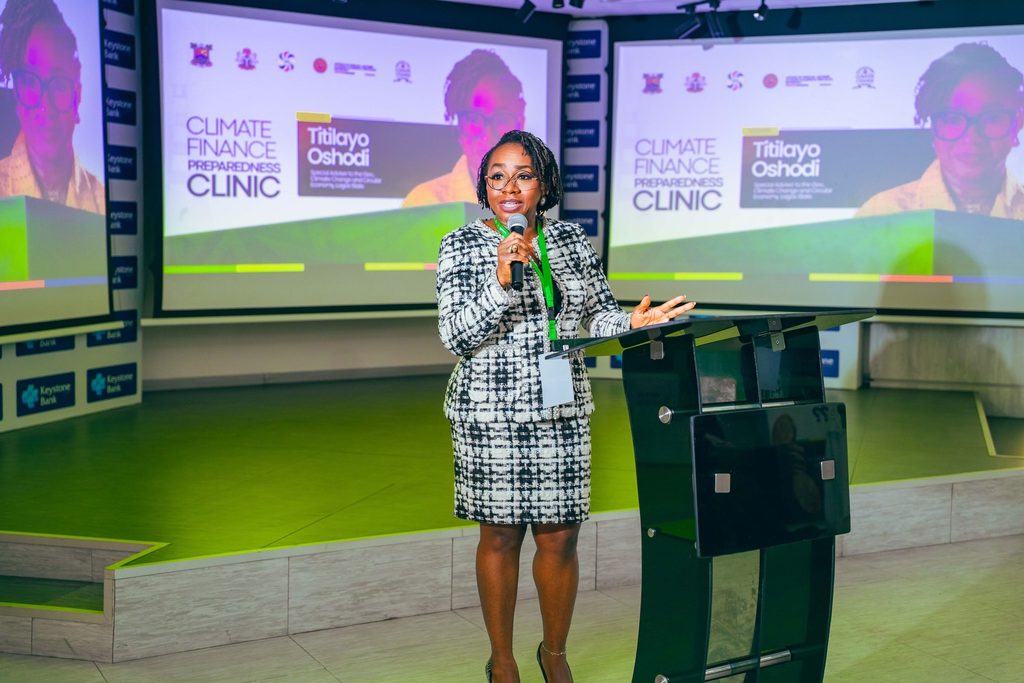
Titilayo Oshodi’s work brings together environmental management, business development, public policy and economic planning. Through community recycling initiatives, green business networks and climate investment programmes, Lagos is attempting to make sustainability relevant to different parts of its economy.
However, ambition must be matched by measurable results. How many green businesses have secured sustainable markets? How much recyclable material is actually processed and how many jobs created through these initiatives are sustained? Additionally, how much climate investment moves from a project pipeline into funded and completed infrastructure?
These questions will determine the strength of the state’s approach.
For Oshodi, the opportunity is to demonstrate that climate action can become a practical driver of economic development rather than another layer of government policy.
Ultimately, connecting climate action to economic growth requires more than investment announcements and greener business practices. It requires systems in which environmental responsibility creates economic value, protects livelihoods and improves living conditions.
That is the larger promise of the work Oshodi is pursuing, and the standard against which its results should be measured.
Stay with CSR Reporters for more stories examining the people, ideas and decisions shaping responsible business and sustainable development across Africa.
[give_form id="20698"]