Beyond the ₦300m Seizure: What Nigeria’s Sachet Alcohol Ban Means for Public Health and Livelihoods
 ONYINYECHI NWAIGBA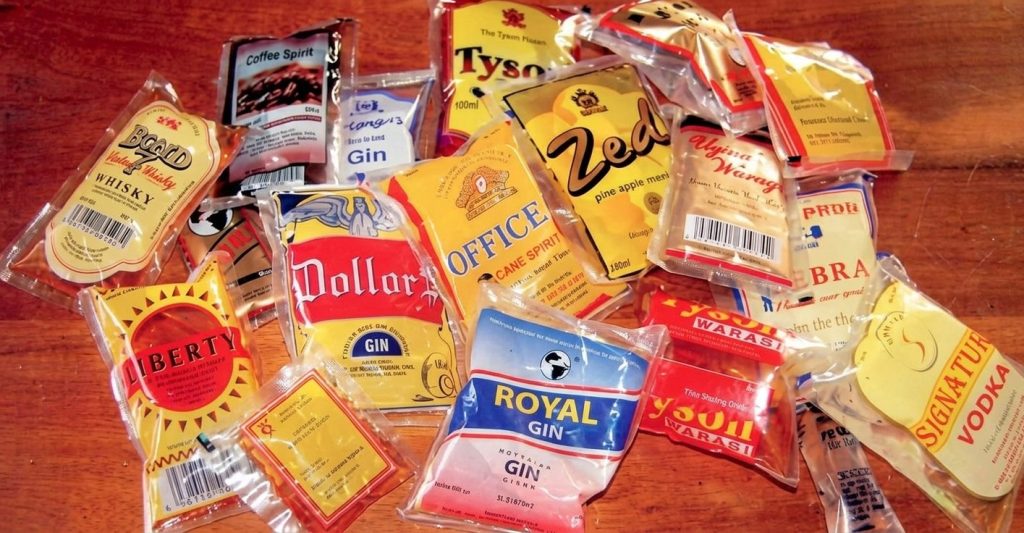
The latest seizure of alcoholic beverages worth an estimated ₦300 million in Lagos has brought Nigeria’s long-running sachet alcohol debate back into focus.
The National Agency for Food and Drug Administration and Control (NAFDAC) said its enforcement teams seized alcoholic drinks packaged in sachets and PET bottles below 200 milliliters during operations at Ile-Epo Market, Ojuwoye Market in Mushin and Oke-Arin Market on Lagos Island. Some distributors and retailers were also arrested.
For NAFDAC, the message is clear: the ban remains in force, and businesses that continue to manufacture, distribute or sell the prohibited products can expect enforcement action.
But behind the seized cartons and arrested traders is a more complicated question.
What happens when a public health intervention meets the livelihoods of thousands of people who have built businesses around the products being banned?
That question matters because Nigeria’s sachet alcohol policy is no longer simply about regulation. It sits at the intersection of public health, consumer protection, employment, small-business livelihoods and responsible business.
Why Nigeria banned sachet alcohol
The Federal Government’s ban covers alcoholic beverages packaged in sachets and alcoholic drinks in PET or glass containers below 200 milliliters.
The policy took effect on January 1, 2026, following years of discussions, consultations and extensions around the regulation. NAFDAC has consistently argued that the smaller packaging makes high-alcohol-content drinks cheap, easily accessible and easier to conceal, particularly for children, adolescents and young adults.
NAFDAC has also pointed to research on underage alcohol consumption.
According to findings presented by the agency in March, 54.3 per cent of minors and underage individuals surveyed obtained alcohol themselves, while 49.9 per cent patronized retailers selling sachets and small PET bottles. The agency also said 47.2 per cent of minors and 48.8 per cent of underage people who purchased alcohol themselves chose sachets because they were easy to conceal.
From a public health perspective, these concerns are significant.
The issue is not simply whether adults should be allowed to consume alcohol. It is whether packaging and pricing can make alcohol sufficiently accessible to vulnerable groups that regulation becomes necessary.
NAFDAC has therefore positioned the ban as a preventive public health measure rather than an attempt to shut down the alcohol industry.
The agency has also clarified that alcohol can still be produced and sold in approved packaging of 200ml and above.
But the ban has created another problem
While the public health argument is straightforward, the economic consequences are more complicated.
Nigeria has a large network of small retailers, distributors and informal businesses operating within consumer goods supply chains.
For many of these traders, alcoholic beverages are not simply products on a shelf. They are part of the daily cash flow that keeps their businesses running.
That is why the enforcement has generated protests from drink sellers and petty traders.
In September, Lagos-based retailers under the Concerned Drink Sellers and Traders Across Nigeria protested the enforcement of the ban, saying the confiscation of their stock had resulted in financial losses, mounting debts and uncertainty about their livelihoods.
Their concerns do not necessarily invalidate the public health objective of the policy.
But they highlight an important part of responsible regulation: what happens to people whose livelihoods are disrupted when a government changes the rules of an established market?
Public health cannot be separated from economic reality
A policy can have a legitimate social objective and still create economic pain.
That is particularly important in an economy where many small businesses operate with limited working capital.
A retailer who purchased prohibited products before the full enforcement of the ban may suddenly find that the inventory they expected to sell can no longer legally be placed on the market.
For a large company, that could mean writing off inventory.
For a small trader, it could mean losing the money needed to pay rent, repay a loan or restock other products.
This is where the conversation needs to move beyond whether the ban is right or wrong.
The more useful question is whether the transition can be managed in a way that protects the public while reducing unnecessary harm to legitimate businesses.
The responsibility of businesses
There is also a responsibility on manufacturers, distributors and retailers.
Once a product has been prohibited, businesses cannot continue treating the old market as though nothing has changed.
NAFDAC has repeatedly warned stakeholders across the supply chain to surrender remaining stocks of the affected products. The agency began nationwide enforcement in July, targeting markets, retail outlets, motor parks, bars and other distribution channels.
The latest Lagos operation suggests that the enforcement is moving deeper into the retail end of the supply chain.
That matters because regulation is only effective when businesses comply.
Manufacturers have a responsibility to adapt their product lines.
Distributors have to stop moving prohibited products.
Retailers have to understand what they can legally sell.
And consumers also have a role to play by understanding the risks associated with unregulated or prohibited products.
For companies in the alcohol industry, this is also a responsible-business issue.
Corporate responsibility cannot begin and end with charitable donations or community projects. It includes how businesses respond when their products, packaging or distribution practices create concerns for public health.
But what happens to affected traders?
This is where the policy conversation could become more constructive.
If the objective is to remove prohibited products from circulation, enforcement is necessary. But enforcement alone does not address the economic disruption experienced by small traders.
There is a case for clearer transition support and communication.
Retailers need to know what products they can replace the banned stock with.
Distributors need clarity about compliant alternatives.
Small businesses may need information on how to restructure their inventories.
And where government or industry programmes are available, affected businesses should be able to access them without navigating unnecessarily complicated processes.
The aim should not be to preserve a prohibited market.
Rather, it should be to help legitimate businesses transition into legal and sustainable activities.
A stronger approach would involve more than seizures
The ₦300 million seizure demonstrates the scale of products still circulating in the market months after the ban took effect.
But it also raises questions about how prohibited products continue to reach retailers.
If manufacturers have stopped producing the products, where is the remaining supply coming from?
Are distributors holding old inventory?
Are some manufacturers still producing them?
Are products being moved across state borders?
Are retailers knowingly taking the risk because consumer demand remains strong?
Answering these questions is important because repeated seizures treat the symptoms without necessarily eliminating the supply chain behind them.
Effective regulation requires enforcement, but it also requires traceability and accountability throughout the value chain.
Consumers are part of the equation
Demand is another part of the story.
NAFDAC has argued that the affordability, availability and concealability of small-format alcoholic beverages contribute to harmful consumption, particularly among younger people.
If consumers continue demanding prohibited products, however, enforcement becomes more difficult.
This makes public education important.
Nigeria needs more than warnings that certain products are banned. Consumers need to understand why the regulation exists, particularly the public health concerns around early and harmful alcohol consumption.
The government’s nationwide campaign involving NAFDAC, the National Orientation Agency and the Federal Competition and Consumer Protection Commission is one step in that direction.
The effectiveness of such campaigns will ultimately depend on whether the message reaches the communities where these products are sold and consumed.
The sustainability question
There is a broader sustainability lesson here.
A sustainable regulatory system should be able to protect public health without creating avoidable economic disruption.
That does not mean every business model should survive every regulatory change.
It means that when government introduces a major market intervention, the transition should be predictable enough for businesses and workers to adapt.
For the alcohol industry, this could mean stronger investment in compliant packaging, responsible marketing, age-verification systems and consumer education.
For retailers, it could mean moving towards other legal products or compliant alcohol formats.
For government, it means maintaining clear communication and consistent enforcement rather than allowing periods of uncertainty that encourage businesses to continue investing in prohibited products.
The real test is what happens next
The ₦300 million worth of alcoholic beverages seized in Lagos is a striking figure, but the seizure itself is not the end goal.
The real goal is to reduce harmful access to alcohol, particularly among vulnerable groups, while ensuring that the regulatory system is fair, clear and enforceable.
If the ban succeeds only in generating repeated seizures, arrests and protests, then the deeper market problem remains unresolved.
But if enforcement is combined with public education, responsible industry practices, clearer supply-chain controls and realistic pathways for affected businesses to adapt, the policy can produce a more sustainable outcome.
Nigeria’s sachet alcohol debate therefore needs to be viewed from more than one angle.
There is the child who may have easier access to alcohol because of its cheap and concealable packaging.
There is the manufacturer expected to comply with a new regulatory environment.
There is the distributor whose inventory has suddenly become illegal.
There is the small retailer whose working capital may be tied up in prohibited stock.
And there is the government regulator responsible for protecting public health.
All of these realities exist at the same time.
The challenge is not choosing between public health and livelihoods as though one must automatically cancel out the other.
It is building a regulatory system that takes both seriously.
For now, NAFDAC’s latest Lagos operation sends a clear signal that enforcement is continuing.
The bigger question is whether Nigeria can turn that enforcement into lasting public health gains while ensuring that businesses and workers affected by the policy are not simply left to absorb the cost of the transition.
[give_form id="20698"]