CSR Personality of the Week: Emomotimi Agama Pushes for Sustainability That Investors Can Verify
 csrreporters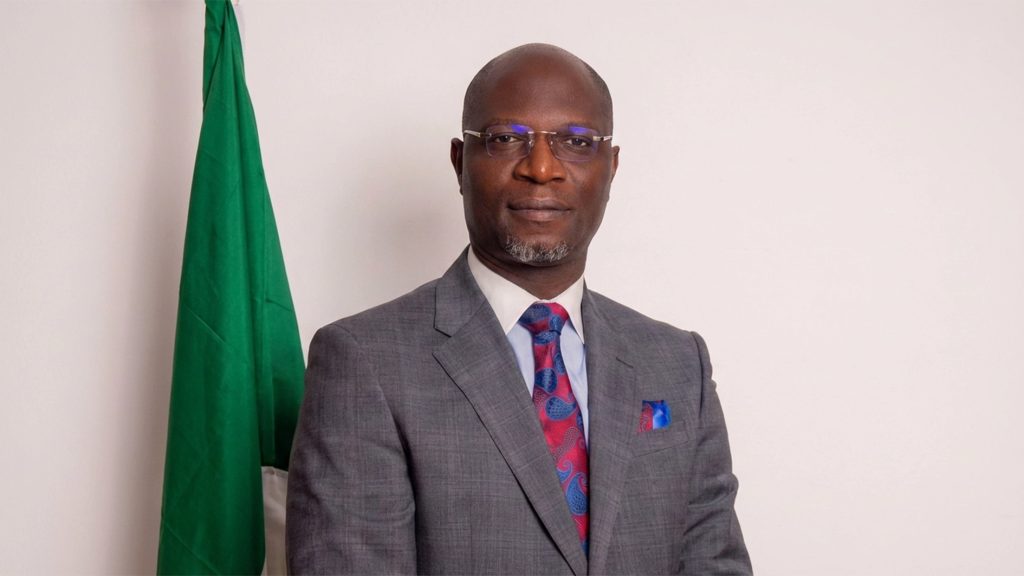
Nigeria’s listed companies face a deadline on October 15. By that date, each public company must show the Securities and Exchange Commission (SEC) how it will report on sustainability. The requirement comes from a circular dated September 23, 2026, issued under the Investments and Securities Act 2025. The directive marks a firm shift from voluntary reporting to formal accountability. Leading that shift is Dr. Emomotimi Agama, the SEC’s Director-General.
From the Lecture Room to the Regulator’s Desk
Agama did not start out as a regulator. He began his career at the University of Benin, working as an accountant and part-time lecturer between 1993 and 2002. He then joined the SEC, where he rose steadily. His roles included Head of Registration, Exchanges and Market Infrastructure, and Head of Public Offerings.
Emomotimi Agama also served on the SEC committee that guided Nigeria’s adoption of IFRS. That background matters today. The same standards he helped introduce now underpin the country’s sustainability reporting push. He later led the Nigerian Capital Market Institute, the SEC’s training arm.
President Bola Tinubu appointed him Director-General on April 19, 2024. His credentials are broad. He holds a PhD in Economics, and he is a chartered management accountant and a chartered stockbroker. He is also an IFC-Milken Institute fellow. Beyond the regulator’s desk, he chairs the board of trustees of the Purity Rose Orphanage Home.
The Argument for Disclosure
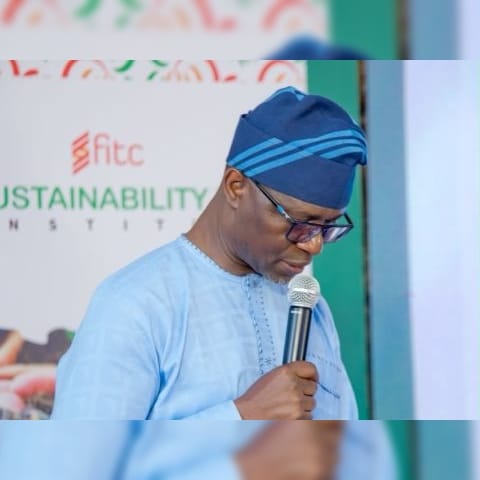
Agama’s position became clear at the FITC Sustainability and ESG Conference in Lagos on July 10, 2026. He announced that sustainability reporting will become mandatory for large public interest entities from 2027. Other public interest entities will follow in 2028 and small and medium-scale enterprises by 2030. The regime is aligned with the ISSB framework, including IFRS S1 and IFRS S2.
His reasoning is simple. Institutional investors now treat ESG performance as a factor in deciding where capital goes. In his view, disclosure is the cost of entering that conversation. He was equally direct about the risk. He warned that companies with weak disclosures “risk missing significant global capital flows.”
Furthermore, he tied the reform to market growth. He noted that market capitalisation had risen from about N130 trillion to nearly N160 trillion, while assets under management had passed N9 trillion. To channel that capital, he said the SEC is promoting green, infrastructure and municipal bonds. In other words, he treats sustainability reporting as market infrastructure, not paperwork.
What the October 15 Deadline Demands
The circular is specific. Companies must set out board-level oversight of sustainability reporting. They must also run a gap assessment against IFRS S1 and S2. In addition, each firm needs an implementation roadmap with clear timelines. Companies must also describe their internal control and assurance mechanisms, their training plans, and the expected year of their first sustainability report.
Notably, the demand starts at the top. By requiring board oversight, the SEC is saying that sustainability belongs in governance, not only in a communications department. This is where reporting stops being a glossy annual exercise. A board that signs off on a roadmap owns the promise.
Why This Matters
For practitioners, the implications are direct. For years, reporting in Nigeria leaned on stories, photographs and pledges. Regulators are now asking for structured, comparable and auditable data. Consequently, community projects will increasingly need to show measurable results.
This mirrors a theme CSR Reporters has pressed repeatedly. Our Independence-season editorial argued that Nigeria needs receipts from corporate CSR. Similarly, our ranking of banks on verified CSR disclosure quality showed how uneven reporting still is. Recent reports suggest banking is improving its ESG compliance, while insurance lags significantly. Agama’s deadline will test which sectors are ready.
Timelines have not always matched across regulators, a point CSR Reporters has examined before. This profile follows the SEC’s own schedule, since it is the one Agama has announced.
RANKED: Top 8 Verified CSR Disclosure Quality Among Nigerian Banks
The Test Ahead
Still, a mandate is only the first step. Dr. Eustace Onuegbu, our recent Personality of the Week, argues that Nigeria’s sustainability problem is implementation, not legislation. That warning applies here. A circular can compel a plan, but only enforcement can compel delivery. Therefore, the real measure of Agama’s push will come after October 15.
Three questions deserve attention. How many companies will file credible plans, and how many will file thin ones? Will the SEC publish findings that help the market compare companies? Finally, what will it do about firms that miss the deadline? The answers will show whether disclosure becomes a real price of entry or stays a formality.

Why Agama Is Our Personality of the Week
Agama earns this recognition for a simple reason. He is moving ESG reporting from aspiration to obligation, and he is doing it through the language investors understand: capital. Moreover, he is doing it with a deadline that is days away, not years. Whether the reform succeeds will depend on boards, auditors and regulators following through. Yet the direction is set, and Nigerian companies now have a date by which to show their plans.
[give_form id="20698"]