Beyond the Gas Terminal: Can Kenya’s LPG Investment Make Clean Cooking Affordable for Millions?
 ONYINYECHI NWAIGBA

Asharami Synergy Kenya is developing a 30,000-tonne LPG terminal in Mombasa as part of Kenya’s ambition to expand access to cooking gas to 10 million households by 2028. But the bigger test will be whether improved supply infrastructure translates into affordable energy, healthier homes and meaningful economic opportunities.
For millions of African households, the decision about what to cook with is not simply a matter of preference. It is shaped by income, fuel availability, distance to markets and the cost of purchasing cooking equipment. In many communities, firewood and charcoal remain the most accessible options, even when families understand the health and environmental consequences of using them.
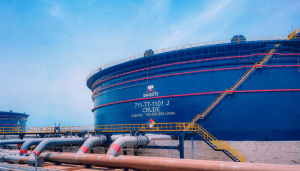
Kenya is attempting to change this reality through an ambitious expansion of liquefied petroleum gas (LPG) infrastructure. One of the latest investments supporting that effort is a 30,000-metric-tonne LPG import, storage and handling terminal being developed by Asharami Synergy Kenya Limited, a subsidiary of Sahara Group, in Changamwe, Mombasa.
The project is expected to strengthen the country’s ability to receive and store larger quantities of cooking gas, improve supply reliability and support the government’s ambition to provide 10 million households with access to LPG by 2028.
However, the significance of this investment goes beyond the construction of a storage facility. It raises a much larger question about Africa’s clean cooking transition: how can governments and businesses ensure that cleaner cooking options are not only available but affordable and practical for ordinary households?
Kenya’s clean cooking challenge
Kenya’s dependence on traditional cooking fuels remains substantial. According to the country’s 2022 Demographic and Health Survey, approximately 68.5 per cent of households, representing about 9.1 million households, relied primarily on traditional cooking fuels.
The challenge is particularly pronounced in rural communities. About 7.4 million of these households were in rural areas, compared with approximately 1.7 million in urban areas. Firewood remains a major cooking fuel, while charcoal and kerosene also contribute to household energy use.
This dependence has consequences that extend beyond the kitchen.
Smoke produced by burning traditional fuels can expose household members to harmful pollutants, particularly in poorly ventilated cooking spaces. Women and children often bear a disproportionate share of this exposure because of their roles in household cooking and fuel collection.
The time spent gathering firewood can also limit opportunities for education, paid work and other productive activities. At the environmental level, continued demand for fuelwood can contribute to pressure on forests and surrounding ecosystems, particularly where harvesting is not managed sustainably.
The challenge is also visible in public institutions. Kenya estimates that approximately 11,000 schools still rely on firewood for cooking. For institutions preparing meals for large numbers of pupils, the choice of cooking fuel affects operating costs, kitchen conditions and the resources available for other priorities.
Expanding access to cleaner cooking solutions is therefore connected to public health, education, environmental protection and household economic wellbeing.
What Asharami Synergy’s investment could change
The planned terminal will occupy approximately 23.19 acres at the Kenya Petroleum Refineries Limited facility in Changamwe.
Its 30,000-metric-tonne capacity is intended to improve the country’s LPG import, storage and handling infrastructure. According to Asharami Synergy, the additional capacity will make it possible to receive larger LPG cargoes, improve vessel discharge efficiency and reduce shipping-related costs, including demurrage.
These improvements could strengthen the supply chain between international LPG suppliers and the distributors responsible for delivering cooking gas to businesses and households.
For a country seeking to expand LPG adoption, dependable supply infrastructure is important. Even where households are willing to switch from firewood or charcoal, inconsistent availability and distribution challenges can discourage sustained use.
The project could also strengthen Mombasa’s position as a regional energy distribution centre. Asharami has indicated that the facility could support markets across East and Central Africa, including Uganda, Rwanda, Burundi, South Sudan and eastern Democratic Republic of Congo.
This regional dimension could create additional opportunities for trade, logistics and economic activity. However, the scale of these benefits will depend on the terminal’s eventual operations, distribution arrangements and the development of markets beyond Kenya.
The project is also expected to create employment opportunities for residents of Changamwe. Asharami has indicated plans to work with government agencies, regulators and local technical institutions to provide internships, industrial attachments and training in LPG handling, engineering and safety.
If implemented effectively, these commitments could help local residents gain technical skills relevant to the energy industry rather than limiting the community’s involvement to temporary construction employment.
Infrastructure alone will not make cooking gas affordable
Perhaps the most important question surrounding the project is whether increased storage capacity will translate into lower prices for consumers.
Additional infrastructure can reduce supply bottlenecks and improve the efficiency of imports and distribution. It may also encourage greater competition among market participants.
However, a larger LPG terminal does not automatically guarantee cheaper cooking gas.
Retail prices are influenced by several factors, including international LPG prices, shipping expenses, exchange rates, taxes, transportation costs and distribution margins. The cost of cylinders, regulators and cooking appliances also creates an initial financial barrier for households that have never used LPG.
For families living on irregular or low incomes, even the cost of refilling a cylinder can determine whether they continue using gas or return to firewood and charcoal.
This is particularly relevant in rural communities, where distribution networks may be limited and transportation costs can make LPG more expensive or difficult to access.
Kenya’s National Cooking Transition Strategy recognises that expanding supply must go hand in hand with addressing affordability, distribution and consumer awareness. Its approach also considers different clean cooking technologies, including LPG, electricity, bioethanol and other suitable alternatives.
The implication is clear: clean cooking policies cannot succeed through infrastructure investment alone. They must also address what households can afford, what is available in their communities and which solutions are practical for their cooking needs.
The environmental and public health opportunity
A transition from traditional biomass fuels to LPG could deliver important public health benefits, particularly where households currently cook with firewood and charcoal in poorly ventilated spaces.
LPG generally produces fewer harmful indoor air pollutants than these traditional fuels when used correctly. Reducing dependence on firewood may also help ease pressure on forests and other natural resources.
Yet it is important to understand the limits of this transition.
LPG is a fossil fuel. Although it can offer a cleaner cooking option than traditional biomass, it is not a renewable energy source and does not represent a zero-emission solution. Its extraction, transportation, distribution and combustion all have environmental implications.
For this reason, expanding LPG access should form part of a broader clean cooking strategy rather than become the only measure of progress.
Governments and businesses must continue to evaluate other suitable options, including electric cooking, sustainably produced bioethanol and biogas, taking into account electricity reliability, local resources, affordability and household needs.
The objective should be to reduce the health and environmental harms associated with traditional cooking while building a more diverse and sustainable household energy system.
What does the investment mean for local communities?
The benefits of a major energy project should not be measured exclusively by its storage capacity or commercial value. The communities hosting the infrastructure should also experience meaningful economic and social benefits.
For Changamwe, this means examining the quality and duration of employment opportunities, the accessibility of technical training and the extent to which local businesses can participate in the project’s supply chain.
Asharami’s proposed internships and technical training initiatives offer an opportunity to develop local expertise in engineering, energy handling and safety. Their value, however, will depend on how many residents can participate, the quality of the training and whether the skills lead to meaningful employment.
There is also an important responsibility around environmental and operational safety. LPG is highly flammable and requires strict standards for storage, transportation and handling. Effective regulation, emergency preparedness, environmental monitoring and transparent communication with host communities will be essential throughout the facility’s construction and operation.
Responsible investment must therefore consider both the economic opportunities created by the project and the potential risks experienced by surrounding communities.
Lessons for Nigeria and the wider African energy transition
Kenya’s investment offers a useful point of reflection for other African countries, including Nigeria, where access to affordable and reliable cooking energy remains an important development challenge.
Nigeria has significant natural gas resources, yet access to cleaner cooking options is still uneven. Many households continue to depend on firewood, charcoal and other traditional fuels, particularly in rural and lower-income communities.
The experience of Kenya highlights an important lesson: having energy resources does not automatically guarantee that households can access or afford them.
Infrastructure, distribution networks, consumer purchasing power, safety standards and supportive government policies all influence whether cleaner cooking solutions become part of everyday life.
For businesses operating in the energy sector, this creates an opportunity to look beyond the commercial supply of fuel and consider the wider development outcomes of their investments.
Companies can contribute through infrastructure development, local employment, technical training, responsible operations and partnerships that address the affordability gap. Governments, in turn, must create policies that encourage investment while protecting consumers and ensuring that underserved communities are not left behind.
Measuring success beyond the terminal
Asharami Synergy’s 30,000-tonne LPG terminal represents an important infrastructure investment within Kenya’s broader clean cooking ambitions. Its potential value lies in strengthening supply, supporting regional distribution and contributing to the country’s target of expanding LPG access to 10 million households by 2028.
But the project should ultimately be assessed by what happens beyond the facility.
Will LPG become more affordable? Will distribution reach rural households that currently depend on firewood? Will local residents gain lasting employment and technical skills? Will schools and other public institutions benefit from more reliable and accessible cooking energy?
These are the questions that will determine whether the investment produces meaningful social impact.
For now, the terminal is a planned development, and the household access target remains an ambition rather than an achieved result. Its contribution will become clearer as construction progresses and the infrastructure enters operation.
Africa’s clean cooking transition needs more than new facilities and ambitious targets. It requires investments that connect energy supply to the everyday realities of households, schools, businesses and communities.
Ultimately, the success of Kenya’s LPG expansion will not be measured only by how much gas the country can store, but by how many people can access cleaner cooking without being priced out of it.
DON’T JUST ANNOUNCE YOUR IMPACT. PROVE IT.
CSR REPORTERS helps organisations verify, assess, document and communicate the real impact of their CSR and sustainability initiatives.
Project Verification | Beneficiary Feedback | Impact Assessment | Impact Storytelling | Stakeholder Engagement
Have an initiative worth documenting? Let us verify it. Document it. Tell the story.
Talk to CSR REPORTERS
enquiries@csrreporters.com
📞 Call/WhatsApp: 0803 401 2198 | 0903 329 6374 | 0905 024 4468 | 0803 209 8499
www.csrreporters.com