ONYINYECHI NWAIGBA
Corporate social responsibility should be about more than launching projects, distributing resources and documenting achievements. Its real value lies in whether communities continue to experience meaningful benefits long after the publicity, funding and corporate attention have moved elsewhere.
A newly renovated school is unveiled. Photographs are taken, company representatives address the gathering, beneficiaries express their appreciation and the organisation publishes an announcement celebrating its contribution to education.
A few months later, the school begins experiencing maintenance challenges. Some of the facilities are no longer functioning as expected, essential resources are becoming difficult to replace, and the community is left wondering what happens next.
The project was completed. The announcement was published. The photographs were shared. But has the intervention created something the community can depend on?
This is a question that deserves greater attention in conversations about Corporate Social Responsibility (CSR) in Nigeria.
Across the country, businesses invest in education, healthcare, environmental protection, youth empowerment, infrastructure and community development. These interventions can address genuine needs and improve access to essential services.
However, there is an important distinction between delivering a project and creating lasting value.
A successful CSR initiative should not be judged exclusively by what happens during its launch or implementation. Its significance should also be reflected in what happens after the organisation has completed its immediate responsibilities and moved on to other priorities.
In other words, what remains when the cameras leave?
The Problem with Short-Term Corporate Interventions
Many CSR initiatives are designed around clearly defined activities, budgets and implementation periods. An organisation identifies a need, allocates resources, engages beneficiaries, completes the intervention and communicates the results.
This approach can be useful, particularly when responding to urgent community needs. However, it becomes problematic when the completion of an activity is treated as evidence of long-term success.
Consider a company that provides computers to a public school. The intervention may initially improve access to digital learning, but what happens when the computers require repairs? Is there a reliable electricity supply? Are teachers adequately equipped to incorporate the technology into their lessons? Is there a plan for replacing damaged equipment?
Without consideration for these questions, an intervention that begins with considerable promise may gradually lose its usefulness.
The same challenge applies to healthcare facilities, water projects, agricultural support programmes and other community investments.
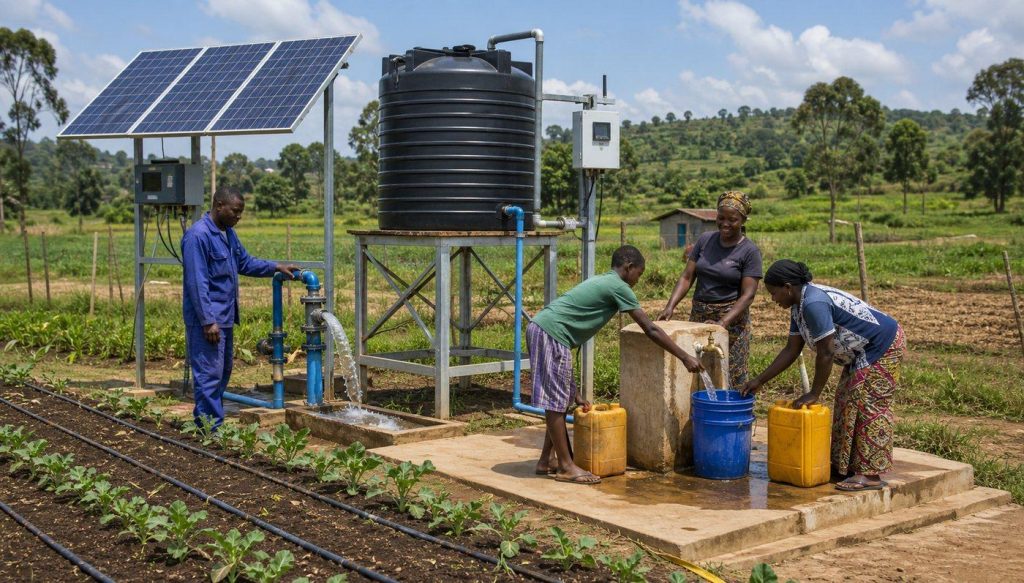
A borehole may provide clean water at the point of commissioning, but its long-term value depends on maintenance, access to spare parts and an arrangement for addressing technical problems.
A company may establish a vocational training programme, but the benefits could be limited if participants have no access to employment opportunities, business support or the resources needed to apply their newly acquired skills.
These examples demonstrate why the completion of a CSR project should not automatically be confused with the achievement of its broader objectives.
Communities Need More Than Corporate Donations
Corporate donations and charitable interventions can provide immediate relief, particularly in communities facing significant social and economic challenges.
However, sustainable development requires more than the transfer of resources from businesses to beneficiaries.
It requires understanding the conditions that created the need in the first place and considering how communities can continue addressing those needs.
For instance, providing agricultural equipment to farmers can improve their capacity to work, but the intervention becomes more valuable when accompanied by relevant technical knowledge, access to markets, maintenance support and opportunities to strengthen productivity.
Similarly, constructing a healthcare facility is an important contribution, but the availability of trained personnel, medical supplies, operational funding and functioning equipment will determine whether residents can continue accessing the services.
This is where community participation becomes particularly important.
People who live in the communities being served should have a meaningful role in identifying priorities, shaping interventions and determining how projects can remain functional.
When communities are involved from the beginning, businesses are more likely to understand local realities and develop initiatives that respond to actual needs rather than assumptions about what beneficiaries require.
Community ownership also creates opportunities for local stakeholders to participate in maintaining and protecting the resources introduced through corporate interventions.
The objective should be to build something communities can sustain, rather than creating permanent dependence on the organisation that initiated the project.
Sustainability Begins Before a Project Is Launched
One of the most important considerations in designing responsible CSR programmes is what happens after implementation.
This means sustainability cannot be treated as an additional consideration introduced towards the end of a project. It should inform the planning process from the beginning.
Before committing resources to an intervention, organisations should consider several important questions.
Who will maintain the project?
Infrastructure, equipment and facilities require continuous attention. Businesses should establish realistic arrangements for maintenance, repairs and operational responsibilities.
Does the community have the capacity to sustain it?
A project may introduce resources that require specialised knowledge or technical support. Beneficiaries and relevant local institutions should be equipped to manage these resources effectively.
What happens when corporate funding ends?
Organisations should consider whether the intervention can continue through community participation, institutional support, government involvement or other sustainable arrangements.
How will long-term benefits be evaluated?
Monitoring should extend beyond project completion. Businesses need ways to understand whether their interventions remain useful and whether the intended benefits are being sustained.
These considerations do not mean every CSR project must continue indefinitely or that businesses must assume responsibility for every challenge within a community.
Rather, they encourage more realistic planning and a clearer understanding of the responsibilities associated with corporate interventions.
Why Community Engagement Should Not End at Project Completion
Another important issue is the relationship between businesses and the communities they serve.
In some instances, community engagement is most visible during project launches, donation ceremonies and other official activities. Yet, the relationship between an organisation and its beneficiaries should not be limited to the period when a project is being introduced.
Regular engagement provides an opportunity to understand whether an intervention is meeting its objectives, identify emerging challenges and make necessary adjustments.
It also gives beneficiaries an opportunity to communicate their experiences rather than being represented exclusively through corporate reports and publicity materials.
For example, a company supporting a community education programme may initially focus on improving access to learning materials. Continued engagement could reveal additional challenges, such as inadequate classroom facilities, teacher shortages or difficulties affecting students’ attendance.
Such feedback can help the organisation understand where further support may be useful and whether the original intervention needs to be adapted.
More importantly, it reinforces the idea that communities are active participants in development, not simply recipients of corporate generosity.
The Business Case for Lasting Social Impact
Creating sustainable community interventions is not only beneficial to beneficiaries. It also makes good business sense.
Businesses operate within social and economic environments that influence their long-term performance. The availability of skilled workers, functioning infrastructure, healthy communities and stable relationships with stakeholders can all affect business operations.
Companies that invest in meaningful community development can contribute to strengthening these conditions.
For organisations operating in host communities, consistent engagement and responsible investments can also help build trust and improve relationships with residents.
In addition, a stronger approach to sustainability can improve how businesses identify social and environmental risks, allocate resources and evaluate the long-term value of their investments.
However, these benefits are more likely to emerge when CSR is approached as a sustained business responsibility rather than an occasional charitable activity.
The objective should not be to undertake projects simply because they create positive publicity or improve corporate reputation. It should be to develop interventions that address genuine needs while contributing to stronger relationships between businesses and the societies in which they operate.
Moving Beyond Project Launches to Lasting Development
For Nigerian businesses, the next stage of corporate responsibility should involve paying closer attention to the entire life cycle of their social investments.
This includes identifying community needs, designing relevant interventions, involving beneficiaries, establishing maintenance arrangements, monitoring outcomes and evaluating long-term results.
It also requires a willingness to acknowledge when projects encounter difficulties and make improvements where necessary.
Not every intervention will produce the intended results immediately. Some may require additional investment, adjustments or collaboration with public institutions and development organisations.
What matters is whether businesses approach these challenges with the same seriousness they bring to project announcements and implementation.
The credibility of CSR should not depend on how impressive an intervention looks when it is unveiled. It should also depend on whether the intervention continues to serve its intended purpose.
SISA 2026: Recognising Impact That Goes Beyond Appearances
The question of what constitutes meaningful corporate impact is central to the broader conversation that the Social Impact and Sustainability Awards (SISA) 2026 seeks to advance.
As businesses increasingly position themselves around sustainability and social responsibility, there is a growing need to recognise contributions that demonstrate genuine value to society.
This year’s SISA will feature the unveiling of the Nigeria CSR Impact Ranking, an independently verified assessment examining corporate responsibility and impact across Nigerian companies.
The event will also feature the Social Impact and Sustainability Awards, celebrating organisations and individuals contributing to responsible business and sustainable development, alongside the Africa Sustainability Summit.
Under the theme, “From Impact to Accountability: Defining Credible Sustainability in Africa,” the summit will provide a platform for conversations about the standards, expectations and practices needed to strengthen corporate sustainability across the continent.
SISA 2026 will hold on November 29, 2026, at the MUSON Centre, Onikan, Lagos.
As the conversation around corporate responsibility continues to evolve, one principle deserves to remain central: communities should experience the benefits of corporate interventions long after the organisations that introduced them have moved on.
A successful CSR project should leave behind more than photographs, publicity materials and a record of funds spent.
It should leave behind stronger institutions, improved opportunities, functioning infrastructure, empowered people and communities better equipped to sustain their progress.
Because the true legacy of a CSR project is not what was celebrated on the day it was launched, but what continues to make a difference years after the celebration is over.
SISA 2026: Rewarding the Best, Inspiring the Rest.
[give_form id="20698"]