


 ROSEMARY IMOBHIO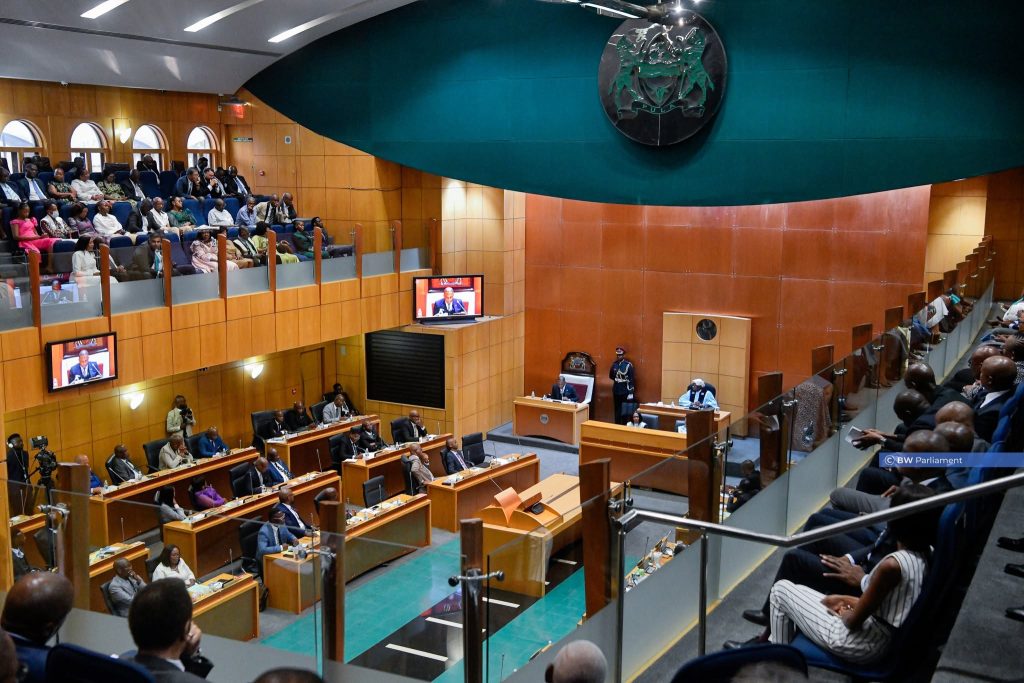
Botswana’s government has confirmed to parliament that it has been developing a National Sustainability Framework since September 2025. The initiative is designed to align the country’s development path with the United Nations Sustainable Development Goals and Vision 2036, Botswana’s long-term national blueprint. At the same time, it will incorporate global Environmental, Social and Governance standards, the reporting and risk criteria that increasingly determine where international capital flows.
A multi-sectoral committee led by the National Planning Commission is coordinating the process. According to the parliamentary briefing, a National ESG Strategy is expected to be finalised within the current financial year. Although the announcement was procedural in tone, it signals something larger. Botswana is attempting to formalise sustainability as a pillar of economic policy rather than a voluntary add-on for a handful of listed companies.
This matters because Botswana has long depended on diamond mining for revenue, and that model is under strain. Global demand for natural diamonds has softened in recent years, partly due to competition from lab-grown alternatives.
The country’s National Development Plan 12 (2025-2030) already emphasises economic diversification. A national ESG strategy fits neatly into that diversification agenda. It could help unlock new financing streams for tourism, renewable energy, agriculture and manufacturing.
Why Now, and Why It Matters
Timing is central to understanding this move. Across Africa, momentum around climate finance and green bonds is building quickly. Africa’s green bond market grew from a standing start in 2013 to roughly $9.6 billion raised through about 76 issuances between 2013 and 2025. However, this still represents less than one percent of global green bond issuance.
Meanwhile, continental leaders enter 2026 amid record climate finance pledges and expanding ESG regulation. Even as the funding gap remains stark. The continent needs an estimated $225 billion a year for climate resilience but receives only a fraction of that amount.
Botswana therefore faces a familiar African dilemma. Global capital increasingly favours jurisdictions with credible, standardised ESG frameworks. Yet building that credibility requires institutional capacity that many governments are still developing.
“Investors are no longer asking whether a country has sustainability ambitions; they are asking whether those ambitions are backed by measurable, verifiable systems,” says a sustainable finance expert focused on emerging markets. “Botswana’s move to formalise its approach is a response to that shift in investor expectations.”
Furthermore, neighbouring South Africa recently published a treasury framework for sustainable finance instruments. It aims to raise roughly $228 billion to fund its climate transition. That kind of regional activity raises the bar. Botswana risks falling behind if it does not present a coherent, investor-facing sustainability story of its own.
The Access and Cost Problem
Parliament was also told that Botswana faces real obstacles in accessing green finance. This is not unique to Botswana. Sub-Saharan Africa’s private and public sectors have historically captured only a sliver of global green capital. They are most times hampered by thin capital markets, limited credit ratings and a shortage of bankable, well-documented projects. Consequently, many governments end up competing for the same concessional funding pools rather than attracting the deeper pools of private, commercial capital.
There is also a cost problem at the company level. Individual firms, particularly smaller ones, often lack the technical expertise to navigate ESG disclosure requirements on their own. As a result, they either hire expensive external consultants, skip reporting altogether, or produce disclosures that do not meet the standards international investors expect.
“When every company has to reinvent ESG compliance from scratch, you get duplication, inconsistency and, frankly, exhaustion,” notes an ESG consultant who has advised firms across Southern Africa. “A national framework, done well, gives companies a shared reference point instead of forcing each one to solve the same puzzle alone.”
What the Framework Could Unlock
If implemented effectively, the National Sustainability Framework could reshape several dimensions of Botswana’s economy.
1. Sustainable and Responsible Investment
A credible national framework would give fund managers a clearer risk lens, potentially channelling more capital toward sectors such as renewable energy, water security and sustainable tourism.
2. Green Bonds and Sustainability-Linked Financing
Botswana currently has no significant track record in this space. A national ESG strategy could provide the taxonomy and reporting rigour needed to issue sovereign or corporate green bonds, following examples set by Nigeria, Kenya, Morocco and South Africa.
3. Corporate Governance and Esg Reporting
The Botswana Stock Exchange already has voluntary sustainability disclosure guidance in place. A national framework could formalise and expand this, pushing more listed and unlisted companies toward consistent, comparable reporting.
4. Investor Confidence and Competitiveness
Predictability matters as much as ambition. A clear framework, even an imperfect one, signals to investors that Botswana’s rules will not shift unpredictably from one administration to the next.
5. Social Inclusion and Environmental Stewardship
Because Botswana’s economy is closely tied to land, water and wildlife, particularly around the Okavango Delta, any credible sustainability strategy must account for community livelihoods alongside carbon metrics.
A mining governance expert offers a note of caution here. “Botswana’s mining sector has strong revenue-sharing mechanisms compared with many peers, but ESG frameworks often stumble when it comes to translating high-level principles into enforceable standards at the mine-gate level,” the expert explains. “The strategy needs teeth, not just intent.”

A Regional Model in Waiting?
Southern Africa currently lacks a single country that other governments look to as a clear sustainability benchmark. South Africa has the most developed climate-related financial rules on the continent, including disclosure requirements and climate stress tests for banks. However, its scale and industrial complexity make it a difficult template for smaller neighbours to copy directly.
Botswana, by contrast, is smaller, politically stable and already has functioning institutions such as the National Planning Commission and the Botswana Stock Exchange. If it can turn its framework into something operational rather than aspirational, it could offer a more replicable model for countries such as Namibia, Zambia and Zimbabwe, all of which face similar pressure to diversify resource-dependent economies while attracting green capital.
That said, replication only works if the framework produces results. An environmental policy specialist CSR Reporters spoke to warns against premature celebration. “Plenty of African countries have announced sustainability frameworks. Fewer have implemented them with real budgets, real timelines and real accountability structures.” “Botswana has an opportunity to be different, but the opportunity does not guarantee the outcome.”
Implications for Africa’s Climate Finance Push
Botswana’s initiative arrives at an auspicious moment. African financial institutions are increasingly positioning themselves as active shapers of sustainable finance rather than passive recipients of it. Reports from earlier in 2026 have highlighted African banks as standout performers in global green bond markets, credited with structuring innovative frameworks that blend environmental, social and economic objectives more deliberately than some traditional Western ESG models.
Against that backdrop, every additional country with a credible national ESG strategy strengthens the continent’s collective negotiating position. Development finance institutions and blended-finance vehicles, including the African Development Bank’s guarantee mechanisms, tend to favour countries with clear regulatory anchors. Therefore, Botswana’s framework, even in its early stages, adds another data point supporting the argument that Africa’s green finance ecosystem is maturing rather than merely expanding.
Lessons and Risks Ahead
Several practical lessons emerge for Botswana as it finalises its strategy, and these lessons apply equally to other African governments pursuing similar frameworks.
Prioritize Targets and Clarity
First, the framework must avoid becoming a document that exists only on paper. Without enforceable targets, dedicated budgets and clear reporting lines, even well-written strategies tend to stall after the initial launch.
SMART goals are Key
Second, measurable targets and accountability mechanisms are essential. Vague commitments to “align with SDGs” mean little unless paired with specific indicators, deadlines and an agency responsible for tracking progress publicly.
Community Engagement is Non-Negotiable
Third, meaningful community participation cannot be an afterthought. A community development advocate stresses this point directly. “Sustainability frameworks too often get drafted in capital cities and handed down to communities as finished products.” For Botswana, where rural livelihoods are tied closely to land and natural resources, communities need a genuine seat at the table, not just a consultation checkbox.
Support SMEs
Fourth, small and medium-sized enterprises need dedicated support. Large corporations can usually absorb ESG compliance costs, but SMEs typically cannot. Targeted grants, simplified reporting templates and shared compliance infrastructure would help prevent the framework from unintentionally favouring only big business.
Support Local Personnel
Fifth, Botswana should invest in building local ESG expertise rather than relying indefinitely on foreign consultants. Over time, this would lower compliance costs and build institutional memory within government and industry alike.
Stay African
Finally, global ESG standards need adaptation to African realities. Frameworks built primarily around European or North American priorities do not always reflect African development needs, such as electrification, job creation and poverty reduction. Blending international credibility with local relevance, as some African financial institutions are already attempting, may prove to be Botswana’s most important design choice.
A Cautiously Promising Start
Botswana’s National Sustainability Framework will not, by itself, solve the country’s green finance access problem or guarantee a wave of new investment. Nonetheless, it represents a meaningful step toward the kind of institutional clarity that global investors increasingly demand. Its ultimate success will depend less on the ambition of its language and more on the discipline of its implementation.
As the National ESG Strategy nears completion, Botswana has a genuine chance to demonstrate that African-led sustainability frameworks can be both credible and practical. Whether it becomes a regional reference point or another well-intentioned plan gathering dust will depend on choices made in the coming months.
Stay with CSR Reporters for continued coverage of ESG policy, green finance and sustainable development across Africa.
[give_form id="20698"]

1 thought on “Botswana Builds ESG Framework to Attract Sustainable Finance”