NDLEA Destroys N301 Billion Worth of Illicit Drugs in Lagos: What the Scale Means for Nigeria
 ONYINYECHI NWAIGBA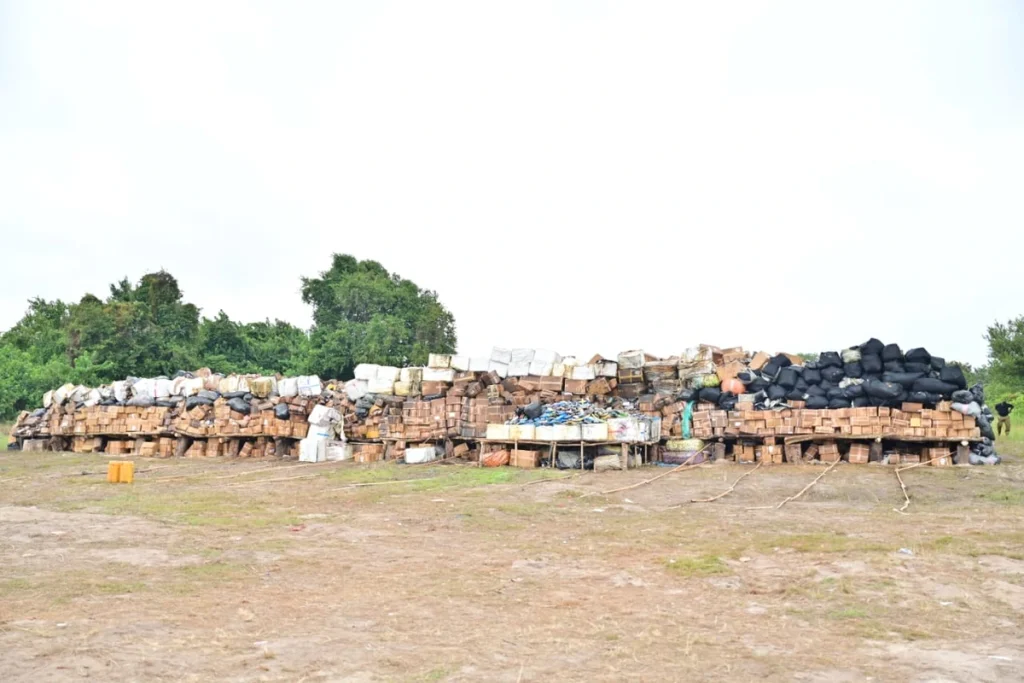
The destruction of almost 330 tonnes of illicit drugs in Lagos has put the scale of Nigeria’s drug challenge into stark perspective.
The National Drug Law Enforcement Agency (NDLEA) destroyed 329,865.585 kilogrammes of illicit drugs and psychotropic substances in Lagos on August 17, with an estimated street value of N301.058 billion.
The substances, seized during operations between April 2025 and May 2026, included cocaine, heroin, methamphetamine, cannabis, tramadol, codeine syrup and other opioids.
While the destruction represents a major enforcement action against drug trafficking, the size of the seizure raises a much broader concern: the social and public health consequences of a drug market large enough to sustain such volumes.
For Nigeria, the issue extends beyond the substances seized. It touches young people, families, healthcare systems, productivity and the safety of communities.
Almost 330 Tonnes Taken Out of Circulation
According to the NDLEA, 246,864.535 kilogrammes of the substances destroyed were seized by its Lagos Strategic Command between April 2025 and May 2026.
A further 83,001.05 kilogrammes came from operations involving the Murtala Muhammed International Airport, Tincan and Apapa Strategic Commands, the Marine Command and a Special Operations Unit operating within Lagos.
The substances included different forms of cannabis, cocaine, heroin, methamphetamine, ephedrine, tramadol, codeine syrup, other opioids and khat leaf.
The estimated street value of more than N301 billion underlines the scale of the illegal market that enforcement agencies are confronting.
For the NDLEA, destroying seized substances prevents them from returning to circulation.
But for society, the bigger challenge remains preventing demand, reducing drug dependence and ensuring that people already affected by substance abuse can access appropriate support.
The Human Cost Behind the Numbers
Drug statistics can easily become abstract.
But behind every kilogramme seized is a potential impact on a person, a family or a community.
The NDLEA has repeatedly warned about the consequences of illicit drug use, including its impact on young people and families.
At the Lagos exercise, NDLEA Chairman and Chief Executive Officer, Brig. Gen. Mohamed Buba Marwa (rtd.), linked drug abuse to public health concerns, reduced productivity, increased healthcare costs, crime, road crashes and broader security challenges.
That makes drug abuse a social development issue as much as it is a law enforcement issue.
When substance abuse affects young people, the consequences can extend into education, employment and family life. For working-age adults, it can affect productivity and household income. For communities, it can contribute to insecurity and place additional pressure on already stretched social and healthcare systems.
The economic value attached to the seized drugs therefore tells only one part of the story.
The cost of addiction, lost productivity, treatment and social disruption is much harder to calculate.
Why Young People Matter in the Conversation
Nigeria’s young population makes the prevention of substance abuse particularly important.
Young people exposed to drug use can face consequences that extend far beyond the immediate health risks. Substance dependence can interrupt education, affect relationships, limit employment opportunities and make it more difficult to build stable livelihoods.
This is why prevention cannot begin only after a person has developed an addiction.
Schools, families, communities and youth-focused organisations all have roles to play in creating awareness and helping young people recognise the risks associated with substance abuse.
But prevention also requires addressing the circumstances that can increase vulnerability.
Access to education, skills development, employment opportunities, mentorship and positive community activities cannot solve drug abuse on their own, but they can contribute to healthier environments and give young people stronger pathways for building their futures.
Enforcement Is Only One Part of the Solution
The NDLEA’s operation demonstrates the importance of enforcement.
Traffickers and criminal networks must be disrupted, and illegal substances must be prevented from reaching communities.
But enforcement alone cannot eliminate the social conditions that sustain drug demand.
That is where prevention, treatment and rehabilitation become important.
People already struggling with substance dependence need access to appropriate healthcare and rehabilitation services. Families need information about where to seek help. Communities need prevention programmes that are practical and sustained rather than limited to occasional awareness campaigns.
A comprehensive response therefore requires multiple institutions working together.
Government agencies can strengthen enforcement and public health interventions. Schools can support early education and awareness. Healthcare providers can contribute to treatment and rehabilitation. Civil society organisations can provide community-level support, while businesses and foundations can support programmes focused on prevention, youth development and reintegration.
Where CSR Can Make a Difference
For companies, drug abuse may not appear to be an obvious CSR priority.
But businesses operate within communities, employ people from those communities and depend on a healthy and productive population.
This gives the private sector a legitimate role in supporting interventions that address substance abuse and its wider consequences.
That role does not mean replacing government or health institutions.
It can mean supporting evidence based prevention programs in schools, funding youth development initiatives, helping community organisations expand their reach or contributing to rehabilitation and reintegration programs.
Companies can also consider employee wellbeing.
Workplace education, confidential support systems and access to appropriate assistance can help organisations respond to substance-related challenges before they become more serious problems.
The strongest interventions will be those that are sustained and measurable, rather than one off donations attached to awareness days.
The Bigger Question After the Destruction
The destruction of N301 billion worth of illicit drugs is significant.
But it should also prompt a more difficult question: what is being done to reduce the number of people who will seek out those drugs in the first place?
Removing drugs from circulation protects communities in the immediate term.
Reducing demand protects them in the long term.
That requires investment in prevention, public education, treatment and rehabilitation alongside continued enforcement.
It also requires better coordination between government agencies, healthcare providers, schools, communities, civil society and the private sector.
For CSR and sustainability leaders, the issue offers a reminder that social impact is often connected to problems that do not fit neatly into a single category.
Drug abuse intersects with health, education, employment, family wellbeing, community safety and economic productivity.
Addressing it therefore requires more than a single intervention.
From Seizures to Prevention
The NDLEA’s destruction of almost 330 tonnes of illicit drugs is an important enforcement milestone.
But its greatest significance may lie in what the numbers reveal about the scale of the challenge still facing Nigeria.
The country needs strong enforcement to keep illicit substances away from communities.
It also needs stronger prevention to reduce vulnerability, accessible treatment for people struggling with dependence and rehabilitation programmes that give recovering individuals an opportunity to rebuild their lives.
For businesses and other social impact stakeholders, the opportunity is to support those efforts where they can create meaningful and measurable value.
The goal should not simply be to respond to the next large seizure.
It should be to build healthier communities in which fewer young people become exposed to harmful substances, fewer families are forced to bear the consequences of addiction and more people have access to the support they need to recover.
The N301 billion figure is therefore more than a measure of drugs destroyed.
It is a measure of the scale of a social challenge that Nigeria cannot afford to address through enforcement alone.
[give_form id="20698"]