ROSEMARY IMOBHIO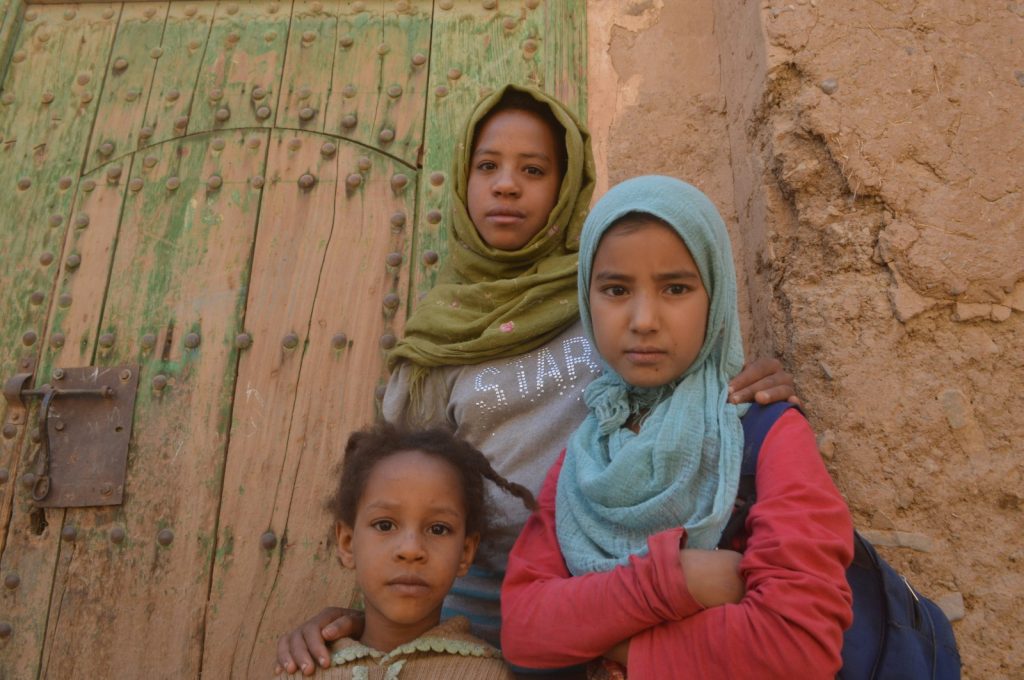
In 2000, Morocco looked a lot like Nigeria does today. Roughly 42 percent of its lower secondary-age adolescents were out of school. Millions of young Moroccans, especially girls in rural areas, had little realistic hope of finishing their education.
Twenty-three years later, that figure has fallen to just 6 percent, according to UNESCO’s 2026 Global Education Monitoring Report (1). Meanwhile, Nigeria still carries the unwanted title of the country with the largest out-of-school population on earth. UNICEF estimates that around 10.2 million primary school-age children remain outside the classroom in Nigeria. A number that climbs into the tens of millions once adolescents are included.
The contrast is striking precisely because the two countries started from comparable positions. Therefore, the question worth asking is not whether Morocco’s experience is relevant to Nigeria, but why Nigeria has yet to replicate it. What actually worked in Morocco, what did it cost, and what can Nigerian policymakers, businesses and citizens learn? This piece approaches these questions without pretending that Morocco’s journey was painless or complete.
How Morocco Turned Things Around
Morocco’s transformation did not happen by accident. According to the GEM Report’s country case study, the turning point came in 1999. That year, the government made education a national policy priority through the National Charter for Education and Training. That single decision set off a quarter century of sustained reform.
Subsequently, Morocco rolled out a large public school construction programme, expanding the number of lower secondary schools significantly between 1999 and 2024. Building classrooms closer to where children actually lived removed one of the biggest barriers to enrolment. Particularly in rural provinces where long commutes had previously pushed families to keep children, especially girls, at home.
Beyond infrastructure, the government introduced conditional cash transfer schemes. These were designed to keep vulnerable households from pulling children out of school for economic reasons. It also passed the 2019 Framework Law No. 51-17. This emphasised preventive measures such as awareness campaigns, psychological support and family engagement to address early school leaving before it happened, rather than simply reacting afterward. In 2018, Morocco enacted free public education at all levels, removing a major affordability barrier for low-income families.
Importantly, the reforms did not happen in isolation. Morocco’s Strategic Vision of Reform 2015-2030 took a broader, root-cause approach. It worked by addressing teacher training, school quality and dropout prevention together. Rather than treating access as a standalone problem. The result, as UNESCO notes, was a decline in the out-of-school rate at a steady pace of 1.6 percentage points every year, an unusually consistent trajectory sustained for more than 25 years.
A Story With Real Limits
However, Morocco’s progress is not a fairy tale, and presenting it as one would do readers a disservice. Repetition rates in secondary education actually rose in places, climbing to 23 percent in lower secondary by 2019 before improving again. The cost of education for families has also grown, with the share of household spending devoted to schooling climbing from 1.6 percent in 2001 to 3.7 percent by 2014. This has pushed more families toward private institutions whose enrolment share has roughly tripled since the early 2000s.
In addition, out-of-school rates among older youth, those of upper secondary age, remain considerably higher, at 23 percent. This shows that access gains have not been evenly distributed across age groups. Morocco’s experience proves that determined policy can dramatically shrink an education crisis. It does not prove that the crisis disappears entirely.

Following the Money
Money alone does not fix education systems, but it is difficult to fix them without it, and the financing gap between Morocco and Nigeria is glaring.
UNESCO data shows that in 2023, Morocco devoted about 22.8 percent of total government expenditure to education, alongside roughly 6 percent of GDP. That places Morocco well above the global benchmark recommended by UNESCO and the World Bank, which calls for governments to allocate 15 to 20 percent of public spending to education.
Nigeria, by contrast, has consistently fallen short of that benchmark for over a decade. According to CSR Reporters analyses of federal budget data, education accounted for 10.75 percent of Nigeria’s national budget in 2015. By 2025, that share had slipped to roughly 5.47 percent, even though the naira amount grew due to inflation.
The 2026 federal budget allocates ₦3.52 trillion to education out of a total ₦58.18 trillion, or about 6.1 percent. That figure has barely moved from the previous year, despite repeated promises from the Tinubu administration to raise education funding substantially.
State Level Budgets
State-level numbers tell an equally uneven story. Some states, including Enugu, Kano and Jigawa, have allocated between 26 and 32 percent of their 2026 budgets to education. Comfortably exceeding both the UNESCO benchmark and Nigeria’s own 26 percent national policy target. Yet many others, including Lagos, Akwa Ibom, Edo and several South-South states, spend below 12 percent. Despite some of them recording among the highest concentrations of out-of-school children nationally.
Consequently, the comparison with Morocco becomes less about wealth and more about consistency of priority. Morocco sustained above-benchmark education investment for 25 years without major interruption. Nigeria’s investment, by contrast, has fluctuated sharply depending on the political cycle, oil revenue and competing security pressures. It has never settled into the kind of predictable, long-term commitment that allowed Morocco’s reforms to compound over time.
Nigeria’s Continuing Education Crisis
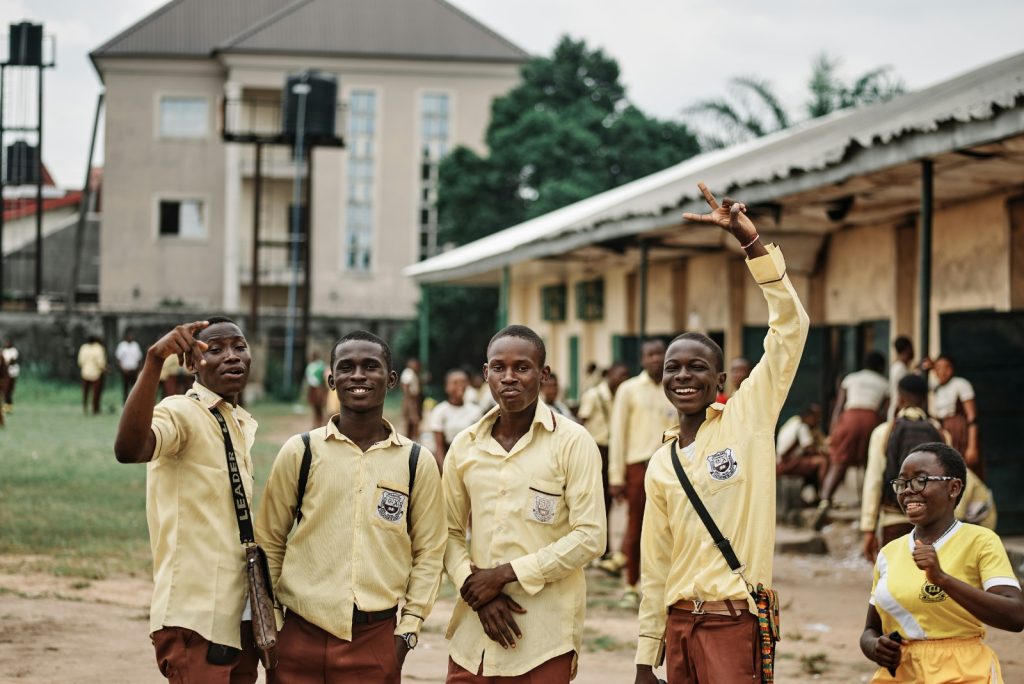
Despite years of interventions, Nigeria’s numbers remain sobering. UNICEF places the number of out-of-school children at approximately 10.2 million at the primary level alone. Save the Children Nigeria reported in January 2026 that more than 28 million children and adolescents lack access to formal schooling or digital learning opportunities altogether.
Sadly, girls account for roughly 60 percent of the out-of-school population. Additionally, the crisis is heavily concentrated in the north, where states such as Kebbi and Sokoto record out-of-school rates above 65 percent.
Even children who remain enrolled are not necessarily learning. UNICEF reports that only 27 percent of Nigerian children aged 7 to 14 possess basic reading skills. Just 25 percent have foundational numeracy skills.
Meanwhile, dropout rates peak at 27 percent at the senior secondary level. In Nigeria, only 51 percent of adolescents transition to upper secondary school on time. A figure that falls to 38 percent in rural areas.
Why does the crisis persist despite repeated government pledges? Experts CSR Reporters spoke to point to several intersecting causes. First, insecurity, particularly in the north-east and north-west, has forced school closures and discouraged enrolment in conflict-affected areas.
Second, inconsistent budget execution means allocated funds often do not translate into classrooms or teachers. Many states implement only about two-thirds of their approved education budgets. Third, a lack of standardised data makes it difficult to design targeted interventions. Estimates of the out-of-school population range from 10 million to 28 million depending on the methodology used.
Finally, household poverty continues to push families toward child labour over schooling. Particularly where free education exists on paper but hidden costs, including uniforms, books and transport, remain prohibitive in practice.
Businesses Can Make Impact
Given the scale of the funding gap, the private sector’s role becomes increasingly important. Not as a replacement for government responsibility, but as a complement to it. Education sits naturally within the social pillar of ESG frameworks, and forward-looking Nigerian companies are beginning to treat it that way.
Several examples illustrate the trend. MTN Foundation has invested over ₦25.7 billion in education, health and economic empowerment since 2004, including more than 12,700 tertiary scholarships.
In December 2025, Aliko Dangote launched a ₦1 trillion, ten-year STEM and girls’ education endowment aiming to reach 1.3 million students across all 36 states by 2036. Around the same period, the Education Fund launched by Nigeria’s First Lady generated ₦25.5 billion in domestic philanthropic donations to support the completion of the country’s national library.
Other firms, including Access Bank, Zenith Bank and Nigerian Breweries, have folded education into broader CSR portfolios spanning literacy competitions, mobile libraries and teacher training.
Still, the honest answer to whether these efforts are enough is no, not yet. Even Dangote’s landmark ₦1 trillion commitment, spread across a decade, amounts to roughly $69 million annually. This is a fraction of the multi-billion-dollar gap between Nigeria’s current education spending and the UNESCO-recommended benchmark.
CSR and philanthropy can fund scholarships, build schools and pilot innovative programmes. However, they cannot substitute for sustained, system-wide public investment of the kind that powered Morocco’s turnaround. What they can do is demonstrate models that the government can scale, and apply pressure, through transparency reporting required under the Nigerian Exchange’s sustainability disclosure guidelines, for more consistent public accountability.
Can Nigeria Replicate Morocco’s Success?
Three lessons stand out from Morocco’s experience, and each is directly transferable to Nigeria’s context.
First, consistency beats intensity. Morocco did not achieve its results through a single dramatic policy but through 25 uninterrupted years of above-benchmark investment and incremental reform. Nigeria’s education allocation, by comparison, has swung between roughly 5 and 10 percent of the federal budget depending on the administration in power. A multi-year, legally binding funding floor, insulated from political cycles, would help Nigeria build the kind of compounding progress Morocco achieved.
Second, infrastructure and retention policy must move together. Morocco paired its school construction drive with conditional cash transfers and dropout-prevention frameworks. Nigeria has piloted similar conditional cash transfer programmes and school feeding schemes, including a ₦35 billion allocation for out-of-school children initiatives in the 2026 federal budget, but these remain small relative to the scale of need and are not consistently implemented across all 36 states.
Third, accurate data must precede effective policy. Morocco’s High Commission for Planning has tracked enrolment, repetition and completion rates annually since 1999, giving policymakers a reliable feedback loop. Nigeria, by contrast, still lacks a single trusted figure for its out-of-school population, with estimates ranging from 10 million to 28 million. Investing in a unified national education data system would be a relatively low-cost reform with outsized returns, allowing both government and CSR funders to target resources more precisely.
Encouragingly, some Nigerian states are already showing what concentrated political will can achieve. Kano’s 30 percent education allocation and Enugu’s 32 percent allocation in their 2026 budgets demonstrate that exceeding the UNESCO benchmark is achievable within Nigeria’s existing fiscal architecture. The challenge is making that commitment the rule rather than the exception.
Conclusion
Morocco’s story offers no shortcuts and no guarantees. Its progress took a quarter century, sustained funding well above international benchmarks, and policies that evolved as new challenges emerged, from repetition rates to the rising cost of schooling.
Yet it offers something Nigeria badly needs. Proof that the trajectory of an out-of-school crisis is not fixed by geography, population size or starting conditions, but by the consistency of political will applied over time.
Nigeria has the policy frameworks, the philanthropic interest and, increasingly, the public pressure to act. What remains uncertain is whether that translates into the kind of sustained, decade-spanning commitment that defined Morocco’s turnaround. If Morocco could dramatically reduce its out-of-school crisis through sustained investment, policy reforms and partnerships, what, then, is stopping Nigeria from doing the same?
References
- Team, G. E. M. R. (2026). Global education monitoring report 2026: access and equity, countdown to 2030. https://doi.org/10.54676/jlkl3223