ONYINYECHI NWAIGBA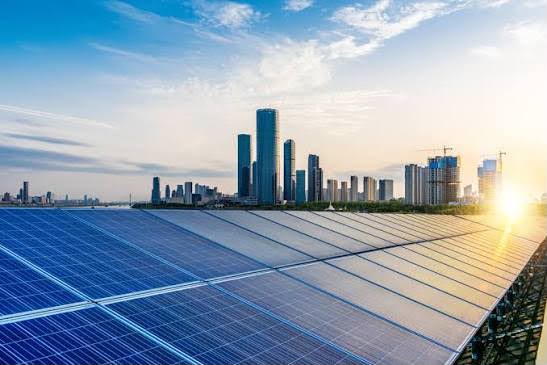
For years, unreliable electricity has been more than an inconvenience for Nigerian universities.
It affects when students can study, how laboratories operate, whether research equipment can run properly and how much institutions spend trying to keep their campuses powered.
In many universities, electricity is closely tied to the quality of education itself.
A laboratory cannot function properly without power. Digital learning becomes difficult when electricity is unstable. Research that depends on specialized equipment can be interrupted. Even something as basic as reading at night can become a challenge when power supply is uncertain.
Now, the Federal Government is putting renewable energy at the center of an effort to change that.
On September 16, 2026, the government commissioned a 3.3MWp solar hybrid mini-grid with 2MWh of battery storage at Yakubu Gowon University in Abuja, formerly the University of Abuja. The project also includes a dedicated grid connection, 388 solar-powered streetlights and a Renewable Energy Workshop and Training Center.
But beyond the solar panels and batteries, the bigger question is what reliable electricity could mean for Nigeria’s universities.
Why Power Matters So Much in a University
A university is not simply a collection of classrooms.
It is also a research center, a workplace, a healthcare environment in some cases, a technology hub and a community where thousands of people live and work.
That means its energy needs are enormous.
Students need electricity to study and access digital resources. Lecturers need it to teach and conduct research. Laboratories depend on stable power for equipment and experiments. Administrative departments require electricity for computers, internet services and other digital systems.
Universities also need power for water systems, security infrastructure and campus lighting.
When electricity is unreliable, all these activities can be affected.
This is why the solar project at Yakubu Gowon University is significant beyond the number of megawatts involved.
The facility is designed to provide electricity for critical campus loads, including beyond daylight hours through its battery storage system.
What Does 3.3MW of Solar Actually Mean?
For someone who is not familiar with energy terminology, figures such as 3.3MWp and 2MWh can sound abstract.
The solar installation has a peak capacity of 3.3 megawatts, while its AC output capacity is 3 megawatts.
The 2MWh battery storage system is important because solar panels do not produce electricity at night.
Instead of depending entirely on sunlight being available at the exact moment electricity is needed, the battery can store energy and make it available for critical loads after daylight hours.
The project also has a dedicated grid connection to support non-critical demand when solar generation is unavailable.
In simple terms, the project is not just about installing solar panels.
It is about combining solar generation, battery storage and grid supply into a system designed to provide a more reliable electricity supply.
The Impact Could Go Beyond Keeping the Lights On
Reliable electricity can change the way students experience university.
A student who does not have to constantly search for alternative places to charge a laptop or phone has more time to focus on schoolwork.
A laboratory that can operate more consistently can support more practical learning and research.
A lecturer can use digital teaching tools without planning lessons around the availability of electricity.
Research projects can also benefit from more dependable power, particularly where equipment needs to operate for extended periods.
These may sound like small improvements, but collectively they can affect the quality of education and research an institution is able to provide.
The Federal Government says the Yakubu Gowon University project is intended to support teaching, research, laboratories and other critical campus operations.
That makes energy access part of the education conversation, not just an infrastructure conversation.
There Is Also a Security Dimension
The project includes 388 solar-powered streetlights across the university.
This matters because electricity on a university campus is not only about classrooms and laboratories.
Students and staff still have to move around the campus after dark.
Better lighting can improve visibility around roads, walkways and other campus areas and may contribute to a safer environment.
The project therefore connects energy access with another important part of university life: security.
For students who live, study or work on campus, the benefits of reliable electricity can extend well beyond the academic timetable.
And Then There Is the Question of Skills
Perhaps one of the more interesting aspects of the project is that it is not limited to energy infrastructure.
The initiative also includes a Renewable Energy Workshop and Training Center.
That creates an opportunity for the university to become more than a consumer of renewable energy.
It can also become a place where students learn about the technology behind it.
The Rural Electrification Agency has encouraged the university to use the facility as a platform for research and innovation in areas including renewable energy, battery storage, smart metering, grid integration and energy management.
This is important because Nigeria’s energy transition will require people who understand how to install, operate, maintain and improve renewable energy systems.
Universities can play a major role in developing that talent.
Can One Project Solve the Power Problem?
Probably not.
A single solar project, regardless of its size, cannot solve Nigeria’s wider electricity challenges.
And even within Yakubu Gowon University, the current project does not immediately mean every part of the campus will receive the same level of power.
The government has indicated that there are plans to extend electricity coverage to student hostels and other areas of the university.
This highlights an important reality: commissioning an energy project is only the beginning.
The long-term impact will depend on how well the system is operated, maintained and protected.
Maintenance Could Determine the Real Success
Renewable energy infrastructure still requires maintenance.
Solar panels need to remain in good condition. Batteries have operating lifespans. Electrical equipment needs monitoring. Security is necessary to prevent vandalism and theft.
The government has acknowledged this challenge and is developing the Renewable Asset Management Company, or RAMCO, to support the management, monitoring and maintenance of renewable energy assets.
That part of the story is easy to overlook.
Nigeria has seen infrastructure projects launched with great expectations, only for poor maintenance to reduce their usefulness over time.
For renewable energy projects to deliver lasting value, sustainability has to mean more than using clean energy.
It must also mean sustaining the infrastructure itself.
A Bigger Opportunity for Nigeria’s Universities
The Yakubu Gowon University project is part of Phase II of the Energizing Education Program, which covers seven universities and two teaching hospitals. The Rural Electrification Agency says the wider programme has delivered renewable-energy infrastructure to 22 federal universities and three affiliated teaching hospitals, with more than 100MW of clean energy deployed.
If such projects are properly maintained and expanded, they could change how Nigerian universities approach energy.
Instead of relying heavily on conventional power sources and generators, institutions could increasingly combine solar, batteries and grid electricity according to their needs.
They could also use their campuses as living laboratories for renewable energy research.
Students studying engineering, technology, environmental science and related disciplines could gain practical experience from systems operating around them.
That could help connect classroom knowledge with the real-world energy challenges facing the country.
The Bigger Question Is Whether the Model Can Scale
Nigeria has hundreds of tertiary institutions with significant energy needs.
The challenge is therefore not simply whether solar energy can work in one university.
It is whether the country can build a model that can be replicated, properly financed, maintained and monitored across more institutions.
That will require investment, technical expertise, good management and long-term planning.
It will also require universities to treat energy infrastructure as a strategic investment rather than simply an emergency response to power shortages.
The benefits could extend beyond electricity bills.
Reliable and cleaner power can support education, research, digital learning, innovation, campus security and skills development at the same time.
So, Can Solar Energy Help Nigerian Universities Escape the Power Crisis?
It can certainly become part of the solution.
But the real measure of success will not be the number of solar panels installed or the number of megawatts announced at commissioning ceremonies.
It will be what happens afterwards.
Can students study more consistently? Can laboratories operate for longer? Can researchers depend on their equipment? Can universities reduce their dependence on expensive backup power? Can students gain practical renewable-energy skills? And can the infrastructure continue working years after the cameras leave the commissioning ceremony?
Those are the questions that will determine whether projects like the one at Yakubu Gowon University represent a temporary intervention or a meaningful shift in how Nigeria powers its universities.
For a country where unreliable electricity has affected education and productivity for years, bringing cleaner and more dependable energy into universities could be about much more than keeping the lights on.
It could be an investment in the conditions under which the next generation learns, researches, innovates and builds Nigeria’s future.
[give_form id="20698"]