csrreporters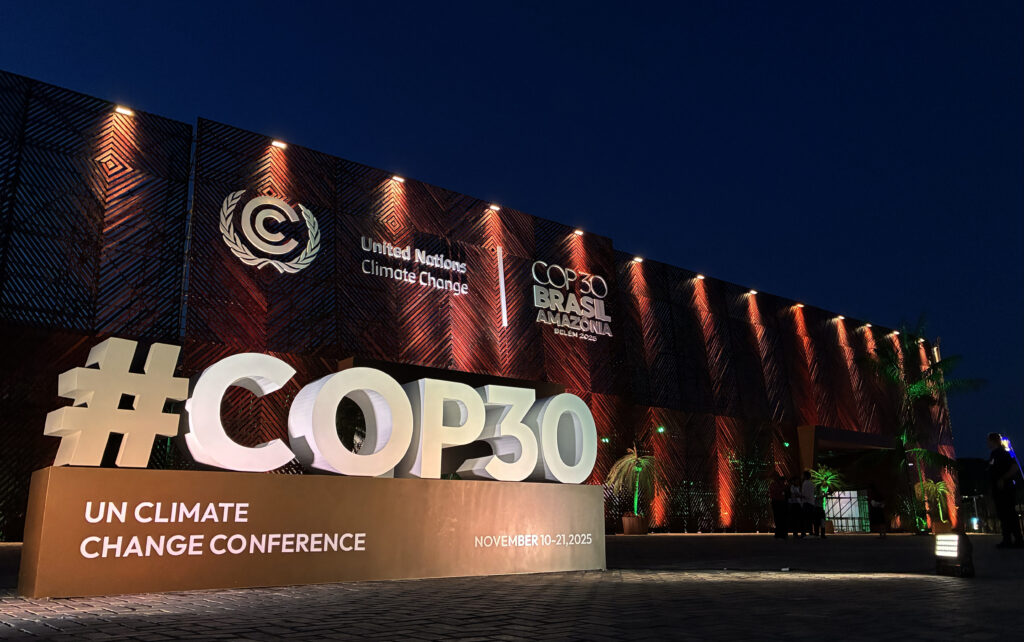
04.11.2025 - Belém - Vista do Centro de Convenções para a cúpula COP30. Foto Sergio Moraes/COP30 Brasil Amazônia/PR
By Akintayo Victor Oni
COP30, recently held in the Amazonian city of Belém, Brazil, was billed as the COP of “truth” and “implementation.” Taking place a decade after the Paris Agreement, it was intended to showcase international solidarity in tackling climate change—a critical moment as global targets come under increasing strain. In 2015, 198 countries agreed to limit global temperature rises to 1.5°C above pre-industrial levels and to keep increases “well below” 2°C. UN Secretary-General António Guterres warned that overshooting 1.5°C is now inevitable given current emissions, but emphasized hope that temperatures could be brought back to target by the century’s end.
Global emissions patterns highlight the uneven responsibility for climate change. Historically, developed nations such as the United States, Germany, and the UK bear the greatest responsibility, while China, the US, India, Russia, and Brazil are the top current emitters. In 2024, China, India, Russia, and Indonesia increased their emissions, with Indonesia showing the largest relative increase (+5%) and India the largest absolute increase (+164.8 Mt CO₂e). Nigeria, by contrast, contributed just 128 Mt CO₂e in 2023—less than 0.8% of global emissions—mainly from transportation and gas flaring. Ironically, the countries least responsible often face the harshest impacts: desertification, droughts, flooding, and food insecurity.
For Nigeria, COP30 represents more than an international gathering—it is an opportunity to demonstrate leadership, attract climate finance, accelerate energy transition, and chart a path toward a climate-resilient future. Despite low emissions, the country faces severe climate risks: desertification in the North, coastal erosion in the South, declining agricultural productivity, energy deficits affecting nearly 90 million people, rapid urbanization, and waste management challenges. These pressures threaten livelihoods, economic stability, and national development.
Nigeria has made significant strides in climate governance and Paris Agreement implementation:
- Climate Change Act (2021): Established a legally binding carbon budget, the National Council on Climate Change, mandatory climate reporting, and a framework for carbon markets and low-carbon development.
- Energy Transition Plan (2022): A detailed roadmap aiming for net-zero emissions by 2060, closing the energy access gap for over 90 million Nigerians, expanding renewables, and reducing fossil fuel dependence. The plan requires an estimated $1.9 trillion in investments across power, cooking, transport, oil & gas, and industry.
- Updated Nationally Determined Contributions (NDCs): Ambitious targets of 20% unconditional and 47% conditional emissions reduction by 2030, with concrete actions across agriculture, energy, transport, forestry, waste management, and industry.
- Clean Energy Expansion: Utility-scale solar plants, solar mini-grids, hydropower rehabilitation, and rural electrification programs.
- Forestry and Land Use: REDD+ readiness programs, reforestation initiatives like the Great Green Wall, protected forest reserves, and community-based forest management.
- Climate-Smart Agriculture: Adoption of drought-resistant crops, irrigation expansion, digital advisory services, early-warning systems, and sustainable livestock practices.
- Climate Finance Initiatives: Nigeria pioneered Africa’s sovereign green bond program in 2017, attracting funds for renewable energy, reforestation, clean transportation, and water management. The government estimates $17 billion annually is required to meet its NDCs.
- National Carbon Market Framework: Developing MRV systems, carbon credit projects, and emissions trading regulations to unlock private-sector climate finance.
- Adaptation Measures: Flood control, coastal protection, water resource management, climate-resilient construction guidelines, and multi-hazard early-warning systems.
Challenges remain: insufficient funding, weak institutional coordination, high dependence on oil revenues, slow technology adoption, and population pressures. Achieving full compliance with the Paris Agreement will require stronger institutional capacity, steady implementation, increased finance, private-sector engagement, technology transfer, and broad public participation.
COP30 presents a defining moment for Nigeria to transition from climate vulnerability to climate leadership. With coordinated action from government, private sector, civil society, and development partners—supported by political will, innovative financing, and inclusive policies—Nigeria can transform its climate challenges into engines of growth, securing a greener, safer, and more prosperous future.
[give_form id="20698"]