ROSEMARY IMOBHIO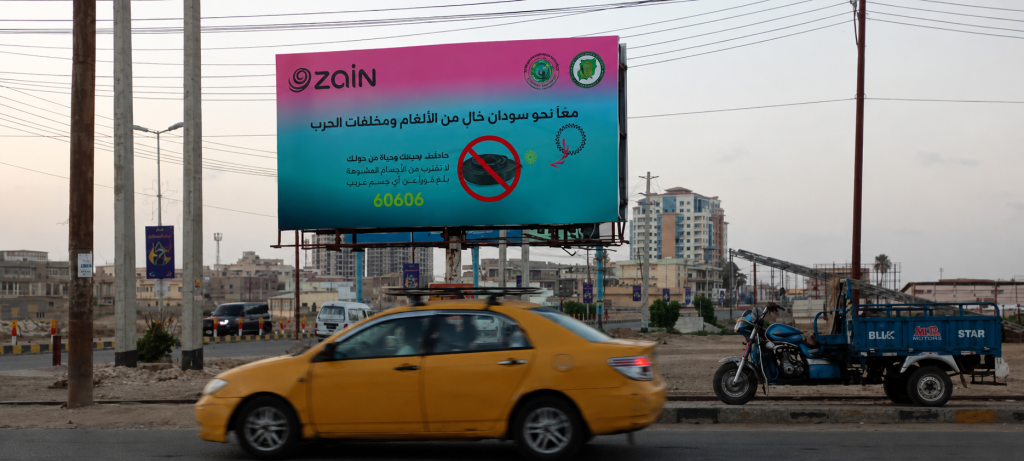
When a telecom company sends SMS alerts warning people about landmines buried in the ground beneath them, that is not ordinary corporate social responsibility. That is a company reading its environment correctly and responding with everything it has.
Zain Sudan’s Awareness of Mine Dangers Campaign, launched in partnership with the National Mine Action Center (NMAC) and the Friends of Peace and Development Organization (FPDO) in Port Sudan, did exactly that. It forces a necessary question for businesses operating across Africa: is your CSR designed for the world as it is, or for the world as you wish it were?
The answer, in too many boardrooms across Nigeria, is the latter.
What Zain Sudan Actually Did
Sudan is not a typical operating environment. Since April 2023, the country has endured one of the world’s fastest-moving humanitarian emergencies. Conflict between the Sudanese Armed Forces and the Rapid Support Forces has displaced over 11 million people.
According to the UN Mine Action Service, the Armed Conflict Location and Event Data Project recorded over 9,800 conflict events between April 2023 and December 2025. Those conflicts likely generated explosive ordnance contamination. Roads, homes, markets, schools, and clinics across Khartoum, Omdurman, and surrounding regions became littered with deadly explosive remnants of war.
For millions of displaced families returning home or moving into unfamiliar territories, the danger is immediate. Therefore, in this context, Zain Sudan and its partners launched a targeted awareness campaign. It was built on the infrastructure the company already owns and operates: mobile networks.
The campaign used social media platforms, printed materials, infographic videos, and SMS messaging to reach affected populations. Crucially, it activated a reporting short code, 60666, allowing civilians to alert authorities to the presence of mines and war remnants in real time. Furthermore, the initiative aligned its activities with International Mine Awareness Day.
The significance; this day observed on April 4th each year, gives the campaign a visible, recurring public profile. The campaign was delegated properly too. The NMAC provided the technical expertise while the FPDO contributed community access and civil society reach. Zain supplied the communication infrastructure and channel reach that neither partner could replicate alone.
Why This Model Works
The most important thing to understand about this initiative is that it is not charity. It is a company deploying its core asset, a mobile telecommunications network, to solve a problem that its customer base urgently faces. That alignment between business function and social need is precisely what makes it compelling.
In conflict-affected environments, the conventional toolkit of CSR, handouts, sponsorships, and infrastructure projects, collapses in value almost immediately. A donated borehole cannot tell you that your return path home is laced with unexploded ordnance. A scholarship fund cannot direct emergency services to a newly discovered minefield. However, an SMS channel that connects civilians directly to mine action authorities can save lives today.
As a result, the Zain Sudan initiative is a lesson in what academics and practitioners now call context-driven CSR. The design of social responsibility initiatives around the actual socio-political and environmental conditions of a country. Rather than around template models borrowed from elsewhere. The campaign demonstrates that for companies operating in fragile or conflict-affected states, the highest value they can deliver is often the leverage of their technical capabilities in service of immediate, life-affecting community needs.
Meanwhile, the multi-stakeholder structure of the campaign adds another dimension worth studying. By co-designing the initiative with the NMAC and FPDO, Zain Sudan avoided the trap of corporate paternalism. There companies assume they understand community needs without consulting those closest to them. By avoiding that, the result is an initiative with credibility, practical utility, and genuine reach.
Turning the Lens on Nigeria

Nigeria does not have landmine fields. However, it does have an extraordinarily complex and often painful socio-political landscape. One that corporate CSR, for the most part, continues to sidestep.
Consider what Nigeria’s operating environment actually looks like in 2025 and 2026. Insecurity and banditry continue to displace farming communities across the Northwest and North-Central zones. Industrial oil spills in the Niger Delta remain an unresolved environmental catastrophe affecting millions who depend on rivers and farmland for survival.
In the Southeast, residual infrastructure destruction from decades of conflict and neglect creates persistent barriers to economic recovery. Flooding events, intensified by climate change, regularly destroy crops, homes, and livelihoods across Bayelsa, Anambra, and Kogi states. Air quality degradation from gas flaring continues to drive respiratory disease in oil-producing communities.
These are not abstract policy challenges. They are the lived realities of Nigerian communities where companies employ workers, draw revenues, and anchor operations.
The Philanthropy Trap
Despite these realities, the dominant CSR pattern among Nigerian companies remains stubbornly philanthropic. CSR Reporters research consistently shows that corporate social responsibility in Nigeria has been largely discretionary and charity-oriented, characterised by donations, event sponsorships, boreholes, and one-off project implementations.
Most CSR initiatives in Nigeria lack coherence, transparency, and genuine community engagement. Annual reports showcase glossy images of handshakes over cheques. Social media feeds feature branded giveaways labelled as CSR. Billboards trumpet scholarships and health outreaches. Yet beneath this surface, the substance is frequently thin.
As one commentary published on CSR Reporters has noted, there is a lingering mindset that still frames CSR as a benevolent handout, a charitable gesture to appease communities, rather than a serious strategic driver of business sustainability. Building a borehole or donating a generator has come to stand in for meaningful engagement with the structural issues that actually shape community wellbeing.
The problem is not that donations are wrong. In many cases, they address genuine needs. However, they rarely address root causes, and they almost never leverage what the company actually does best.
A telecom company drilling a borehole is generous. That same company using its SMS infrastructure to connect health workers in flood-affected areas to emergency supply chains is transformative.
Furthermore, the repetitive nature of philanthropic CSR creates another problem. When companies return each year to donate bags of rice or brand water points, communities come to expect the ritual rather than the result. The initiative calcifies into a PR exercise. Real impact, meanwhile, goes unaddressed.
What Context-Driven CSR Would Look Like in Nigeria
The lesson from Zain Sudan is not to replicate the mine awareness campaign. It is to replicate the thinking behind it. Identify the specific, urgent risks facing your communities, then deploy your core capabilities to address them.
For Nigerian telecoms companies, that means moving beyond airtime donations and scholarships. In the Northwest and North-Central zones, where banditry and kidnapping have severed market access for rural communities, telecoms operators are uniquely positioned to deploy early-warning SMS alert systems in partnership with state security agencies, replicating in spirit what Zain Sudan did with the NMAC.
In flood-prone states, digital platforms can be used to disseminate real-time evacuation guidance, relief coordination information, and livelihood recovery resources, in local languages, to affected populations.
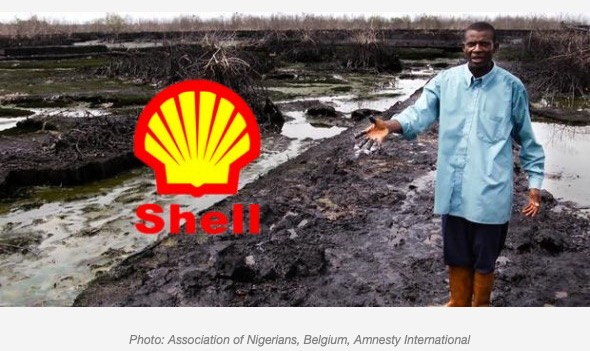
For oil and gas companies operating in the Niger Delta, the context-driven approach would shift investment from community halls and scholarship schemes toward co-funded environmental remediation programmes with verifiable milestones, independent monitoring, and community oversight. The Shell Petroleum Development Company’s existing remediation obligations in Ogoniland, still largely unfulfilled years after the UNEP report of 2011, show what happens when companies avoid this harder, contextual work in favour of more comfortable philanthropic optics.
For the financial services sector, Nigeria’s food inflation crisis, which has pushed millions of low-income Nigerians toward food insecurity over the past two years, presents a direct context for CSR action. Banks and fintech companies hold enormous data and distribution infrastructure that could support smallholder farmers in accessing affordable credit, market price information, and climate-resilient inputs. These are not donations. They are the application of core business competencies to a social crisis the company is positioned to address.
In addition, companies operating in the Southeast could partner with state reconstruction authorities to fund vocational training programmes that specifically target conflict-affected youth and returning migrants. The infrastructure for such programmes does not need to be built from scratch. In many cases, it simply needs corporate partnership, technical support, and consistent funding.
The Strategic Case for Doing This Differently
It is worth being direct here: context-driven CSR is not only more ethical than routine philanthropy. It is also more commercially rational.
Companies that align their CSR investments with real community needs build deeper social licenses to operate. They reduce operational disruption from community conflicts, and generate stronger reputational returns. This is crucial in markets where ESG disclosure is increasingly scrutinised by investors.
In addition, Nigeria’s capital market is deepening and ESG reporting standards are growing in importance. Particularly following the Securities and Exchange Commission’s growing emphasis on sustainability disclosure. Companies that can demonstrate genuine, context-responsive social investments will be better positioned to attract institutional capital.
The broader trend in global CSR in Africa points in the same direction. Across the continent, leading companies are moving away from philanthropic models toward what researchers describe as shared value creation. One where business strategy and social impact are designed together.
Furthermore, there is growing influence of international ESG frameworks, including the IFRS Sustainability Disclosure Standards. They are now gaining traction in African capital markets, is raising the bar for what counts as credible social impact reporting. Routine philanthropy, however well-intentioned, is increasingly unlikely to satisfy these requirements.
The Standard Zain Sudan Has Set
A telecom company in one of the world’s most dangerous conflict zones found a way to use what it already had. Its network, its reach, its channels, are playing a part to protect the people it serves from an immediate, life-threatening risk. It did not commission a borehole. Neither did it donate bags of food. It built a bridge between civilians in danger and the people who could help them. Simply by using SMS, social media, infographic videos, and a short code that anyone with a phone could use.
That is not an extraordinary act. In principle, it is a very simple one. It required Zain Sudan to look honestly at its environment and ask: what do people here actually need from us right now? The question is simple. The courage to answer it honestly, and then to act on the answer with genuine resources and sustained commitment, is rarer than it should be.
Nigerian companies have that same question waiting for them. The operating environment has been asking it for years.
Insecurity, climate displacement, environmental degradation, food insecurity, and broken infrastructure are not abstract challenges. They are the realities of the communities where Nigerian businesses earn their revenues and build their futures. Context-driven CSR does not ask companies to become aid agencies. It asks them to stop pretending that the context does not exist.
The template is there. The lesson is clear. The only remaining variable is whether Nigerian companies will choose to learn from it.
Follow CSR Reporters for more insights on how context-driven CSR is reshaping impact across Africa and beyond.
[give_form id="20698"]