CSR Personality of the Week: Ismail Omamegbe, The Poet Who Became a Sustainability Architect
 csrreporters
Ismail Omamegbe Head of Sustainability, Media and External Relations at First Bank of Nigeria
There is a detail in Ismail Omamegbe’s biography that stops you mid-sentence. He built one of Nigeria’s most consistently recognised corporate sustainability programmes. He created the frameworks that helped First Bank of Nigeria win back-to-back Best Bank for ESG awards. But before all of that, he was a prize-winning poet.
His debut collection, Labyrinth of Hope, won the ANA Cadbury Prize, the most prestigious poetry award in Nigeria, in 2002. His second, The Colours of Seasons, was named one of the top eleven books in Nigeria by the Nigeria Prize for Literature in 2005. Not shortlisted. Not highly commended. One of eleven, in a country of two hundred million people and a literary culture that takes its fiction and poetry seriously.
He did not give up writing to go into corporate sustainability. He simply brought the same sensibility, the careful attention to what words mean, what systems say about the societies that build them, what responsibility actually looks like when you strip away the language of obligation, into a professional space that rarely attracts people who think that way.
The result, over nearly two decades at the intersection of Nigerian corporate life and social impact, is a body of work that deserves examination on its own terms.
A Career Built from the Beginning
Omamegbe did not fall into CSR. He moved toward it deliberately, through a path that gave him both the creative tools and the institutional credibility to do the job properly.
He began at M2DC, a marketing communications firm in Lagos. There his responsibilities included producing financial reports, sustainability reports, and corporate communications. The brand works with blue-chip clients including British American Tobacco, MTN, and CitiBank Nigeria.
It was this unusual training ground, not a development organisation or a foundation, but a commercial environment that required him to understand what companies were doing, what they claimed to be doing, and how those two things were communicated to the world.
His academic formation ran alongside this. He holds a Master’s degree in International Relations from the University of Warwick. However, with research interests in corporate sustainability and business-government relations. An unusual combination that would later prove exactly right for the role he would come to occupy.
In 2008, he joined Etisalat Nigeria as its pioneer Head of Corporate Responsibility and Sustainability and Internal Communications. It was not simply a new job. It was an institution-building exercise.
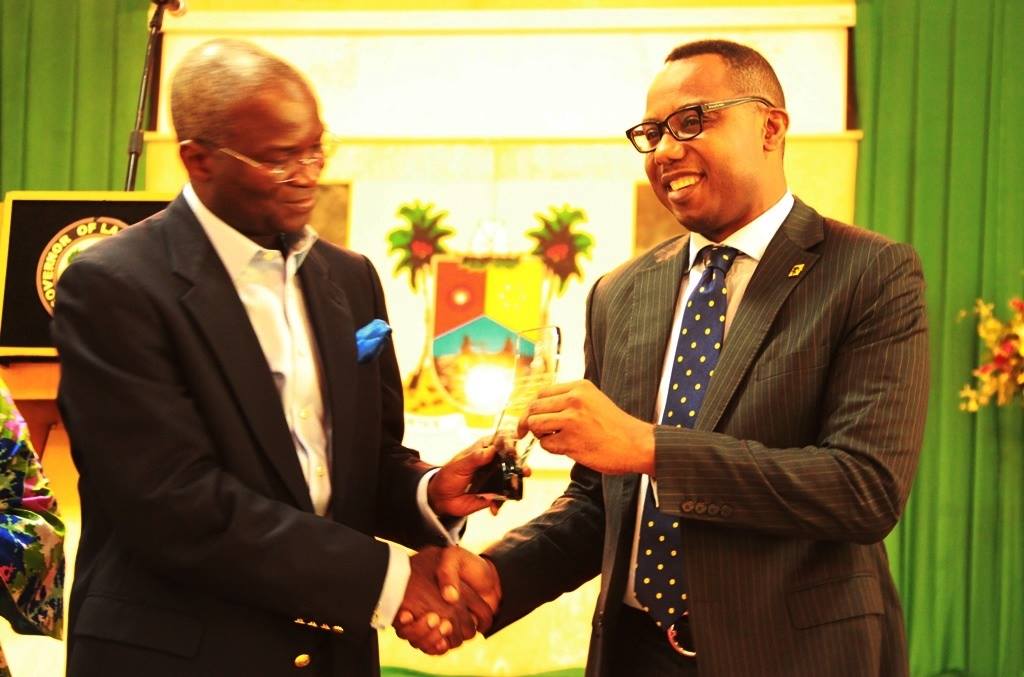
As pioneer head of CRS and Internal Communications at Etisalat between 2008 and 2012, he championed impactful initiatives. These earned Etisalat Nigeria, in its first year of operations, the CSR award in the Group of about 19 subsidiaries in the world. In its first year. That is the standard against which his subsequent work should be measured.
Omamegbe joined First Bank of Nigeria, then approaching its 120th anniversary, now well into its 130th year, as Head of Corporate Responsibility and Sustainability. A role that has since expanded to Head of Sustainability, Media and External Relations.
What He Has Built at FirstBank
First Bank of Nigeria is not a small organisation to attach a sustainability mandate to. It is the oldest financial institution in West Africa. It has over 43.5 million customer accounts, more than 820 business offices, and agent locations spanning 772 of Nigeria’s 774 local government areas. When Omamegbe develops a CSR framework for FirstBank, the operational reach of that framework is nationwide by default.
His CR&S strategy at FirstBank rests on three defined pillars. Education, health and welfare; diversity and inclusion; and responsible lending and procurement. What distinguishes the approach is the consistency with which each pillar has been backed by specific, measurable programmes rather than general commitments.
In education, the flagship is the FutureFirst programme, built in partnership with Junior Achievement Nigeria. The programme is structured around career counselling, financial literacy, and entrepreneurship. It is designed to equip secondary school students with practical money management skills and the knowledge needed for long-term financial independence. The scale is significant! The FutureFirst programme has impacted over 85,000 secondary students across Lagos, Port Harcourt, and Abuja.
Omamegbe has been a direct participant in the programme, volunteering in secondary schools to teach financial literacy and career counselling. In 2026, FirstBank announced plans to train no fewer than 3,700 students across 37 schools nationwide in financial literacy. This was part of activities marking the 2026 Global Money Week. The programme is to be implemented across the six geopolitical zones and the Federal Capital Territory.

Sustainability
In parallel, FirstBank’s sustainability efforts have reached beyond the classroom into the natural environment. An unusual commitment for a financial institution in Nigeria.
In November 2025, the bank announced the completion of an ambitious three-year tree-planting campaign. 50,000 trees planted across Nigeria, launched in partnership with the Nigerian Conservation Foundation, aligned with the Paris Agreement and Nigeria’s Green Recovery Plan. What began with 1,000 trees at the Lekki Conservation Centre in 2023 grew to 30,000 in 2024. It culminated with the final 20,000 planted during the 2025 CR&S Week. The trees are projected to absorb approximately 720 tonnes of CO₂, contributing meaningfully to biodiversity preservation and climate resilience.
In renewable energy, in 2025, FirstBank invested over $9 million in solar home projects across Africa. Thus providing clean and affordable energy to communities. It also supported modular power plants with over N15 billion, enhancing energy access and reducing reliance on fossil fuels.
On the social side, over one million students have been impacted with financial literacy skills. Over 2,000 female employees have benefited from leadership development through the FirstBank Women Network.
In the governance dimension, the bank screened 340 corporate transactions for ESG risks worth almost ₦5 billion and $340 million for sustainability risks, further integrating ESG considerations into its credit framework.
The Recognition That Followed
Programmes at this level of consistency attract recognition. The bank has won the “Philanthropic Financial Institution of the Year” award at CSR Reporters SISA. It has also won “Best CSR Bank Nigeria 2025″ and “Most Innovative Digital Banking Services Nigeria 2025” with other organizations. The Euromoney Awards for Excellence recognised FirstBank as Nigeria’s Best Bank for ESG in 2025. For the second consecutive year.
These awards do not come from press releases. They come from assessors like us examining what organisations have actually done, how they report on it, and whether the numbers behind the narrative hold up. FirstBank’s track record, across multiple independent evaluation bodies over multiple years, suggests that they do.
None of that happens without someone designing and managing the architecture. In Omamegbe’s case, that architecture spans not only the programmes themselves. It includes the reporting frameworks behind them. FirstBank has led the adoption of IFRS S1 and S2 standards for transparent sustainability disclosures, enhanced board oversight via its Board Risk Management Committee, and integrated climate considerations into risk management and decision-making. It is also a corporate member of the Climate Governance Initiative Nigeria and sits on the Advisory Board and Steering Committee of that body.
These are not the actions of an organisation wearing CSR as a costume. They are the marks of an institution that has embedded sustainability into its governance at the board level. That kind of embedding is the work of the person who holds Ismail Omamegbe’s role.
The Profession He Helped Build
Beyond FirstBank, Omamegbe has worked to build the professional infrastructure of the CSR and sustainability field in Nigeria itself. As Director of Advocacy and Stakeholder Relations at the Sustainability Professionals Institute of Nigeria (SPIN), he outlined the institute’s plans for capacity building, professional sustainability training, developing standards for sustainability practice in Nigeria and Sub-Saharan Africa, and benchmarking initiatives against global associations.
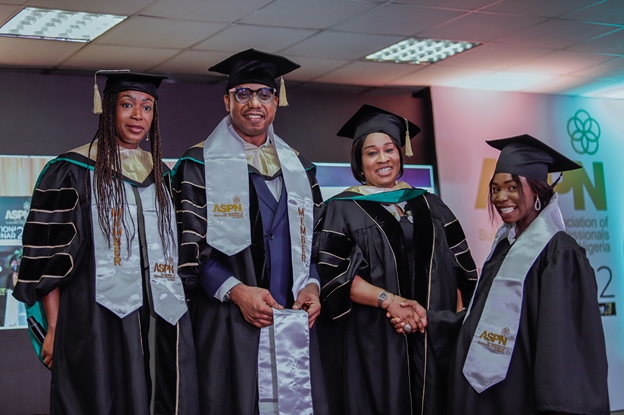
He is a Member of the Chartered Institute of Public Relations (MCIPR) and a Fellow of the Institute of Corporate Responsibility and Sustainability (FICRS). These credentials are not simply decorative. They reflect a commitment to holding himself to the same professional standards he asks institutions to meet.
He has said of the CRS field that it has moved from the fringes to the mainstream. And that beyond qualifications and training in ESG and sustainability, practitioners need relevant skills in project management, research and analysis, communication, and leadership. The ability to manage and engage stakeholders appropriately, he argues, remains critical for success.
That perspective, from someone who built CSR functions at two major Nigerian institutions from the ground up, carries weight that purely academic commentary does not.
The Thread That Runs Through
What makes Ismail Omamegbe an unusual figure in Nigeria’s corporate sustainability landscape is not simply his record of achievement. It is the coherence between who he is and what he does.
A poet who studies international relations at Warwick. A corporate communications professional who gravitates toward the sustainability elements of his clients’ work. A CSR practitioner who volunteers in secondary schools. A sustainability head who co-designed an institute to professionalise the field across Sub-Saharan Africa.
These are not disconnected chapters. They are different expressions of the same fundamental commitment. They say that what companies do in the world matters. That the gap between what is claimed and what is delivered is morally significant. They also say that language, precise, honest, accountable language, is the tool with which that gap is either closed or widened.
Omamegbe has chosen to spend his career closing it.
For a profession that can easily slide toward theatre, Ismail Omamegbe represents something rarer. A practitioner who took the promise of corporate social responsibility seriously enough to build institutions around it, measure the results, report them transparently, and then go back and do more.
That is what this recognition is for.
Follow CSR Reporters for more stories shaping social impact in Nigeria, Africa, and the World.
[give_form id="20698"]