csrreporters
Step into Ojuelegba on any weekday morning and the scene is familiar to millions of Lagos residents. Hawkers weave through dense traffic with basins loaded with chilled drinks and sachet water. Passengers buy from car windows. Empty bottles hit the pavement. Empty nylon sachets float into open drains. Soon some of those same drains overflow, backing water onto the roads that the city’s gridlocked commuters are navigating.
Nobody in that scene is acting unusually. They are doing what the system around them makes easy. Buying is frictionless. Disposal is wherever you can find space. Collection, if it comes at all, is inconsistent. Sorting infrastructure is almost nonexistent. And recycling? That happens somewhere else, in a different city, for a different class of waste, under very different conditions.
This is the quiet story behind Nigeria’s recycling problem. Not laziness. Not ignorance. A system that was never built to do what policymakers periodically demand of it.
Nigeria generates approximately 32 million metric tons of solid waste every year. This makes it the seventh-largest waste polluter in the world. Of that volume, only about 2% is recycled. Lagos alone produces roughly 13,000 tons of waste daily.
A 2024 World Bank study found that nearly 40% of Lagos State’s solid waste is recyclable. Yet no more than 12% of it ever reaches the recycling stream. Meanwhile, the Yale Center for Environmental Law and Policy scores Nigeria at just 12.7 out of 100 on environmental performance.
Those numbers point to one uncomfortable truth: Nigeria cannot recycle what it never properly collects.
The Collection Gap Is Where the Crisis Begins
Before any bottle reaches a sorting facility or any plastic pellet enters a manufacturing line, waste has to be collected. That first step is where Nigeria’s recycling chain breaks, repeatedly and at scale.
According to the World Bank, only about 30% of Nigeria’s generated waste is efficiently collected and disposed of. Two-thirds of households in low-income urban neighbourhoods have no formal waste management service. Government collection trucks reach some areas reliably and skip others entirely. A scenario often depending on the proximity of communities to arterial roads. Or the political attention paid to that neighbourhood, sometimes, simply whether a contractor has been paid.
In practical terms, this means that a household in Surulere or Gbagada in Lagos may receive periodic LAWMA collection. While a family in Agege or Bariga might go weeks without a truck. The gap between these two realities is not about recycling ambition. It is about basic infrastructure access.
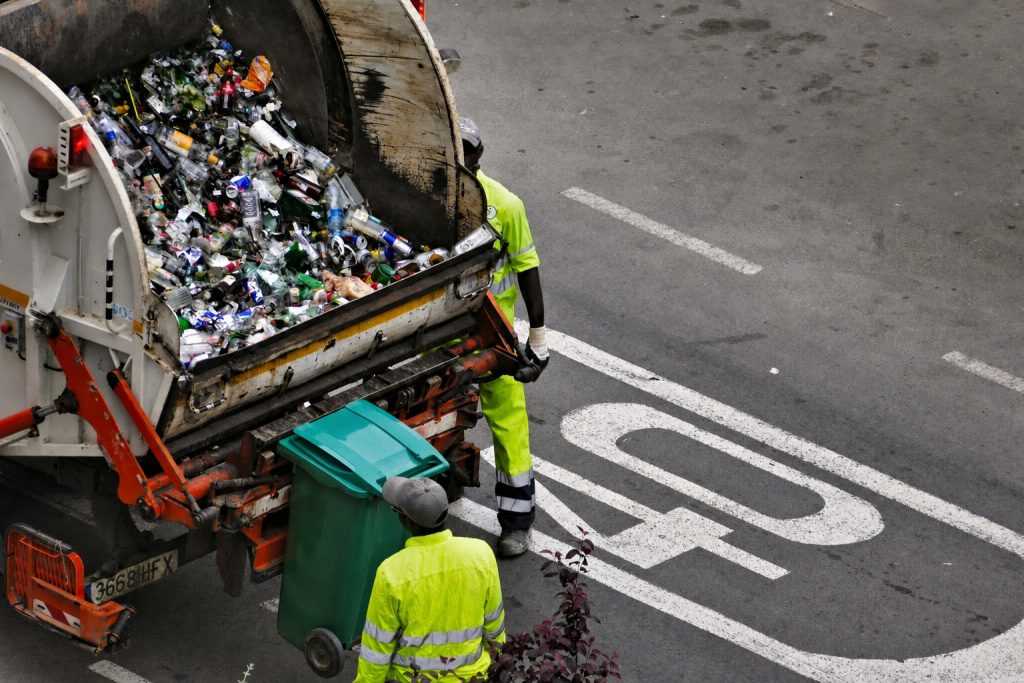
Furthermore, the collection that does exist rarely differentiates between waste types. A general refuse truck picks up food scraps, plastic bottles, cardboard, e-waste, and hospital waste all in the same load. Even when citizens want to separate their recyclables, there is often nothing meaningful waiting on the other end. The Blue Box Programme run by the Lagos State Waste Management Authority (LAWMA) has tried to address source separation, but its reach remains concentrated in select areas of the state rather than distributed equitably across communities.
The result is predictable. Recyclable materials that could generate value end up buried under organic waste in landfills, dumped in drainage channels, or burned in open-air refuse heaps. Nigeria does not have a recycling problem. Rather, it has a collection problem with a recycling problem stacked on top of it.
When Waste Becomes a Flood
The consequences of inadequate collection are not limited to missed recycling opportunities. In Nigerian cities, uncollected and improperly disposed waste becomes a physical hazard. Particularly when rain arrives and we are currently in that season.
An estimated 60 million water sachets are discarded daily in Nigeria, totalling over 20 billion annually. Those sachets, along with plastic bottles, wrappers, and bags, clog the drainage systems that cities depend on to handle seasonal rainfall. When those drains fail, flooding follows.
From Lagos Island to Lokoja in Kogi State, blocked drainage systems have become one of the most visible and deadly consequences of poor waste management. The Deputy Director of the Lagos State Environmental Protection Agency, has been direct about the connection, noting that the casual disposal of plastic waste blocks drainage systems and directly contributes to flooding in populated areas.
In 2025 alone, several flooding incidents in Lagos displaced residents, destroyed property, and overwhelmed emergency services. In many of those incidents, investigators identified accumulated plastic waste in drainage channels as a primary contributing factor. Beyond Lagos, north-central states like Kogi, Kwara, and Niger face both flood risks and widespread rural plastic dumping, but without the state-level environmental task forces that Lagos, Rivers, and Ogun have gradually developed.
This is where waste management stops being an environmental abstraction and starts being a public safety emergency. Nigeria’s flooding vulnerability is, in significant part, a waste collection failure dressed up as a climate disaster.
Sorting Infrastructure: The Missing Middle
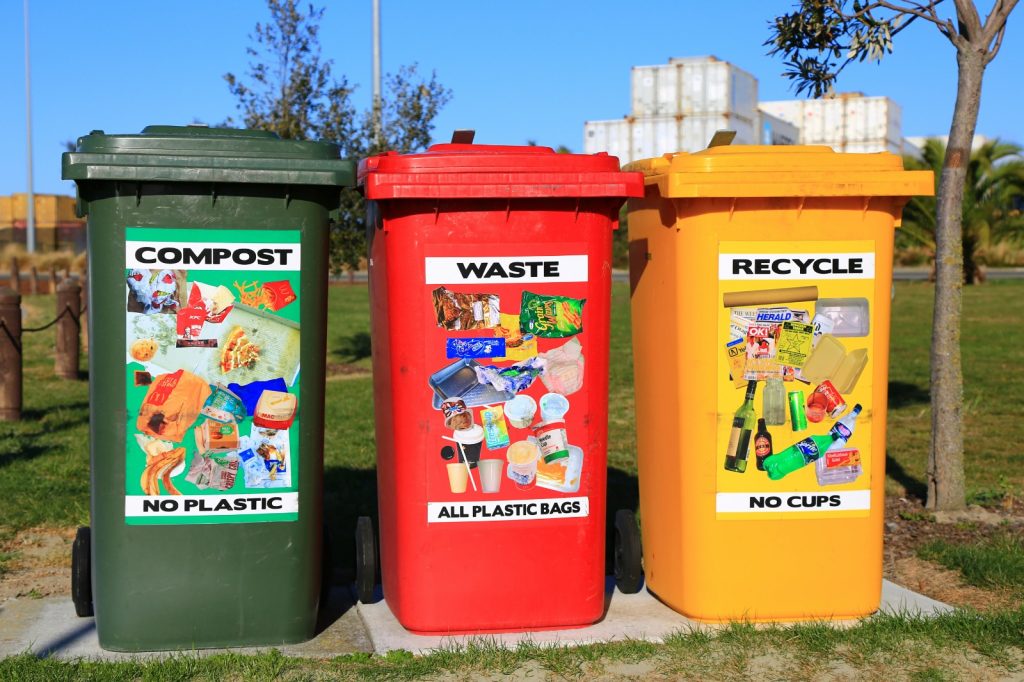
Even among waste that is collected, almost none of it gets sorted. Sorting is the critical bridge between collection and recycling. Without it, recyclable materials are contaminated, commingled, and rendered commercially unusable. Nigeria’s sorting infrastructure is, at best, fragmented.
Outside Lagos and Abuja, formal sorting facilities are rare to nonexistent. Even within those cities, the infrastructure largely depends on a combination of private enterprise and informal labour rather than coordinated public systems. There are no neighbourhood-level sorting centres in most Nigerian cities comparable to what exists in Nairobi’s Mathare Valley or Accra’s waste ecosystem.
No standardised bins that distinguish between organic waste, plastic, and glass have been deployed at scale. And no public communications campaign has successfully changed household-level behaviour in ways that make sorting a default habit rather than an exceptional one.
The absence of sorting at source creates what recyclers consistently describe as a feedstock quality problem. Recycling companies in Nigeria already struggle with the economics of their operations due to infrastructure costs, inconsistent power supply, and high diesel prices. When the waste they receive is heavily contaminated or commingled, recovery rates drop further and processing costs rise. The economics become even more difficult to justify, particularly for smaller operators working outside Lagos.
Chanja Datti, an Abuja-based plastic recycling company, has navigated this by working directly with corporate clients such as embassies, hotels, donor agencies, and banks, where feedstock quality is more controllable. But that approach reaches only a narrow sliver of the waste stream. Mass-market recycling still requires mass-market sorting, and that requires infrastructure Nigeria has not yet built.
Policy Exists. Enforcement Does Not.
Nigeria is not short of environmental policy. The National Policy on Plastic Waste Management, introduced in 2020, bans non-biodegradable plastic bags, promotes circular economy initiatives, and encourages Extended Producer Responsibility. The Climate Change Act of 2021 mandates a five-year carbon budgeting cycle and created the National Climate Change Council to oversee emission targets, including plastic waste reduction. Nigeria has committed to phasing out single-use plastics and aims to enforce ESG reporting standards across all sectors by 2027.
On paper, this is an ambitious regulatory framework. In practice, enforcement remains, as experts consistently describe it, uneven and slow.
A key issue is the fragmentation of governance. Environmental regulation is split between federal agencies like the National Environmental Standards and Regulations Enforcement Agency (NESREA), state environment ministries, and local government councils. Each tier operates with different levels of funding, political will, and technical capacity. This means a policy mandate issued at the federal level may be implemented strictly in one state, loosely in another, and completely ignored in a third.
Addressing Nigeria’s waste challenge requires governments and stakeholders to establish an enabling environment, supported by forward-thinking policies and a robust legal framework. Not new legislation. Enforcement of what already exists.
Lagos has moved furthest in this direction. The state’s single-use plastics ban, which covers Styrofoam food packs and common disposables, began formal enforcement in 2025. But independent assessment by CSR Reporters notes that compliance remains uneven, particularly among smaller traders who face cost pressures and limited access to alternatives. Meanwhile, states in the north and rural belts have neither the regulatory architecture nor the funding to implement comparable measures.
The policy gap, therefore, is not primarily a writing problem. It is an implementation gap, compounded by inadequate inter-agency coordination and insufficient financing for enforcement.
The Invisible Workforce: Waste Pickers Holding the System Together
Here is a part of the story that rarely appears in policy documents: Nigeria’s recycling system would not function at all without an informal workforce that is largely unrecognised, poorly protected, and actively marginalised.
Informal waste pickers, known locally as scavengers, collect low-value recyclable materials from streets, dumpsites, and residential areas. They sort, aggregate, and sell these materials to middlemen who then supply recycling companies.
In Lagos, waste pickers operate under relatively strict regulations that include mandatory registration and, historically, frequent arrests. In Abuja, policies have been more lenient, though largely undefined. The inconsistency across states creates an unstable working environment for a workforce that is doing work the formal system is not doing.
Furthermore, currency devaluation and exchange rate fluctuations destabilise the market that waste pickers depend on. When the naira weakens significantly, the cost of imported recycling machinery rises, recyclers pay less per kilogram of collected material, and waste pickers absorb that loss at the bottom of the chain. They are, in effect, subsidising the recycling sector with their labour and their vulnerability.
The most progressive recycling companies in Nigeria have started acknowledging this reality. Pakam Technology Limited in Lagos pays collectors through its Earn-As-You-Waste programme and trains them in waste sorting, recycling logistics, and employability skills. Wecyclers has built its entire model around rewarding waste collectors and low-income households with points redeemable for household goods. EcoBarter pays households and businesses cash for their recyclable waste, flipping the conventional model on its head. These approaches work partly because they formalise what the informal sector already does, but with better economics and more dignity for workers.
Scaling this sector meaningfully, however, requires policy that formally integrates waste pickers. Rather than criminalising them. That will provide social protections for a workforce doing genuinely essential environmental work.
CSR, ESG, and the Corporate Responsibility Conversation
Nigeria’s recycling challenge is not only a government problem. Businesses play a central role in both generating waste and, increasingly, in financing solutions.
The February 2026 Nigerian Plastic Brand Audit, conducted by a coalition of civil society organisations, identified Coca-Cola and PepsiCo as the leading multinational companies linked to plastic pollution across audited Nigerian cities. Sachet packaging for water and beverages, the most common plastic waste item found in the audit, is the core packaging model of dozens of Nigerian food and beverage producers. The audit made a direct connection between corporate packaging decisions and the waste that clogs Nigeria’s streets and drains.
This is where CSR and ESG frameworks are supposed to intervene. Nigeria’s Food and Beverage Recycling Alliance (FBRA), the country’s first Producer Responsibility Organisation, has expanded its partnerships with brands including Nestlé, Coca-Cola, and Nigerian Breweries to improve PET collection rates and create jobs for waste pickers. That is meaningful progress. But experts note that EPR funding remains inconsistent and that measurable nationwide targets are still absent.
APM Terminals Apapa, Nigeria’s largest container terminal, launched a Zero Carbon Recycling Hub in partnership with waste management startup GIVO in June 2025, as part of the company’s explicit CSR commitment to environmental sustainability, education, and healthcare in its host communities. Notably, the APM Terminal Manager noted that the company had already begun procuring workwear made from recycled plastic, signalling an effort to close the loop on what it produces and what it consumes.
More broadly, Nigeria’s ESG trajectory is pointing toward greater corporate accountability. The country aims to enforce ESG reporting standards across all sectors by 2027. For multinationals, this is manageable. For thousands of local plastic manufacturers and importers who remain outside any structured reporting or waste take-back scheme, it presents a much steeper challenge that the regulatory framework has not yet resolved.
The responsible business case is straightforward: companies that produce packaging waste in Nigeria have an obligation to fund the infrastructure that manages it. Voluntary commitments are a start. But given Nigeria’s enforcement history, structured and mandatory EPR schemes with binding targets are what the situation actually demands.
The Lagos-Abuja Concentration Problem
Walk into the offices of almost any Nigerian recycling company and you will find an address in Lagos or Abuja. That geographic concentration is not coincidental. It reflects where the infrastructure exists, where corporate clients are clustered, where educated workforces are available, and where policy frameworks are most developed.
Kaltani, a Lagos-based plastic recycling company, currently operates collection centres in Lagos and Ogun States, with plans to expand to 20 centres across 10 states. Wecyclers operates primarily in Lagos. RecyclePoints has centres in Lagos, Abuja, and Port Harcourt. EcoBarter has grown to serve roughly 13,000 users across Lagos, Abuja, Port Harcourt, and Ibadan. Even with these expansions, the coverage leaves vast parts of Nigeria, particularly the north and the rural south-east, without meaningful recycling infrastructure.
This concentration produces a recycling inequality that mirrors Nigeria’s broader economic inequality. A household in Victoria Island has multiple options for responsible waste disposal: LAWMA trucks, private collectors, recycling pickup apps, and drop-off centres. A household in Kaduna, Gombe, or Nnewi does not. For the vast majority of Nigeria’s 210 million people, recycling is not a practical option regardless of how much awareness is raised.
Moreover, the concentration in Lagos and Abuja means that aggregate recycling statistics are misleading. Even the modest 2% national recycling rate is inflated by performance in two cities. The real recycling rate in most Nigerian states is effectively zero. Until recycling infrastructure is distributed across the country, national recycling targets are aspirational fiction.
This is, at its core, an urban development and equity issue. Just as electricity access, clean water, and digital connectivity have required deliberate policy to extend beyond major commercial centres, so too does waste management infrastructure. Private enterprise alone will not solve it. The economics do not work at the margins without public co-investment.
Top Recycling Brands in Nigeria: Who Is Doing the Work
Despite the systemic challenges, a growing number of companies and organisations are building Nigeria’s recycling ecosystem from the ground up. Here is a look at the nine most significant players currently operating in the country.
1. Kaltani
Location: Lagos (with operations in Ogun State)
What they recycle: PET plastics, polyethylene, polypropylene, paper, glass, rubber, and organic waste.
Sustainability/CSR focus: End-to-end clean-tech plastic recycling and waste management; organic fertiliser production; youth employment.
For businesses: Corporate collection partnerships for post-production and post-consumer waste; supply of recycled pellets for manufacturers.
For households: On-demand pickup scheduling through their tech-enabled system; drop-off points at collection centres.
Recent development: Expanding from Lagos and Ogun to a planned network of 20 centres across 10 Nigerian states; uses AI-optimised logistics to manage collections efficiently.
2. Wecyclers
Location: Lagos
What they recycle: Plastic bottles, sachets, cans, cardboard, and glass.
Sustainability/CSR focus: Rewards-based recycling for low-income communities; cargo bike collection model that reduces carbon emissions; partnerships with Nestlé and Unilever for plastic recovery.
For businesses: Corporate sustainability partnerships; branded collection campaigns; supply of sorted recyclables.
For households: Subscribe via SMS or app; set out sorted recyclables and receive points redeemable for food, household goods, or airtime.
Recent development: Continued expansion of its cargo bike fleet and household membership base, with partnerships under the Food and Beverage Recycling Alliance (FBRA).
3. Chanja Datti
Location: Abuja
What they recycle: LDPE and HDPE plastics, processed into pellets and resins for manufacturers.
Sustainability/CSR focus: Women-led business focused on plastic circularity; serves corporate clients including embassies, hotels, and donor agencies; employment creation for waste pickers.
For businesses: Waste audit and collection services; supply of recycled plastic raw materials; sustainability reporting support.
For households: Material buyback and community awareness programmes.
Recent development: Received £850K in funding; continues to expand its corporate client base in Abuja and the FCT
4. RecyclePoints
Location: Lagos, Abuja, and Port Harcourt
What they recycle: Sachet water bags, PET bottles, used beverage cans, glass bottles, old newspapers, and cardboard cartons.
Sustainability/CSR focus: Point-based incentive model that creates tangible economic value from waste; partnership with LAWMA for sanitation advocacy; employment for waste pickers.
For businesses: Co-branded recycling programmes; corporate event collection; integration into company sustainability strategies.
For households: Register online; drop off waste at collection centres and earn points redeemable for household items or cash.
Recent development: Deepening LAWMA partnership and expanding beyond Lagos to other Nigerian cities.
5. Pakam Technology Limited
Location: Lagos
What they recycle: Plastics, aluminium cans, cardboard, and other dry recyclables.
Sustainability/CSR focus: Tech-enabled household collection via mobile app; youth employment through the Earn-As-You-Waste programme; waste picker training in logistics and sorting.
For businesses: Scheduled collection services; sustainability reporting data; corporate waste audits.
For households: Download the Pakam app; schedule a pickup; collectors arrive and weigh recyclables; users are paid per kilogram.
Recent development: Over 18,000 app users as of early 2026; expanding its collector workforce and logistics network across Lagos
6. EcoBarter
Location: Lagos, Abuja, Port Harcourt, and Ibadan
What they recycle: Plastic, aluminium, metals, and organic waste (channelled into a biogas plant in Abuja as of 2025).
Sustainability/CSR focus: Cash-for-waste model that incentivises source separation; organic waste-to-energy conversion; social enterprise built for behavioural change at scale.
For businesses: Commercial waste collection and monetisation partnerships; CSR integration.
For households: Register via the EcoBarter platform; exchange sorted recyclables for cash payments.
Recent development: In 2025, expanded into organic waste recycling through a biogas facility in Abuja; serves roughly 13,000 users across four cities.
7. GIVO (Garbage In Value Out)
Location: Lagos (Apapa)
What they recycle: Plastic waste, with a focus on community-accessible collection in port communities.
Sustainability/CSR focus: Solar-powered Zero Carbon Recycling Hub launched in 2025 in partnership with APM Terminals Apapa; community-led environmental impact model aligned with APM’s ESG commitments.
For businesses: ESG-aligned recycling partnerships; integration into port and logistics sector sustainability strategies.
For households: Drop-off at the hub; community engagement programmes at schools and local institutions in the Apapa area (25km service radius).
Recent development: Launched the Zero Carbon Recycling Hub at Ladi-Lak Primary School, Apapa, in June 2025, with NIMASA and LASEPA endorsement.
8. Eco Heroes Nigeria Limited
Location: Lagos
What they recycle: Plastics, with a focus on community-level collection in underserved areas.
Sustainability/CSR focus: Hybrid incentive-based model offering cash, food, healthcare support, and school fee assistance in exchange for recyclable plastics; women and youth-focused.
For businesses: Community outreach partnerships; supply of recovered plastic materials; CSR co-branding opportunities.
For households: Accessible via mobile app, WhatsApp bot, web portal, or offline community drop-off points.
Recent development: Continues expanding its hybrid online-offline model to reach communities with limited smartphone access.
9. Trashcoin
Location: Lagos
What they recycle: General recyclables, with a technology-led tracking and reward system. Sustainability/CSR focus: Blockchain-based recycling rewards platform; gamified incentives to drive participation; smart bin integration.
For businesses: Enterprise recycling tracking and reporting; integration with smart waste management systems; sustainability data analytics.
For households: Earn “coins” for depositing sorted recyclables; redeem tokens through the platform.
Recent development: Cited in 2025 smart cities and circular economy research as one of Lagos’s emerging digital waste management platforms
What the Geography of These Players Tells Us
Of the nine players listed above, eight are headquartered in Lagos and one is based in Abuja. That single data point says more about Nigeria’s recycling system than any policy document could. The country’s recycling infrastructure is not merely concentrated in a few cities. It is almost entirely absent everywhere else.
Cities like Kano, Enugu, Maiduguri, Sokoto, and Benin City, each with populations of hundreds of thousands to millions, have no serious equivalent to the organisations above. That absence is not because the waste does not exist. It is because the enabling conditions, corporate demand, investor interest, policy support, and infrastructure density, do not yet exist outside the Lagos-Abuja corridor.
Blaming Citizens Oversimplifies a Structural Crisis
When Nigeria’s waste problem makes the news, the narrative often lands on citizen behaviour. People are littering. They are not separating their waste. People lack environmental awareness. And while behaviour change is genuinely part of the solution, framing this as primarily a cultural failure is both analytically weak and politically convenient.
Consider what a citizen in a low-income neighbourhood in Nigeria actually faces. There is no formal waste collection schedule they can rely on. No separate bins for organic waste, plastics, and metals. There is no recycling facility within accessible distance. No financial incentive to sort waste at home. There is no penalty for dumping it in the nearest open space because enforcement is absent. In that environment, what exactly should “responsible disposal” look like?
Yes, we acknowledge that shifting to a circular economy requires a deliberate change in individual behaviour. That is true. But behavioural change does not happen in an infrastructure vacuum. When systems are designed to make responsible behaviour easy and irresponsible behaviour inconvenient, people adapt. Nigeria has never designed such a system at scale.
The burden of proof should shift. Before asking why Nigerians do not recycle enough, the more honest question is: what system have we built for them to recycle into?
What Businesses and Households Can Realistically Do Now
The systemic problems are real and they will not be fixed quickly. But within current constraints, there are practical steps that both businesses and households can take.
For businesses, the starting point is recognising waste as a resource management issue rather than a disposal cost. Companies can partner with recycling organisations like those listed above to create structured take-back programmes, fund collection infrastructure in communities near their operations, and integrate recycling metrics into their ESG and sustainability reporting. Brands that produce significant volumes of plastic packaging should be actively engaging with the FBRA’s EPR framework, contributing to collection targets, and funding innovation in recyclable packaging design.
For households, the most impactful action is source separation, setting aside plastic bottles, cardboard, and cans from organic waste before disposal. Platforms like Wecyclers, RecyclePoints, Pakam, and EcoBarter now make it financially rewarding to do this, even in Lagos. Participation in these platforms also generates data that helps companies and policymakers understand where waste is being generated and where collection infrastructure is most needed.
Community-level action matters too. Neighbourhood sanitation groups, school-based recycling programmes, and local business associations that aggregate recyclables for collection have all demonstrated impact in Nigerian urban contexts. These initiatives do not require waiting for government infrastructure. They create pressure for it.
The Future: Circular Economy as Both Opportunity and Obligation
Nigeria’s waste crisis is enormous. Its circular economy opportunity is equally enormous. A 2024 World Bank study estimated that Lagos alone loses $2.5 billion annually in potential recycling value from unrecovered waste. Kaltani’s founder has described the national plastic recycling market as a $10 billion opportunity. Several entrepreneurs are building $10 million aerosol recycling plants with Dutch partners, and many Lagos homes are already powered by waste-to-energy initiatives.
The circular economy framing matters because it shifts the conversation from cost to value. Waste is not a problem to be disposed of. It is a resource that Nigeria is currently throwing away at extraordinary scale. Unlocking that value requires investment in collection infrastructure, sorting facilities, and processing plants, but also in the policy coherence and enforcement capacity that makes those investments viable.
Nigeria’s updated Nationally Determined Contributions under the UNFCCC present a policy window to embed waste management and circular economy principles into climate commitments with binding timelines and public financing. The momentum from global conversations, including the ongoing UN plastics treaty negotiations, creates external pressure that domestic advocates can leverage.
Ultimately, though, collaboration is what will move this forward. Government, business, civil society, and communities all have distinct roles. Government must build and enforce the collection and sorting infrastructure framework. Businesses must fund EPR mechanisms and redesign packaging. Recycling companies must expand beyond Lagos and Abuja. Communities must demand services and participate when they exist. Waste pickers must be formally recognised and protected.
None of these actors can solve this alone. But together, they can build the system that Nigeria’s recycling potential deserves and that its cities urgently need.
Because the recycling revolution cannot begin at the sorting facility. It begins at the point of collection and in Nigeria, that beginning is long overdue.
[give_form id="20698"]