csrreporters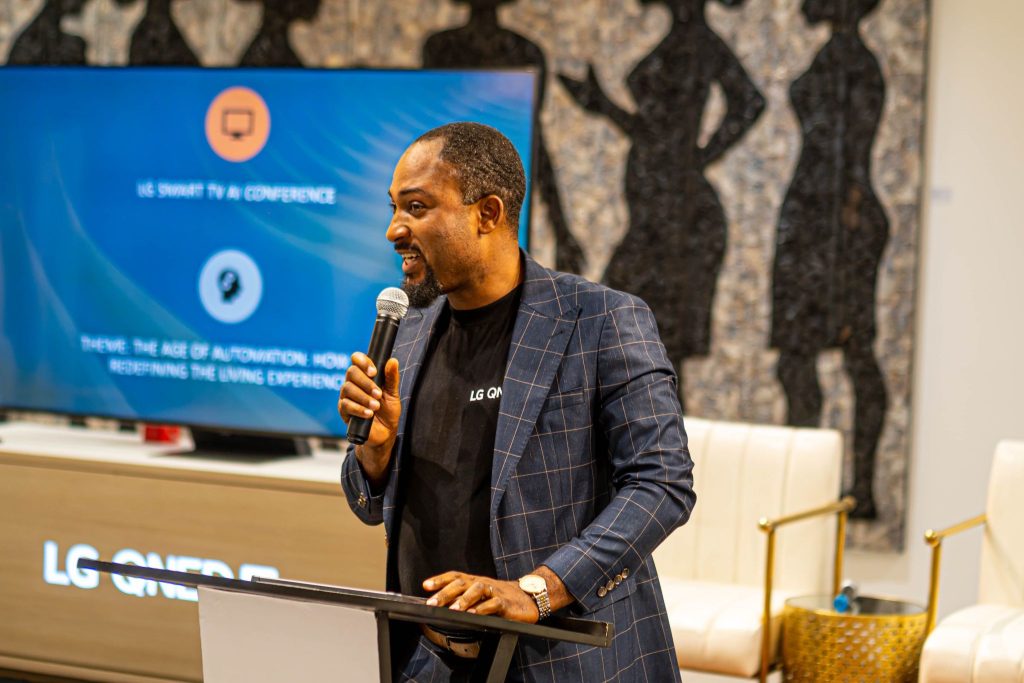
Corporate social responsibility in Nigeria often lives inside a single press release. It gets announced once and is rarely revisited. For Moses Osime, Public Relations and Corporate Social Responsibility Manager at LG Electronics Nigeria, the job has instead become an exercise in repetition.
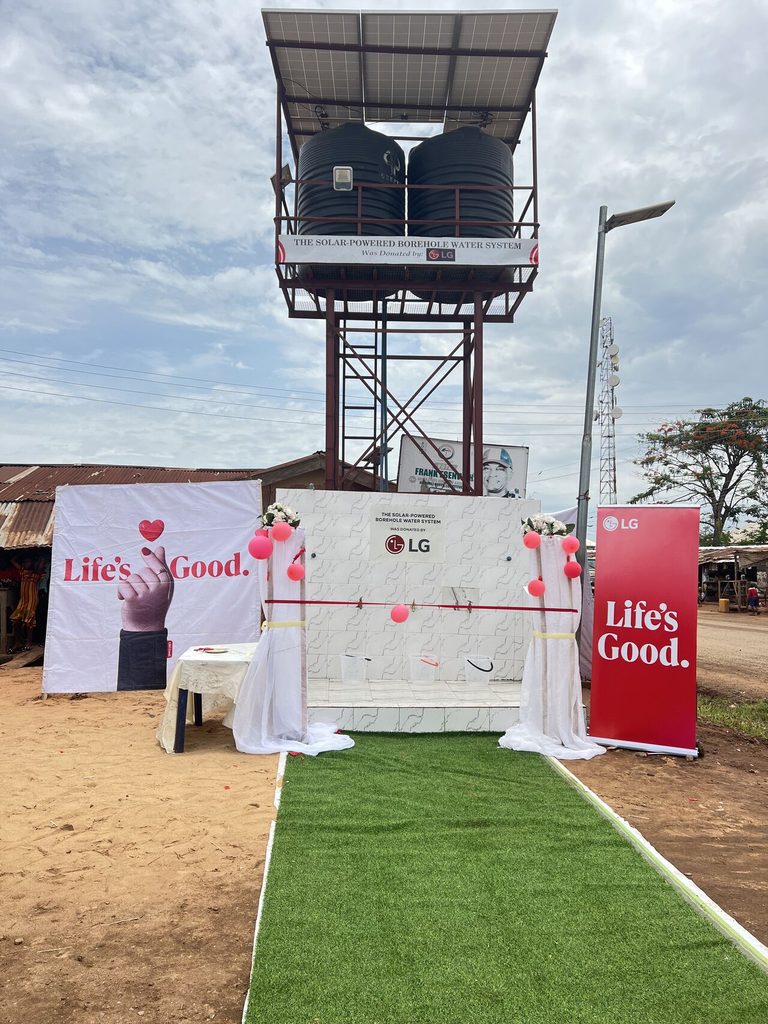
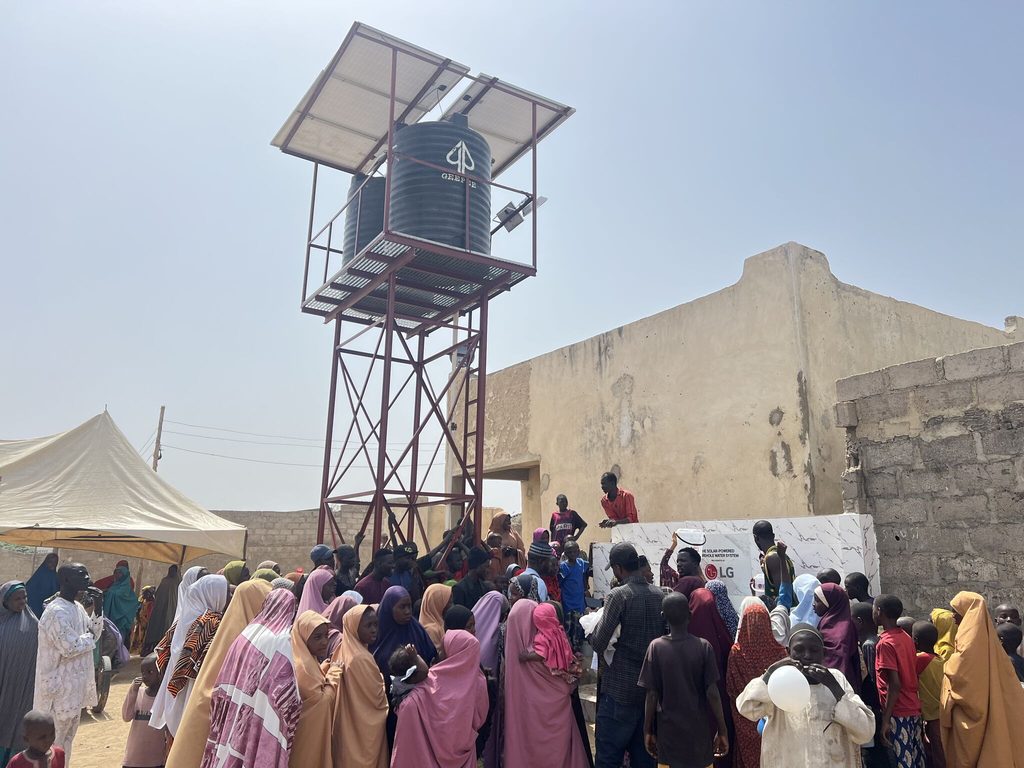
Rather than chasing one flagship donation, his portfolio reads as a running list. Eighteen solar-powered boreholes were commissioned across Nigeria’s geopolitical zones just this year. Then a nineteenth arrived in September 2026, this time in Kaduna State’s Nariya Rigasa community.
That number matters less as a statistic than as a pattern. Nigerian CSR coverage tends to reward the ribbon-cutting moment. It then moves on to the next announcement.
Osime’s work, however, has quietly built something more structural. It is a recurring, plant-independent water access programme. It treats infrastructure as an ongoing obligation rather than a one-time gesture.
Consequently, the story around him is less about a single project. It is instead about the discipline of showing up in community after community with the same commitment.
From Building A Project To Building A Pattern
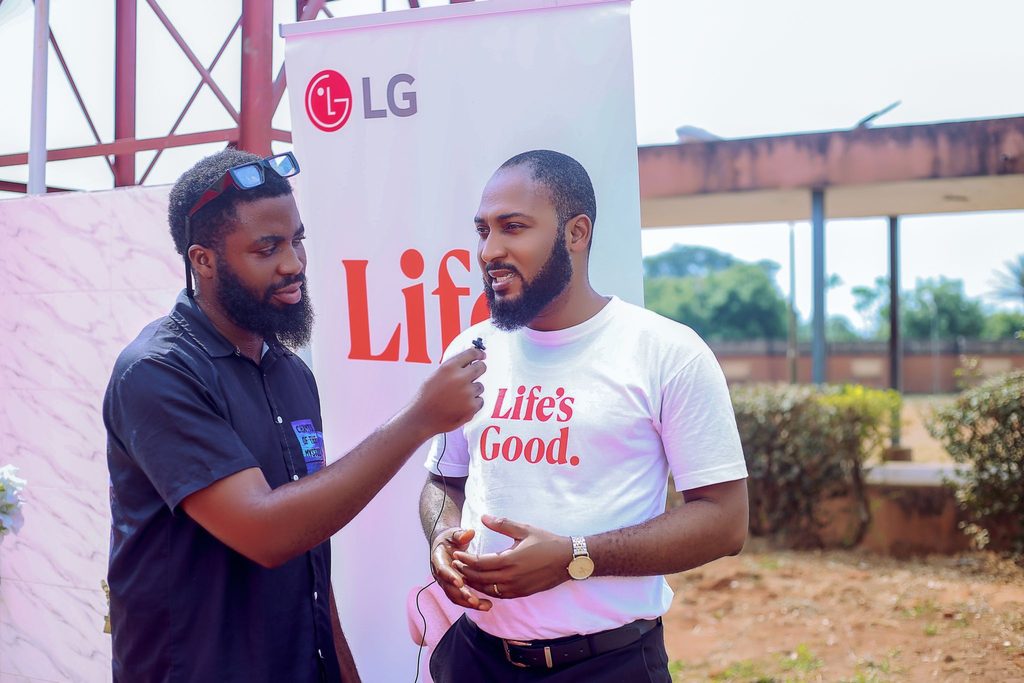
Osime’s most recent commissioning took place at Nariya Rigasa. There, LG donated a solar-powered borehole to a community that previously relied on inconsistent water sources. Speaking at the event, he described the project as an expression of a specific philosophy. “CSR becomes meaningful when it responds to a genuine need and continues creating value after the commissioning ceremony is over,” he said. He added that interventions should stay relevant to people’s lives and sustainable within their communities long after the cameras leave.
That language was not new for Osime. Similar commitments accompanied earlier commissionings this year. One was an April 2026 project in Omuafor, in the Aboh-Mbaise local government area of Imo State. Another was a May 2026 handover in Ifa Ikot Idang, within the Etoi clan of Uyo local government area, Akwa Ibom State.
In each case, Osime or his colleague Paul Mba, Head of Corporate Marketing at LG Electronics Nigeria, framed the borehole as more than charity. Instead, they presented it as proof of the company’s Environmental, Social and Governance strategy in practice. Therefore, the Nariya Rigasa project reads less like an isolated act of goodwill. It looks more like the latest instalment in a deliberate rollout.
LG has now touched all four of Nigeria’s geopolitical zones with this specific intervention. The programme moved from the South-East to the South-South and now into the North. That geographic spread was built one commissioning at a time.
Meanwhile, the pace itself is notable. Nineteen sites in roughly a year and a half suggests a standing budget line rather than a one-off gesture. That distinction matters to anyone tracking whether Nigerian CSR spending is becoming more structural or remains largely reactive.
Engineering Meets Empathy
The solar dimension of these boreholes was reportedly championed internally by Hyoungsub Sub Ji, Managing Director of LG Electronics Nigeria. His backing gave the initiative its renewable-energy backbone. Each system typically pairs a deep borehole, reaching 180 feet in the Akwa Ibom case, with a solar array and storage tank.
Together, these keep water flowing independent of Nigeria’s often unreliable national grid. That design choice is not incidental. It reduces recurring operating costs for host communities. It also removes a common failure point in donated infrastructure, namely dependence on a grid connection that may itself be unreliable.
For Osime, that technical detail is inseparable from the human one. Describing the Akwa Ibom project, he called it “a deeply human initiative that transcends infrastructure.” He pointed to the daily burden that unreliable water access places on households. Women and children, he noted, typically carry that burden.
Similarly, at the Kaduna commissioning, a community representative echoed the same theme. She said improved water access meant less difficulty and more time for other responsibilities for the women of Nariya Rigasa.
In other words, Osime’s public role has increasingly become that of a translator. He converts an engineering decision made in a boardroom into language communities recognise as tangible relief. That translation work is easy to overlook in CSR coverage. Coverage often privileges the executive announcing a strategy over the manager tasked with explaining, defending and repeating it in community after community.
Nonetheless, it is precisely that repeated explanation, delivered nearly two dozen times across different states and traditional structures, that has given LG’s water programme a coherent public identity.
A Practitioner’s View From Inside The Machine
Unlike many executives typically profiled for their sustainability titles, Osime occupies a hybrid function. He combines public relations with corporate social responsibility, a structure increasingly common among multinationals in Nigeria’s consumer electronics and manufacturing sectors.
That dual mandate means his job includes both designing community interventions and articulating why they matter. Arguably, that combination shapes how consistently LG’s water programme has been communicated across nearly two dozen ceremonies.
This pairing also reflects a broader shift that Osime himself has pointed to. Corporate social responsibility, in his words, is moving beyond episodic philanthropy. Instead, it is moving towards interventions designed around relevance, sustainability and measurable human value.
Historically, Nigeria’s CSR sector has rewarded splashy, one-off donations timed to generate coverage around a single news cycle. Osime’s approach, whether by design or necessity, has instead built a slower, cumulative form of visibility. It happens one borehole and one community at a time.
Furthermore, the programme’s consistency gives LG’s ESG messaging a credibility that isolated interventions rarely achieve on their own. Nineteen commissionings, spread across several years and four geopolitical zones, constitute a documented track record.
That is a very different thing from a single unverified claim. For a company whose Nigerian operations are best known for consumer electronics rather than social investment, that track record is doing quiet reputational work. A single donation could never accomplish the same thing.
Community Voices As Evidence
What distinguishes the Nariya Rigasa project from a typical corporate press release is simple. It is the space given to community voices inside the coverage itself. Local leaders, including the Imam of Niraya Mosque and the district head of Nariya Rigasa, were present at the commissioning alongside Osime. Their remarks were folded directly into the public account of the event. That inclusion signals an editorial choice on LG’s part. It treats community testimony as evidence of impact, not merely as a supporting quote beneath a corporate headline.
Similarly, in Akwa Ibom, community leaders were named participants rather than passive recipients of a company’s largesse. These included the Vice Chairman of Mboho Mkparawa Ibibio and youth representatives from Ifa Ikot Idang. That pattern has repeated across Imo, Akwa Ibom and now Kaduna. It suggests a communications approach built around local ownership rather than corporate spectacle.
Nonetheless, questions remain about scale relative to need. Nineteen boreholes, however well engineered, address only a fraction of Nigeria’s water access gap. Osime’s own public statements acknowledge as much. Each project, he suggests, should be judged by what happens after the ceremony ends, not by the ceremony itself.
Independent, third-party verification of long-term maintenance across all borehole sites is not yet publicly available. That gap will matter more as the programme’s history lengthens and as scrutiny of Nigerian ESG claims grows more rigorous.
Why He Matters Now
Nigeria’s CSR conversation is dominated by banking, oil and telecommunications. These are sectors with the balance sheets to fund headline-grabbing sustainability reports. Consumer electronics rarely features in that conversation, which is precisely what makes Osime’s role notable. He represents a quieter model of corporate citizenship. It is one built by a communications and CSR practitioner rather than a dedicated sustainability executive, and sustained through repetition rather than a single landmark announcement.
As LG continues expanding its water access programme into new states, Osime’s task will stay the same. He must keep translating each commissioning into the same language of relevance and continuity that defined the previous eighteen. Ultimately, that consistency, more than any single ceremony, is what makes Moses Osime this week’s CSR Personality of the Week.
[give_form id="20698"]