

Dangote Cement Supports 80 Students, Commissions Four Transformers in Edo Host Communities
 ONYINYECHI NWAIGBA
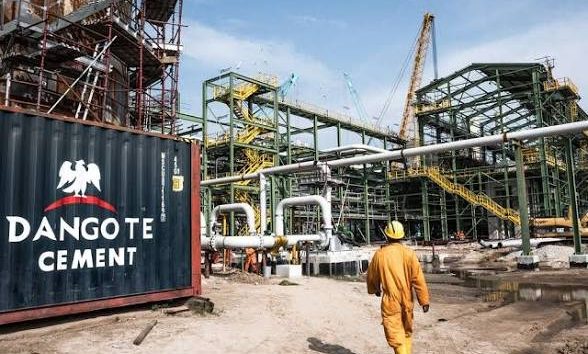
Dangote Cement’s Okpella Plant has awarded scholarships worth ₦32 million to 80 students and commissioned four 500KVA transformers in its host communities in Edo State. The interventions highlight the role of corporate investment in education and local infrastructure, but their long-term value will depend on sustained support, reliable electricity and measurable improvements in community wellbeing.
For communities located around large industrial operations, development should extend beyond the economic activities taking place within factory walls. Residents also need opportunities to access quality education, reliable electricity, healthcare, improved infrastructure and sustainable livelihoods.
This makes the relationship between businesses and their host communities an important part of responsible corporate operations.
Dangote Cement Plc’s Okpella Plant has taken another step in this direction by awarding scholarships to 80 students and commissioning four 500KVA transformers in Okpella, Edo State.
The interventions were unveiled on October 29, 2026, under the company’s Community Development Agreement (CDA) with its host communities.
The educational component involved scholarship awards totaling ₦32 million, while the commissioned transformers are intended to improve electricity distribution, support businesses and create a better environment for learning and other economic activities.
The event attracted traditional rulers, community representatives, youth groups, students, parents, government officials and company executives.
While the projects provide support in two important areas of community development, they also raise a broader question about how companies can ensure that their social investments create lasting improvements in the communities where they operate.
Education Support for 80 Students
One of the major components of the intervention is the scholarship programme, which provides financial assistance to students at secondary and tertiary levels.
A total of 80 students benefited, comprising 60 undergraduates studying at tertiary institutions across Nigeria and 20 secondary school students drawn from the company’s host communities.
Under the programme, each undergraduate received ₦500,000, while each secondary school beneficiary received ₦100,000.
This brings the total scholarship allocation to ₦32 million, comprising ₦30 million for undergraduates and ₦2 million for secondary school students.
The Social Performance Manager of Dangote Cement’s Okpella Plant, Daniel Obamina, said the initiative reflects the company’s commitment to human capital development and its belief in education as a tool for social transformation.
The financial support comes at a time when the cost of education continues to place pressure on Nigerian households.
For university students, assistance with educational expenses can help reduce the financial burden associated with tuition, accommodation, learning materials and other academic requirements. For secondary school students, financial support can help families manage the costs of keeping their children in school.
Scholarship programmes can also contribute to educational continuity by providing assistance to students whose academic progress may otherwise be affected by financial difficulties.
However, the long-term value of such programmes depends on more than the amount distributed. It is also important to examine whether the support reaches students who need it, whether it is sustained over time and whether beneficiaries are able to complete their education.
The inclusion of both secondary school and undergraduate students provides an opportunity to support young people at different stages of their academic journeys.
Four Transformers to Address Electricity Needs
Beyond education, Dangote Cement commissioned four 500KVA transformers to improve electricity distribution in its Okpella host communities.
Access to reliable electricity remains an important requirement for household welfare, education and local economic activity.
For small businesses, electricity supports daily operations, from running equipment and preserving goods to providing services and communicating with customers.
When electricity supply is unreliable, business owners may have to depend on petrol generators and other alternative sources, increasing operating expenses and reducing available income.
Households also experience the effects of inadequate electricity. Students may struggle to study, families may face additional energy costs, and access to certain basic services can become more difficult.
The company’s Social Performance Manager said the transformer commissioning was intended to improve power distribution, support businesses, enhance learning environments and improve residents’ quality of life.
The intervention is therefore significant because electricity infrastructure can benefit more than individual households. When distribution improves, businesses, schools and other community facilities may also gain from more dependable power.
However, commissioning transformers is only one part of improving electricity access.
Their actual impact will depend on proper installation, connection to the distribution network, adequate electricity supply, maintenance and effective coordination with the relevant electricity distribution company.
The number of transformers installed does not automatically establish that every household or business in the benefiting communities will experience improved electricity supply.
Continued monitoring will be necessary to determine whether the infrastructure is addressing the electricity challenges it was introduced to solve.
The Role of Community Development Agreements
The scholarships and transformer projects were implemented under Dangote Cement’s Community Development Agreement with its Okpella host communities.
In July 2024, the company announced the signing of its first Community Development Agreement with the communities around the Okpella Plant.
At the time, the company described the agreement as a framework for supporting community development and improving the welfare of residents through initiatives involving infrastructure, healthcare, education and economic empowerment.
Community Development Agreements are important because they provide a structured basis for engagement between companies and the communities affected by their operations.
Industrial activities can influence the economic, social and environmental conditions of surrounding communities. These effects make consistent engagement and clearly defined development commitments important.
Rather than relying entirely on occasional donations or one-off corporate social responsibility activities, structured agreements can help companies and community representatives identify priorities and establish areas of responsibility.
For host communities, such arrangements provide an opportunity to communicate their needs and participate in decisions concerning projects that affect their welfare.
For companies, they can strengthen relationships with residents, support local development and create a more collaborative operating environment.
However, an agreement is only as meaningful as its implementation. Communities need to understand what has been promised, what has been delivered and what remains outstanding.
The latest scholarship and transformer projects provide examples of interventions being implemented under the Okpella agreement. Continued reporting on the agreement’s activities would help residents and other stakeholders assess progress over time.
Why Corporate Investment in Host Communities Matters
Industrial companies often operate in locations where surrounding communities have significant development needs.
Their presence can generate employment, create demand for local suppliers and stimulate economic activities. However, these benefits do not necessarily translate into improvements in education, electricity access or other essential services without deliberate investment and collaboration.
Corporate community investment can help address some of these gaps.
Education support can improve access to learning opportunities, while infrastructure projects can strengthen the conditions under which households and businesses operate.
Other interventions, including vocational training, healthcare support, skills development and access to finance, can help communities build stronger economic and social foundations.
For companies, such investments should form part of a broader understanding of responsible business conduct.
The goal should not simply be to demonstrate that money has been spent or projects have been commissioned. It should be to understand whether these interventions are addressing community priorities and producing measurable improvements.
This requires listening to residents, involving relevant stakeholders in project planning and establishing ways to assess the results of investments.
What Should Be Measured Beyond the Announcements?
The latest intervention provides an opportunity to examine how the company’s community development commitments translate into practical results.
For the scholarship programme, relevant indicators include the number of beneficiaries who continue their education, their academic progress, the extent to which financial support reduces barriers to schooling and whether the programme reaches students from households facing financial difficulties.
For the transformer project, the most important question is whether electricity distribution actually improves in the benefiting communities.
This can be assessed through the number of households and businesses connected to the improved infrastructure, changes in electricity availability, the frequency of outages and the reliability of maintenance arrangements.
It is also important to establish how community members are involved in identifying priorities and evaluating completed projects.
The Chairman of the Executive Committee of Host Communities, High Chief Peter Afiabor, commended Dangote Cement for its interventions and described them as evidence of the value of constructive engagement between companies and their host communities.
He also noted that the scholarships would provide financial relief to families while the transformers would address important electricity needs.
Such community feedback is important, but long-term assessments would provide a clearer understanding of the results.
Regular updates from the company and community representatives could help establish whether the interventions are delivering the expected benefits and identify areas requiring further attention.
Building Beyond One-Time Interventions
Dangote Cement’s latest intervention in Okpella demonstrates how corporate community investment can combine educational support with infrastructure development.
The ₦32 million scholarship allocation provides financial assistance to 80 students, while the commissioning of four transformers addresses an important infrastructure need in the surrounding communities.
Together, these interventions recognize two areas that influence community development: access to education and the availability of essential infrastructure.
However, the wider challenge is ensuring that such projects form part of continuous development rather than isolated activities.
Students need sustained opportunities to complete their education and develop relevant skills. Communities need infrastructure that remains functional, while local businesses require an environment that supports productivity and growth.
For responsible businesses, the effectiveness of community investment should therefore be assessed through the changes it creates, not just the resources committed.
As Dangote Cement continues implementing its Community Development Agreement in Okpella, transparent reporting, regular community engagement and measurable outcomes will be essential to demonstrating the value of these interventions.
Ultimately, the relationship between an industrial company and its host communities should be reflected in shared progress. The success of community investment lies not only in what a company provides, but also in whether residents experience lasting improvements in their opportunities, livelihoods and quality of life.
[give_form id="20698"]