DR Congo’s Plan to Lift 23-Year Moratorium on Logging Concessions Sparks Climate, Governance Concerns
 CHUKS OLUIGBO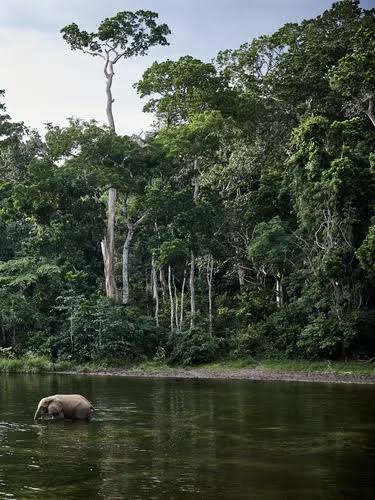
Congo Basin. Image credit: World Wildlife Fund
The plan by the Government of the Democratic Republic of the Congo (DRC) to lift a 23-year moratorium on the allocation of new industrial logging concessions have sparked concerns that the move could jeopardise climate commitments, undermine recent forest governance reforms, and expose vast areas of the Congo Basin to unsustainable exploitation.
In an open letter addressed to the Prime Minister, a coalition of over 70 environmental, indigenous rights, and human rights organisations urged the government to immediately suspend all ongoing efforts to lift the moratorium.
This comes in the wake of revelations that plans to lift the ban through draft legislation are at an advanced stage, potentially opening tens of millions of hectares of tropical forests to the timber industry.
Why the Moratorium Was Enacted
The DRC’s logging moratorium was enacted in May 2002 to curb rampant corruption and unsustainable exploitation in the Congo Basin. Months later, the Forest Code was passed with the World Bank backing to establish the strict rules required to eventually lift the moratorium.
Over the years, international funds, including the Norwegian-funded Central African Forest Initiative (CAFI), have pledged billions to protect the Congo Basin, but on the condition that the DRC maintain the moratorium and clean up forest governance. In October 2017, for instance, CAFI greenlighted the transfer of $41.2 million to the DRC’s national fund for Reducing Emissions from Deforestation and forest Degradation (REDD+), sparking concerns that significant funds have been disbursed in the absence of due diligence.
A History of Violations
A 2016 investigation by Greenpeace Africa uncovered violations of the 2002 moratorium by the DRC government. Findings by Greenpeace Africa revealed that the government granted three concessions of a total of 650.000 hectares in 2015 to Chinese-owned logging companies Société la Millénaire Forestière (SOMIFOR) in Equateur and Tshuapa Provinces, and La Forestière pour le Développement du Congo (FODECO) in Tshopo Province.
In August 2016, following instructions from then Prime Minister Augustin Matata Ponyo, the Environment Minister, Robert Bopolo, cancelled the concessions.
However, on 1 February 2018, the new Minister of Environment, Amy Ambatobe, reinstated the concessions, igniting fresh calls for revocation and holding the perpetrators accountable.
“We are alarmed that the Minister of Environment has illegally reallocated these concessions in breach of the 2002 moratorium on new industrial logging titles despite their earlier cancellation. Greenpeace Africa calls on the Congolese government to revoke these concessions once more and, this time, sanction the perpetrators,” said Irene Wabiwa Betoko, Greenpeace Africa Senior Campaign Manager.
A Timely Call
The recent concerns by a coalition of rights groups come at a pivotal moment as the DRC seeks to strengthen its position as a global “solutions country” in addressing the climate and biodiversity crises.
The country has demonstrated a clear ambition to build a development model that combines conservation, social justice and sustainable economic growth through flagship initiatives like the Kivu-Kinshasa Green Corridor, ongoing land and forest governance reforms, the recognition of Indigenous Peoples’ and Local Communities’ rights, and international environmental commitments.
Prematurely lifting the moratorium, the coalition reckons, would undermine this positive momentum, threatening the Congo Basin’s globally important ecosystems, the rights and livelihoods of forest-dependent communities, and the DRC’s international credibility as a leader in climate action and sustainable forest governance.
Bonaventure Bondo, Congo Basin Forest Campaigner at Greenpeace Africa, said lifting the moratorium without effective governance mechanisms, including robust monitoring and enforcement systems, would open the door to industrial expansion with disproportionate consequences for the communities that depend directly on forests.
“Greenpeace Africa has joined this coalition because protecting the Congo Basin forests means protecting our collective future,” Bondo said.
Why the Congo Basin Matters
The Congo Basin, covering roughly 300 million hectares, is the world’s second-largest tropical rainforest and acts as the planet’s largest net carbon sink. It spans six Central African nations: Cameroon, the Central African Republic (CAR), the Democratic Republic of the Congo (DRC), Equatorial Guinea, Gabon, and the Republic of the Congo. However, about 155 million hectares of these forests lie within the DRC, representing around a tenth of the world’s remaining tropical forest.
According to ScienceDirect, the region’s vegetation and peatlands store over 90 billion tons of carbon, equivalent to roughly 10 years of global energy-sector emissions.
The Congo Basin is home to iconic and endangered wildlife including forest elephants, lowland gorillas, bonobos, okapis, hundreds of bird species and tens of thousands of plant species..
The ecosystem directly supports the livelihoods of more than 75 million people, including numerous indigenous communities.
Destroying the Congo Basin forests through deforestation, illegal logging, and mining will accelerate global climate change, trigger severe regional water shortages, and devastate local economies and wildlife populations. According to analysis by Zero Carbon Analytics, because the tropical rainforests of the Congo Basin regulate rainfall both locally in Central Africa and across West Africa, destroting the ecosystem would create a domino effect from the local communities of Central Africa to global agricultural markets.
Legal Conditions Not Yet Fulfilled
The technical analysis accompanying the open letter demonstrates that the legal conditions required to lift the moratorium have not yet been fulfilled. It also highlights persistent weaknesses in forest governance, significant risks of land-use conflicts, the limited economic contribution of industrial logging, and the environmental and social impacts associated with allocating new logging concessions.
The coalition stresses that, rather than expanding an extractive model with limited long-term benefits, the DRC has a unique opportunity to strengthen community forestry, improve forest governance, secure community land rights, and attract greater investment in conservation and sustainable development.
“Opening these climate-critical forests to more industrial logging would severely undermine the DRC’s standing as a ‘solutions country’ at a time when it has taken several positive steps to improve forest governance and recognise the rights of Indigenous Peoples and other forest-dependent communities,” said Joe Eisen, Executive Director of Rainforest Foundation UK.
“The DRC and its international partners should stick to this path rather than pursuing failed extractive models that deliver little benefit for forests or rural Congolese communities,” he said.
Indigenous Peoples’ Rights Matter
For the Congolese organisations within the coalition, protecting forests begins with protecting the rights of the people who have safeguarded them for generations.
Blaise Mudodosi Muhigwa, Actions pour la Promotion et la Protection des Peuples et Espèces Menacés (APEM), said, “Most existing logging concessions have already been converted into conservation concessions, while more than half of those that remain have ceased operations. This raises a legitimate question: who would truly benefit from lifting the moratorium?“
What the Coalition Demands
The coalition is calling on the Government of the Democratic Republic of the Congo to halt all ongoing initiatives aimed at lifting the moratorium until the legal conditions have been fulfilled. It said this would advance the country’s forest governance, land-use planning and Indigenous Peoples’ rights reforms, and strengthen transparency, oversight and law enforcement throughout the forestry sector.
The coalition also calls on the DRC’s technical and financial partners to continue supporting sustainable forest management models based on community forestry, biodiversity conservation, respect for human rights and inclusive local development.The signatory organisations reaffirm their commitment to working alongside the Government of the Democratic Republic of the Congo, Indigenous Peoples, Local Communities, civil society organisations and international partners to strengthen ongoing reforms, protect the Congo Basin forests, and promote a development model grounded in climate justice, good governance and the sustainable management of natural resources.
[give_form id="20698"]