El Niño and Nigeria’s Food Security: Why Smallholder Farmers May Bear the Biggest Cost
 ONYINYECHI NWAIGBA
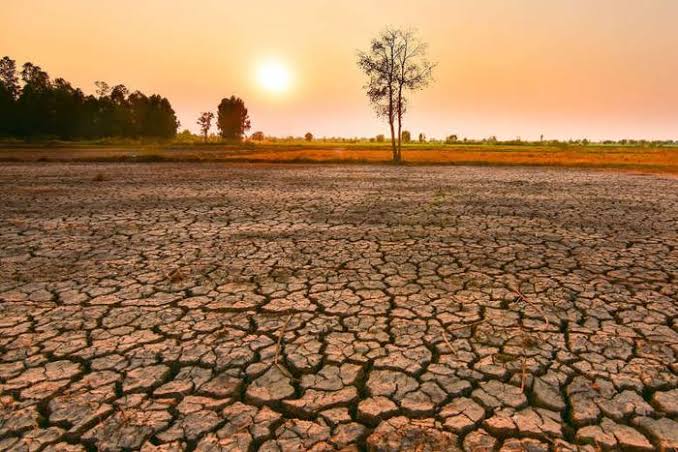
As climate forecasts raise concerns about agricultural drought across parts of West Africa, Nigeria faces another test of its food system, with smallholder farmers, agricultural productivity and household food security potentially at risk.
Nigeria’s food security could face another significant challenge as the developing 2026/2027 El Niño weather phenomenon raises concerns about rainfall patterns, agricultural production and the livelihoods of millions of farmers.
The warning comes from the International Fund for Agricultural Development (IFAD), whose latest report, Food Systems Under Stress: Building Resilience from the First Mile, highlights how climate-related disruptions, rising energy prices and increasingly expensive agricultural inputs are placing additional pressure on food producers, particularly small-scale farmers.
Released at the opening of the 2026 United Nations Climate Change Conference (COP31) in Antalya, Türkiye, the report identifies a potential agricultural drought corridor stretching from Senegal through Nigeria to Ethiopia and Sudan.
Although the forecast for the West Africa-Sahel corridor carries a lower level of confidence, the potential consequences deserve attention, particularly for countries where agricultural production depends heavily on seasonal rainfall.
For Nigeria, the concern extends beyond the possibility of reduced harvests. It raises questions about how prepared the country’s agricultural sector is to withstand another climate-related disruption at a time when farmers are already dealing with high production costs.
Understanding the El Niño Threat
El Niño is a naturally occurring climate phenomenon characterised by unusually warm surface waters in the central and eastern tropical Pacific Ocean. These changes influence atmospheric circulation, altering rainfall and temperature patterns across different parts of the world.
Depending on the region, its effects can include prolonged dry conditions, excessive rainfall, flooding and higher temperatures.
For parts of the Sahel, previous major El Niño events have been associated with localised rainfall deficits of between 20 and 35 per cent. According to the IFAD report, these deficits have been linked to potential yield reductions of 15 to 30 per cent in major rain-fed staple crops such as millet, sorghum and maize.
These figures describe historical patterns and potential impacts rather than confirmed projections for every Nigerian farming community.
Nevertheless, they highlight the risks facing agricultural systems that depend on predictable rainfall for planting, crop development and harvesting.
The timing is particularly important. IFAD warns that the 2026/2027 El Niño could have substantial economic consequences, estimating potential global income losses of up to $11 trillion over the next five to six years.
The estimate includes agricultural losses, infrastructure damage and wider economic disruptions resulting from higher food and commodity prices, reduced demand and interruptions to international trade.
Why Nigerian Farmers Are Particularly Exposed
Agriculture remains an important source of employment and income in Nigeria, particularly across rural communities. A significant proportion of the country’s agricultural production also depends on rainfall rather than fully developed irrigation systems.
This dependence makes farmers vulnerable to changes in rainfall timing, prolonged dry spells and unpredictable weather conditions.
For smallholder farmers, the consequences can be particularly severe.
Unlike larger commercial agricultural operations, many small-scale producers have limited access to irrigation infrastructure, improved seeds, affordable financing, agricultural insurance and modern farming technologies.
A prolonged dry spell could force farmers to replant, reduce the size of cultivated land or abandon crops altogether. Where rainfall becomes insufficient during critical stages of crop development, yields may decline, reducing both household income and the volume of food available for local markets.
The consequences can extend beyond individual farms.
Smallholder farmers support agricultural supply chains that connect rural producers to food processors, traders, distributors and consumers. When production becomes unstable, the effects can spread across these interconnected businesses.
This makes agricultural resilience an economic and social development issue, not simply an environmental concern.
Rising Farm Costs Could Make the Situation Worse
One of the most concerning aspects of the IFAD report is that the potential climate disruption is emerging alongside rising energy and fertiliser costs.
Farmers are already operating in an environment where the cost of production can determine whether agricultural activities remain profitable.
Higher fertiliser prices make it more expensive to maintain soil fertility and support crop development. Rising fuel and energy costs also affect land preparation, irrigation, harvesting, processing and transportation.
For farmers with limited financial resources, these pressures can create difficult decisions.
Some may reduce the quantity of fertiliser they apply, use less expensive but potentially lower-quality inputs or cultivate smaller portions of their available land. Others may struggle to afford the transportation required to move harvested produce to markets.
The Food and Agriculture Organization’s September 2026 country brief on Nigeria also highlighted the pressure of high agricultural input prices on cereal production.
According to the FAO, fertiliser prices increased between February and May 2026, with NPK rising by approximately 12 per cent and urea by 43 per cent. Higher fuel prices also increased production and transportation costs.
These existing pressures demonstrate why another weather-related disruption could be particularly difficult for farmers to absorb.
Even where harvests are not significantly affected by rainfall changes, rising input and operating costs can reduce farmers’ earnings and weaken their ability to invest in subsequent planting seasons.
What Could This Mean for Nigeria’s Food Security?
The relationship between agricultural production and food security goes beyond the quantity of food harvested.
When farmers experience production losses, their ability to earn income, employ agricultural workers and supply local markets can decline.
If reduced production affects the availability of important staples, consumers may also face additional pressure from rising food prices.
For households already spending a substantial proportion of their income on food, even moderate increases can affect the quantity and quality of food they can afford.
There are also implications for agricultural businesses.
Food processors, distributors, retailers and other businesses that depend on consistent supplies of agricultural produce may experience higher sourcing costs and supply disruptions.
Small businesses operating within agricultural value chains could face reduced sales, lower profit margins and difficulties maintaining operations.
The potential consequences therefore extend from rural farming communities to urban households and businesses that depend on agricultural production.
Nigeria’s food security challenge is also influenced by other factors, including insecurity in farming communities, inadequate storage facilities, poor transportation infrastructure and limited access to agricultural finance.
El Niño should therefore be understood as an additional risk to an already pressured food system rather than the sole explanation for Nigeria’s agricultural challenges.
Building Resilience Before the Next Agricultural Shock
While the risks associated with El Niño deserve attention, the situation also presents an opportunity for Nigeria to strengthen its agricultural preparedness.
One important priority is expanding access to irrigation.
Reducing dependence on rainfall through affordable irrigation systems would allow farmers to maintain production during periods of insufficient rainfall. Investments in solar-powered irrigation could also help reduce long-term energy expenses, particularly for farmers in rural communities with unreliable electricity supply.
Access to climate information is equally important.
Farmers need timely and location-specific weather forecasts that can guide decisions on planting periods, crop selection and water management. Early warnings are most useful when they reach farmers in formats they can understand and translate into practical action.
The availability of climate-resilient seeds and improved agricultural practices should also receive greater attention. Drought-tolerant crop varieties, better soil management, agroforestry and water conservation techniques can help reduce farmers’ exposure to changing weather conditions.
However, these interventions require more than awareness campaigns. Farmers must be able to access the necessary technologies, training and financial resources.
This is where agricultural financing becomes particularly important.
Smallholder farmers often lack the collateral and financial history required to access conventional loans. Expanding affordable agricultural credit, insurance schemes and targeted financing can help them invest in better farming practices while providing some protection against unexpected losses.
IFAD’s report makes a strong case for combining these interventions rather than treating them as isolated solutions.
Its analysis found that finance-focused interventions, such as insurance, reduced farmers’ income losses during combined drought and price shocks by 9.8 per cent. However, when interventions covering agricultural inputs, market access and finance were combined, income losses were reduced by 18.7 per cent.
The findings demonstrate the value of an integrated approach to agricultural resilience.
A Food Security Challenge That Requires Collective Action
Preparing for climate-related agricultural disruptions cannot be the responsibility of farmers alone.
Government institutions, financial organisations, development agencies, agricultural businesses and private investors all have important roles to play in strengthening the resilience of Nigeria’s food systems.
Government investment in irrigation infrastructure, agricultural research, rural roads and climate information services can help reduce the risks facing producers.
Financial institutions can develop more accessible financing products for smallholder farmers, while agricultural companies can support improved access to seeds, fertilisers, equipment and markets.
Development organisations can also help close existing gaps in technical knowledge, financing and climate adaptation, particularly among rural communities with limited resources.
For businesses operating within agricultural value chains, investing in resilient sourcing systems and supporting the farmers who supply their operations can contribute to more stable production and stronger local economies.
Ultimately, the potential El Niño disruption is a reminder that food security depends on the strength of the entire agricultural value chain.
Nigeria cannot afford to wait until failed harvests, reduced farm incomes and rising food prices become more pronounced before taking action.
The warning provides an opportunity to strengthen preparedness, improve access to agricultural resources and ensure that farmers have the support required to withstand future climate shocks.
The real test will not simply be how Nigeria responds to the next difficult planting season, but whether it can build an agricultural system capable of protecting livelihoods and maintaining food production despite an increasingly unpredictable climate.
DON’T JUST ANNOUNCE YOUR IMPACT. PROVE IT.
Have an initiative worth documenting? Let us verify it. Document it. Tell the story.
CSR REPORTERS helps organisations verify, assess, document and communicate the real impact of their CSR and sustainability initiatives.
Project Verification | Beneficiary Feedback | Impact Assessment | Impact Storytelling | Stakeholder Engagement
Talk to CSR REPORTERS
enquiries@csrreporters.com
📞 Call/WhatsApp: 0803 401 2198 | 0903 329 6374 | 0905 024 4468 | 0803 209 8499
www.csrreporters.com