Foundation Invests Over ₦20m to Equip 500 Nigerian Youths for Employment and Entrepreneurship
 ONYINYECHI NWAIGBA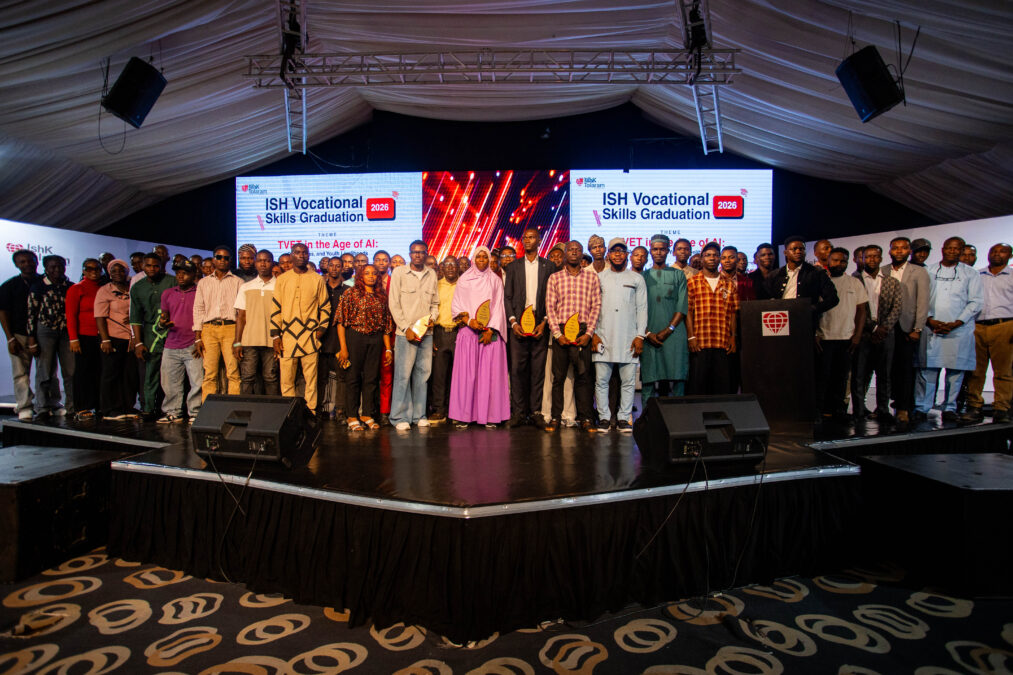
The foundation’s six-month vocational program combines technical training, workplace experience, soft skills and post-training business support as it seeks to turn skills acquisition into sustainable livelihoods.
The Ishk Tolaram Foundation has invested more than ₦20 million in tools and business support for vocational training graduates, as it seeks to help young Nigerians move beyond skills acquisition into employment and entrepreneurship.
The intervention was announced as 500 young Nigerians graduated from the foundation’s 2026 vocational skills programme, bringing the number of young people the foundation says it has trained through its skills development initiatives to more than 2,000.
The program covers practical trades including fashion design, carpentry and furniture making, masonry, plumbing, heating, ventilation and air conditioning (HVAC), and solar installation.
For the foundation, the intervention reflects a broader approach to youth development: training alone may not be enough if beneficiaries leave a programme without the tools, experience or support required to put their skills to work.
Speaking at the graduation ceremony, Oje Ivagba, Programme Director, Nigeria (Skilling), Ishk Tolaram Foundation, said the organisation’s approach combines technical knowledge with soft skills, workplace experience, certification and post-training support.
Through its Alumni Business Support Grant, the foundation has invested more than ₦20 million in tools for some of its outstanding graduates, according to Ivagba.
The support is intended to help beneficiaries establish or expand businesses after completing their training.
From Training to the Workplace
The foundation’s vocational model runs for six months, with the first three months focused on intensive technical training and the remaining three months dedicated to industrial attachment with partner organisations.
According to Abiola Oyeneye, Senior Programme Manager at the foundation, beneficiaries receive a 100 per cent scholarship, basic training tools and personal protective equipment, removing some of the financial barriers that can prevent young people from accessing vocational education.
The industrial attachment component is designed to give participants exposure to real workplace environments, allowing them to apply the knowledge acquired during training.
Some participants also receive stipends where their internships are paid, Oyeneye said.
This combination of classroom-based learning and workplace exposure is significant because the transition from training to employment is often one of the biggest challenges facing young people entering the labour market.
A certificate can demonstrate that someone has completed a course, but employers and customers also need evidence that the individual can perform the job in a real-world setting.
By placing industrial experience inside the six-month programme, the foundation is attempting to shorten that gap.
Building More Than Technical Skills
The programme also places emphasis on skills beyond the technical trades.
Beneficiaries undergo soft-skills and mindset development covering areas such as teamwork, resilience, self-awareness and goal-setting.
The foundation says this is deliberate because succeeding in a trade or running a small business requires more than knowing how to perform a technical task.
For a young plumber, electrician, fashion designer, carpenter or solar installer, for example, business success can also depend on communication, customer relationships, financial management, reliability and the ability to adapt to changing market demands.
That approach also reflects the foundation’s broader objective of producing not only employable workers but potential entrepreneurs and job creators.
The foundation says more than 70 per cent of the young people it has trained are currently employed or running businesses.
However, that figure is a self-reported outcome from the foundation and has not been independently verified.
The foundation’s own Skills Hub currently reports more than 1,900 students who have completed training, over 900 placed in internships, 274 employed graduates and 377 who have started businesses.
500 Graduates and the Bigger Youth Employment Challenge
The graduation comes against the backdrop of Nigeria’s continuing challenge of creating productive economic opportunities for its growing youth population.
For young people without university degrees or with limited access to formal employment, technical and vocational education can provide an alternative route into the labour market.
But the effectiveness of such programs ultimately depends on what happens after graduation.
Training someone to become a skilled artisan is one part of the equation. Ensuring that the person can access customers, secure decent work, obtain the equipment required to operate and eventually build a sustainable enterprise is another.
This is where the foundation’s investment in tools becomes particularly relevant.
A graduate may possess the technical knowledge to provide a service but still be unable to start working because of the cost of essential equipment.
Providing productive tools can therefore help convert skills into economic activity.
The foundation has also used an accelerator program and business pitch competition to identify graduates for additional business grants. At the 2026 graduation, 15 graduates received business grants, with cash prizes ranging from ₦100,000 to ₦1.5 million, according to reports from the ceremony.
Preparing Artisans for an AI-Driven Economy
The foundation is also encouraging young people in vocational trades to view emerging technology as an opportunity rather than simply a threat to traditional jobs.
The theme of this year’s graduation ceremony, “TVET in the Age of AI: Skills, Jobs, and Youth Livelihoods,” reflected the growing debate around how artificial intelligence will reshape the labour market.
Speaking at the event, Professor Victor Odumuyiwa of the University of Lagos’ NITDA IT Hub urged young people to embrace vocational skills and recognise the sector as a credible pathway to employment and entrepreneurship.
The message is increasingly relevant as digital technology becomes embedded in everyday business.
AI may not replace the physical work performed by many artisans, but digital tools can potentially help them improve areas such as customer acquisition, marketing, scheduling, inventory management, design and business administration.
For a solar installer, for instance, technical expertise may remain essential, while digital tools can help with customer communication and business management.
The future of vocational work may therefore depend not only on traditional technical skills but on the ability to combine those skills with technology.
The Accountability Question
The Ishk Tolaram Foundation’s model raises an important question for corporate social impact programmes: what happens after the graduation ceremony?
The number of people trained is an important measure of reach. The amount invested in tools is an important measure of resources committed. But neither automatically demonstrates long-term impact.
The more meaningful indicators will emerge over time.
How many of the 500 graduates secure sustainable employment? How many establish businesses? How long do those businesses survive? How many create additional jobs? How much income do beneficiaries generate after receiving training and tools? And how many continue to receive support when the formal programme ends?
The foundation’s reported employment and entrepreneurship figures provide an encouraging starting point, but stronger longitudinal tracking and independently verifiable outcomes would offer a clearer picture of the programme’s economic impact.
That distinction matters because skills development should ultimately be measured not only by how many people are trained, but by how many people are able to build sustainable livelihoods from those skills.
For the Ishk Tolaram Foundation, the ₦20 million investment in tools represents an attempt to address one part of that challenge.
The next test will be whether those tools, combined with six months of training, workplace experience and business support, translate into lasting jobs, viable enterprises and greater economic independence for the young Nigerians who received them.
The foundation says its broader Skills Hub is designed to help underserved young people become employable and access productive employment, with vocational training offered across several practical trades.
As Nigeria looks for more pathways to tackle youth unemployment, initiatives that connect training to tools, experience and enterprise support may offer a more complete model.
But the real measure of success will not be the graduation numbers.
It will be what those graduates are able to build afterwards.
[give_form id="20698"]