Apply Now: UNDP, Mastercard Foundation Open Young Africa Innovates 2026 Program for Nigerian Innovators
 ONYINYECHI NWAIGBA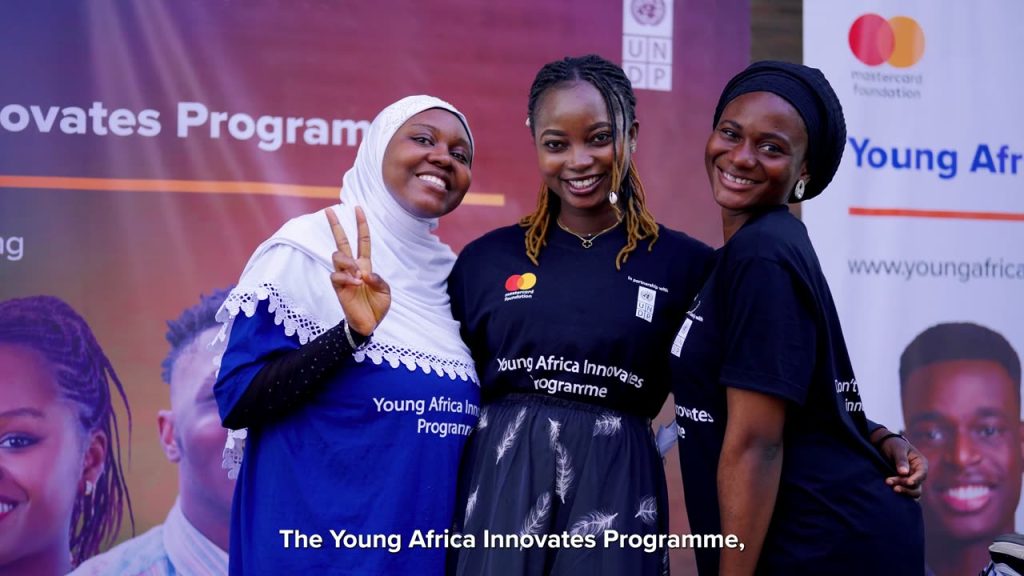
Cohort 2 will support young Nigerians with innovation development, incubation, mentorship, market access and financing pathways, expanding a programme that previously helped create 815 employment opportunities.
The United Nations Development Programme (UNDP), in partnership with the Mastercard Foundation, has opened applications for the second cohort of its Young Africa Innovates (YAI) Programme, an initiative designed to identify, develop and scale innovative solutions created by young Nigerians.
The programme is targeting young people whose ideas address pressing social and economic challenges but who may lack access to the financing, mentorship, networks and technical support needed to turn those ideas into sustainable ventures.
Applications for Cohort 2 opened on September 1, 2026, with the programme expanding its reach beyond the states covered during its inaugural cohort.
The initiative is particularly focused on what UNDP describes as “atypical innovators” young people from underserved communities, young women and persons with disabilities whose ideas may be overlooked by conventional innovation and entrepreneurship ecosystems.
From Ideas to Viable Businesses
Young Africa Innovates is structured around a simple but significant premise: having a good idea is not enough to create economic or social impact.
Young entrepreneurs often face a difficult journey between developing an idea and building a commercially viable product or service. Financing constraints, limited technical expertise, weak business networks and difficulties accessing customers can prevent promising innovations from progressing beyond the prototype stage.
YAI seeks to address several of these barriers simultaneously.
Selected participants will receive incubation and entrepreneurship support, technical mentorship, business advisory services, product and prototype refinement, market-readiness assistance and opportunities to connect with innovation networks and strategic partners.
Participants will also gain exposure to investors, grant opportunities and other financing pathways.
The objective is not simply to train young people but to help them develop solutions capable of surviving beyond the programme.
UNDP says the programme is designed to build a pipeline of innovators whose ventures can contribute to inclusive economic growth, job creation and sustainable development across Nigeria’s six geopolitical zones.
What the First Cohort Revealed
The second cohort builds on the experience of the programme’s inaugural cycle.
According to UNDP, Cohort 1 attracted more than 9,000 applications from across Nigeria, demonstrating the depth of interest among young people seeking opportunities to develop innovative solutions.
Following a competitive selection process, 205 innovators were incubated across seven states: Borno, Ekiti, Kwara, Lagos, Anambra, Kaduna and Akwa Ibom.
Participants received support in innovation development, business incubation, entrepreneurial training, mentorship, commercialisation and market-readiness interventions.
UNDP reports that the first cohort ultimately contributed to the creation of 815 employment opportunities.
That figure provides an important benchmark for the second cohort.
If the programme is to demonstrate lasting impact, the outcomes from Cohort 1 will need to be followed beyond the initial period of support to determine how many ventures remain active, how many continue to grow and how many jobs are sustained or created over time.
Who Can Apply?
Cohort 2 is open to Nigerians aged 18 to 35, particularly young people from underserved communities, young women and persons with disabilities.
Applicants must have a disruptive solution, prototype or working sample addressing a community, national or development challenge.
The programme is open to innovations across a broad range of sectors, including agriculture, climate action, healthcare, education, manufacturing, digital technology, financial inclusion, renewable energy and the creative economy.
Applicants are expected to demonstrate a commitment to transforming their ideas into sustainable ventures capable of generating measurable social and economic impact.
This sectoral breadth is important because innovation is often associated primarily with technology startups, despite the fact that many of Nigeria’s most urgent development challenges exist in areas such as agriculture, healthcare, energy, education and informal commerce.
Expanding Beyond the First Seven States
One of the programme’s notable developments in Cohort 2 is its expansion.
The inaugural cohort operated across seven states, while the new phase is intended to extend the programme’s reach to additional states and strengthen connections between innovators and local ecosystems.
UNDP says the expansion will involve collaboration with state governments, innovation hubs, universities, private-sector partners, development institutions and investors.
The goal is to create stronger state-level innovation ecosystems where young entrepreneurs can access support from the idea stage through commercialisation and eventual scale.
That ecosystem approach could prove more important than the grant component alone.
A young entrepreneur may receive funding to develop a product, but without customers, technical expertise, regulatory support, distribution networks or follow-on capital, the business can still struggle.
Connecting innovators to multiple parts of the entrepreneurship ecosystem therefore gives the programme a better chance of producing ventures that can survive beyond donor-funded support.
Why Market Access Matters as Much as Funding
For many early-stage businesses, capital is only one part of the problem.
A business can receive a grant and still fail to achieve sustainability if it cannot find paying customers.
This is why the programme’s emphasis on market readiness and commercialisation is particularly significant.
Helping young innovators understand their target customers, test products, refine their business models and develop routes to market could determine whether an innovation remains a promising idea or becomes a functioning enterprise.
The emphasis also reflects a broader challenge within youth entrepreneurship programmes across Africa: moving from participation metrics to economic outcomes.
The number of people trained or funded can demonstrate reach, but it does not automatically demonstrate impact.
The Accountability Question
Young Africa Innovates enters its second cohort with a strong opportunity and an equally important accountability challenge.
The programme’s first cohort produced encouraging numbers, including 205 innovators incubated and 815 employment opportunities reported by UNDP.
But the more important questions will emerge over the longer term.
How many of those ventures are still operating? How many have generated sustainable revenue? How many have attracted private investment? How many jobs have been retained? And how many businesses have grown beyond their initial programme support?
For Cohort 2, similar questions will matter.
If thousands of young Nigerians apply, how transparent will the selection process be? How will success be measured? Will beneficiaries receive support after incubation? And will the programme track whether supported businesses remain viable several years after completing the programme?
These are not criticisms of the initiative. They are essential questions for any programme seeking to demonstrate meaningful social and economic impact.
The strongest youth innovation programmes should ultimately be able to show a clear chain from idea to support, support to enterprise, enterprise to revenue, and revenue to sustainable jobs and community impact.
Giving Nigeria’s Young Innovators a Pathway to Scale
Nigeria has no shortage of young people with ideas for solving problems around them. What is often missing is the infrastructure to help those ideas move from conception to execution and eventually scale.
Young Africa Innovates is attempting to address that gap by combining incubation, technical assistance, mentorship, market access and financing pathways rather than treating funding as a standalone solution.
For young Nigerians who have historically struggled to gain entry into formal innovation networks, the programme’s emphasis on underserved communities, women and persons with disabilities could also help broaden who gets to participate in Nigeria’s innovation economy.
Applications for Cohort 2 opened on September 1, 2026. Interested applicants can access eligibility requirements and application information through the official Young Africa Innovates platform referenced by UNDP.
The first cohort demonstrated that there is significant demand for this kind of support. The second cohort now has an opportunity to demonstrate something even more important: that when young Nigerians with promising ideas receive the right combination of capital, knowledge, networks and market access, those ideas can become sustainable businesses that create opportunities for others.
That is ultimately where the success of Young Africa Innovates should be measured not only by how many innovators enter the program, but by how many are still building, employing and solving problems long after they leave it.
[give_form id="20698"]