ROSEMARY IMOBHIO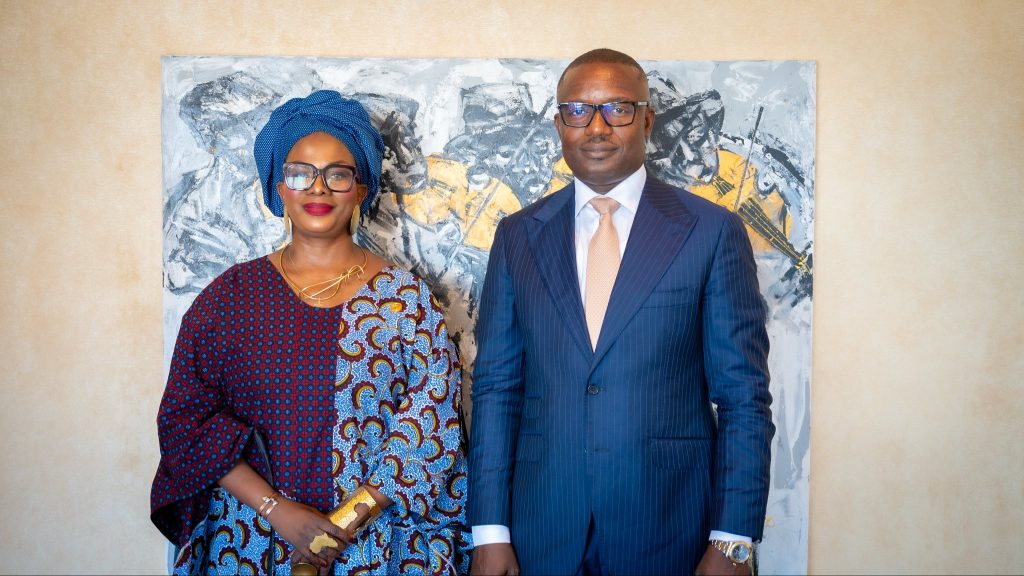
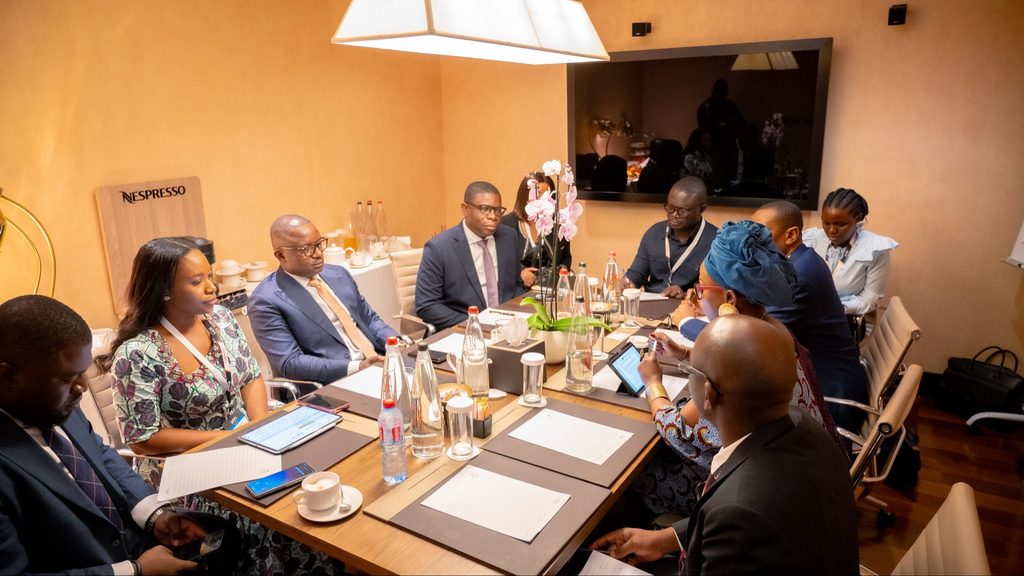
Ghana and the African Union Commission are deepening cooperation on energy financing, regional infrastructure, energy data and renewable power as Accra seeks to strengthen energy security while advancing its green transition. The discussions took place in Accra between African Union Commissioner for Infrastructure and Energy, H.E. Lerato D. Mataboge, and Ghana’s Minister for Energy and Green Transition, Dr John Abdulai Jinapor.
This engagement happened on the sidelines of AOW Energy 2026, held in Accra from September 1 to 3. The event brought together governments, national oil companies, investors, operators and other industry stakeholders to discuss Africa’s energy future.
For Ghana, the discussions come as the country attempts to attract more capital into its energy sector while reducing vulnerabilities linked to fuel costs and inadequate infrastructure.
Financing Takes Centre Stage
A major focus of the Ghana-AU discussions was access to African development finance for national energy programmes. The two sides also discussed improving energy statistics and strengthening cooperation between the African Energy Commission and Ghanaian institutions.
That focus on data is significant. Investors increasingly require reliable information before committing capital to large infrastructure and energy projects. Moreover, better data can improve public accountability. It can help governments track whether energy investments are delivering reliable electricity, economic opportunities and wider social benefits.
This creates a clear connection with ESG principles. For energy projects, environmental performance cannot be separated from governance, transparency and social outcomes. The AU has also been pushing for stronger continental energy systems. Its wider agenda includes energy integration, domestic capacity and greater diversification of energy sources, technologies and partnerships.
At AOW Energy 2026, regional cooperation therefore emerged as more than an infrastructure conversation. It was also a discussion about how African countries can retain more economic value from their natural resources.
The event itself placed strong emphasis on investment, exploration, infrastructure, local content and sustainable development. Its Energy Finance & Investment Forum focused specifically on mobilising capital from private equity, banks, development finance institutions and African financial markets.
Gas Pipeline Shows Regional Value
Ghana’s experience with the West African Gas Pipeline was cited as an example of the benefits that regional energy infrastructure can deliver. The pipeline transports natural gas from Nigeria through the West African network to Ghana and other participating countries.
For Ghana, the infrastructure has helped support gas-fired power generation and reduce reliance on more expensive liquid fuels. Historical US-backed energy programme documentation estimated that expanded gas flows could deliver fuel-cost savings of about $250 million annually. The wider lesson, however, goes beyond fuel savings.
Shared infrastructure can allow several economies to benefit from the same investment. It can also strengthen regional energy security while creating opportunities for trade, industrial development and cross-border partnerships. Consequently, infrastructure such as gas pipelines, electricity interconnections and regional power pools can become important tools for Africa’s industrialisation.
The approach also aligns with the AU’s push for greater continental energy integration and cross-border energy trade. From a sustainability perspective, the issue is more complex. Gas can support energy reliability and industrial activity, yet African countries are also under pressure to reduce emissions and expand cleaner energy.
Ghana’s challenge is therefore to manage energy security and decarbonisation without undermining affordability or economic development.
Ghana Targets More Renewable Power
Renewable energy featured prominently in the discussions, particularly Ghana’s plans to increase solar generation and incorporate energy storage. The government has reaffirmed its target of achieving at least 10 percent renewable energy penetration in the national electricity generation mix by 2030.
Ghana’s National Energy Compact also outlines a pathway for expanding renewable generation. This includes solar, hydro and wind capacity, alongside reforms designed to improve competitive procurement.
Meanwhile, the government is moving beyond policy commitments. In May, Ghana announced plans to scale up solar projects, mini-grids and rooftop systems nationwide. The programme is to increase electricity access while reducing dependence on fossil fuels.
The country is also pursuing utility-scale renewable projects and battery storage. Its Ministry of Energy and Green Transition lists competitive procurement for solar projects among its current priorities.
That shift matters for communities and businesses alike. More reliable renewable electricity can reduce operating costs, and improve resilience. It can support productive activities such as agriculture, food processing and small-scale manufacturing.
For CSR and sustainability professionals, that creates another important consideration. Energy projects should not be judged solely by megawatts added to the grid. Their wider impact should also be measured through jobs, local procurement, community access, affordability, skills development and environmental performance.
AOW Energy Puts Investment Under Spotlight
The Ghana-AU engagement also reflected the broader priorities of AOW Energy 2026. Hosted in Accra for the second consecutive year, the event positioned the city as a major meeting point for Africa’s upstream investment and energy discussions.
The 2026 programme included ministerial and leadership discussions, an Africa Content Forum, an Upstream and Exploration Forum, national showcases and an energy finance platform. Importantly, local content formed part of the conversation.
For African countries, attracting investment is only one part of the equation. The bigger question is whether projects build domestic expertise, strengthen local businesses and create durable economic value. That is where the investment debate increasingly intersects with ESG.
A project can attract billions in capital and still deliver limited local benefits if procurement, employment and skills development remain disconnected from host economies. Similarly, energy infrastructure can improve national revenues while creating environmental or social risks if those risks are poorly managed.
Therefore, stronger cooperation between African institutions could help countries develop investment frameworks that consider financial returns alongside development outcomes.
Energy Security Meets Sustainability
The Ghana-AU discussions underline a broader reality facing African policymakers. The continent needs more energy, not less. At the same time, it must expand access, support industrialisation, attract investment and respond to climate risks.
Ghana’s own Mission 300 programme illustrates the scale of the challenge. The country is working towards increasing electricity access from about 89.1 percent to 99 percent by 2030 while mobilising a $4.4 billion energy investment pipeline.
Achieving those goals will require more than government spending. It will depend on development finance, private capital, regional infrastructure, stronger institutions and credible investment frameworks. Above all, it will require energy policies that translate infrastructure investment into measurable improvements in people’s lives.
For Ghana and its African partners, the emerging strategy is therefore becoming clearer. Use regional cooperation and stronger financing mechanisms to expand energy access, strengthen economic resilience and accelerate the shift towards cleaner power.
The success of that strategy, however, will ultimately be measured beyond conference halls. It will be seen in whether businesses become more competitive and communities gain reliable electricity. Growth of local industries and households experiencing a more affordable and resilient energy system will also show it.
Follow CSR Reporters for more reporting on energy, sustainability, responsible investment and the decisions shaping Africa’s development.
[give_form id="20698"]