


 CHUKS OLUIGBO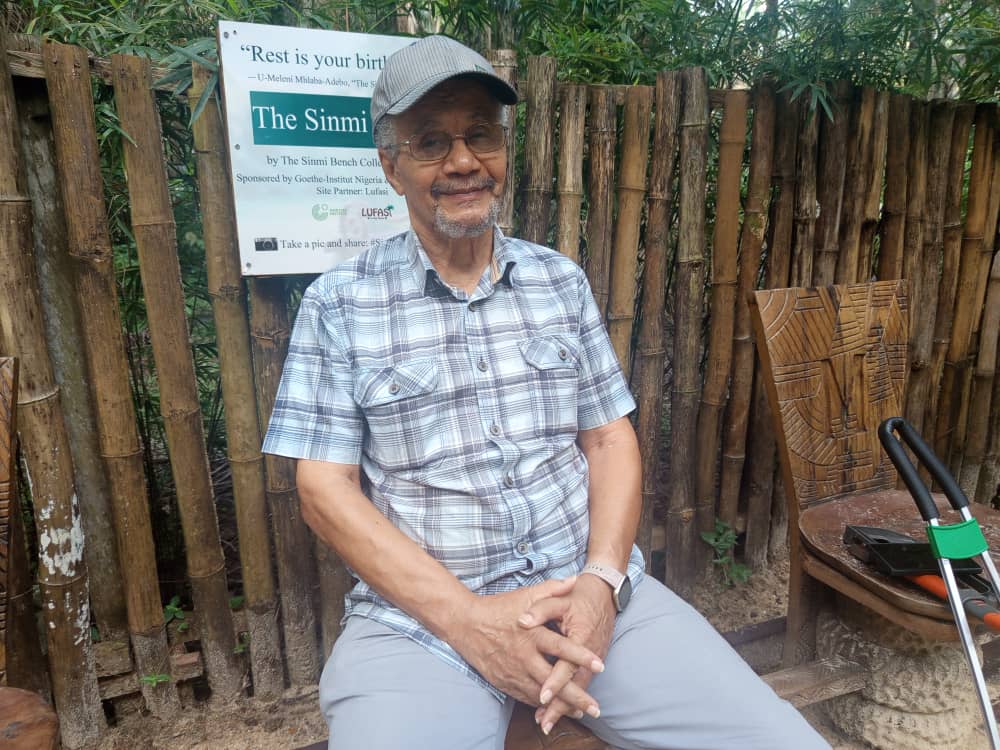
Mr. Desmond Majekodunmi, Chairman, Lekki Urban Forest and Animal Shelter Initiative (LUFASI)
LUFASI Nature Park, sitting on 20 hectares of protected forest off the Lekki-Epe Expressway in Lagos State, is not just a recreational centre. It is a dedicated environmental conservation area, nature park, and animal sanctuary. A natural habitat hosting some globally significant species, LUFASI also serves as an outdoor eco-laboratory for schools, researchers and nature lovers.
Chairman of LUFASI, MR. DESMOND MAJEKODUNMI, a renowned environmentalist who also sits on the Board of the Nigerian Conservation Foundation, speaks with CHUKS OLUIGBO on how the park is fulfilling the objectives that led to its establishment.
What led to the establishment of LUFASI Nature Park and how has the journey been?
The journey to LUFASI (Lekki Urban Forest and Animal Shelter Initiative) has been a long road. It started when I was just a youngster, about nine or ten years old, sitting in the cashew tree in my parents’ compound and eating the fantastic cashew fruit. I enjoyed it so much. After you have collected enough nuts, you go and roast the nuts. Oh, I fell in love with that cashew tree because even when it wasn’t fruiting, it gave so much shade. I really loved that tree, and that kind of connected me to nature. Then I got involved in my vocation, which had to do with music production and some degree of documentary production and so on. I practised in London, Lagos, then Nairobi, but it was in Kenya that I was wowed. These Kenyans, they are really working well with nature. And nature is providing everything for them. Ninety per cent of their economy is either agriculture or eco-tourism. Then talk about the food, they have a lot of it. I was there for three years, and I decided that when I got back to Nigeria I was going to start a farm. I wanted to become a farmer, and that led me to this location which had not been opened up in the Lekki axis between Ajah and Abijo. We started a farm. Luckily, I took a crash course in agriculture at the International Institute of Tropical Agriculture in Ibadan. I was strongly advised to do what is called agroforestry, so we retained a lot of the natural forest. Then we did our palm plantation and a few other crops. But then, after some time we saw that development was coming very quickly and if care was taken, this place would be taken over as an estate. So we were able to work out an arrangement with the Lagos State Government, then under Governor Babatunde Fashola, to convert a portion of the farm into a park, which is where we are now in LUFASI Park.
That was the long journey that led us to establishing this as a park, and for various reasons. We definitely wanted to have a nice place that will give fresh air for ourselves and for the community, but also somewhere that animals, especially the birds and a few of the other local animals, could have as a shelter. We also thought of it as a sequestration zone because it’s partly wetland. Wetland is particularly good for sequestering Co2; it works as a sponge for soaking up a lot of moisture as well. But the main reason, my particular main reason, was to use it as a focal point for creating awareness about the necessity to care for the environment – in fact, we say creation care. Over the years, the more we have gone into that and learnt more about it, the more we realised how extremely important it is – because humans are actually rapidly deteriorating the possibility of nature to support life.
The journey starting the farm was okay. People were so happy to get our products, mainly the oil palm. The journey for the park raised a lot of eyebrows amongst people who thought: ‘This is a place that can be real estate, why are you doing a park here?’ That brought a bit of enmity from certain quarters but we stood up against it and prevailed and continue to prevail.
So it has been a mixed bag, but we are pleased that we seem to be making some progress. Some of the leadership are taking into cognisance some of the things we are preaching and advocating for. It is really rewarding and pleasing that, yes, we have been able to bring some influence into the decision-makers. It’s been a tough journey, but the harder the road, the stronger we are.
From information available on its website, LUFASI Nature Park has four strategic goals, including biodiversity conservation, education and awareness creation on climate change, and providing sanctuary for injured and abandoned wildlife and domesticated animals. Thirteen years down the line, to what extent would you say these goals are being realised?
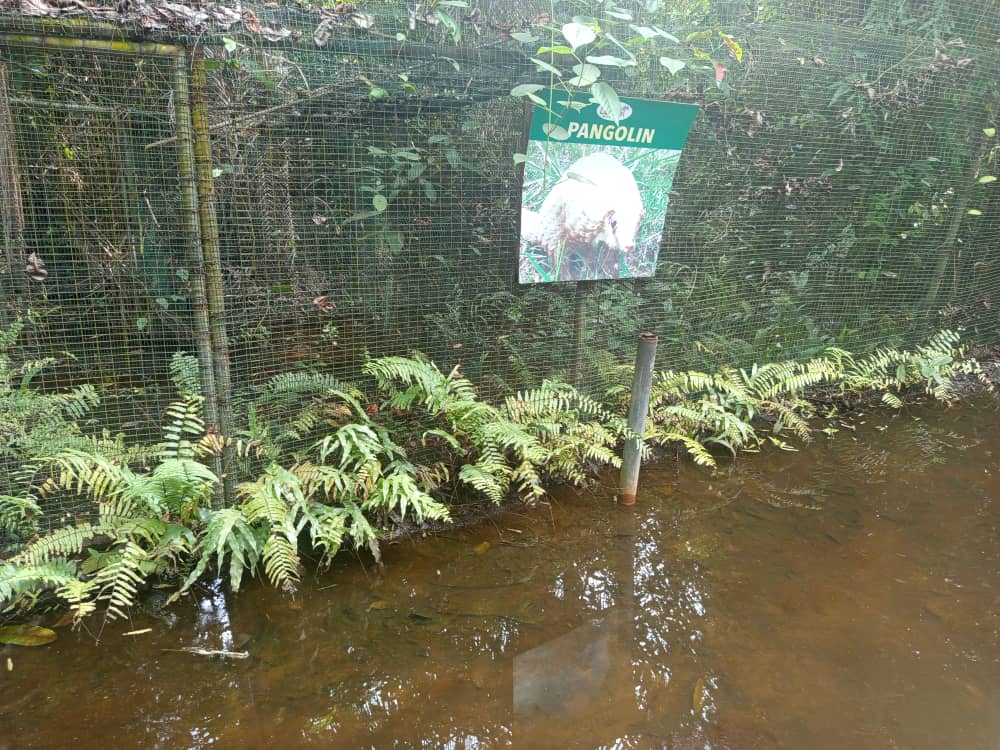
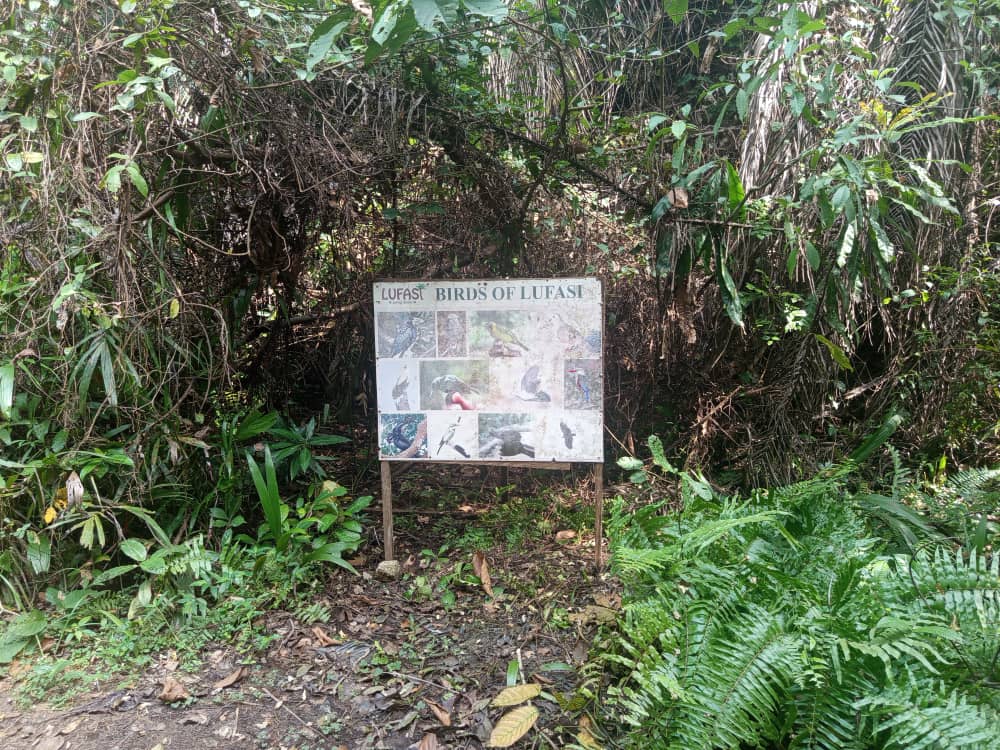
The goals are being realised to some degree, although not nearly as much as they need to be generally. Within the park itself, there is good protection of the biodiversity. We have some very rare species of flora and fauna, such as the vulnerable Ekki “iron wood” tree, and the critically endangered hooded vulture. Then there are butterflies, birds, squirrels, monkeys, and so on. So in that regard, it’s been effective as a biodiversity protection area. The other goals, we are working on them and we realise we have to work a lot harder.
Our main goal now is to create the necessary awareness that shall encourage a very fundamental and rapid transformational renewal of our minds into what we as human beings are designated to be, which is stewards, caretakers of creation. That is our main objective, our main role now. Because if you don’t look after that which looks after you, then you are going to have a very rough future ahead. And we are already seeing the manifestations of that now, particularly this year, when the natural heating system of the planet is combining with the unnatural ones we have caused as human beings. We see it all over the world, including in Nigeria, particularly in the Lekki area where we have had unprecedented floods, and this has been caused by human activities.
What do you consider the biggest impact/achievement of LUFASI Nature Park so far?
LUFASI Phas been able to link people up with nature. We find that a lot of people keep coming back over and over again because they feel good here. Many Lagosians have actually been disconnected from nature. Some of them do have links in terms of village homes and so on, but a lot of them have actually grown up in the urban areas of Lagos, so they have this disconnect. I do feel that we have been quite successful in connecting our visitors with the beauty and the value of nature and the fundamental message is coming out. We are seeing people adopting it because our main message here is: LUFASI, loving nature. In order to be ‘loving nature’, you need to have a ‘loving nature’. This brings us to fundamental scriptural injunctions in the two major scriptures of our continent: “Peace be unto you”; “Love your neighbour”.
A major threat to projects like LUFASI Park is often inadequate financing. Then there are human activities like wildlife poaching. Sometimes even government is a threat. What has your experience been and how do you navigate these challenges?
At first there was no financing at all. All the financing for LUFASI came out of my own personal pocket and that went on for several years, but the popularity of the park has helped a lot in terms of the gate entrance fees now covering the basic running cost. So it’s self-sufficient.
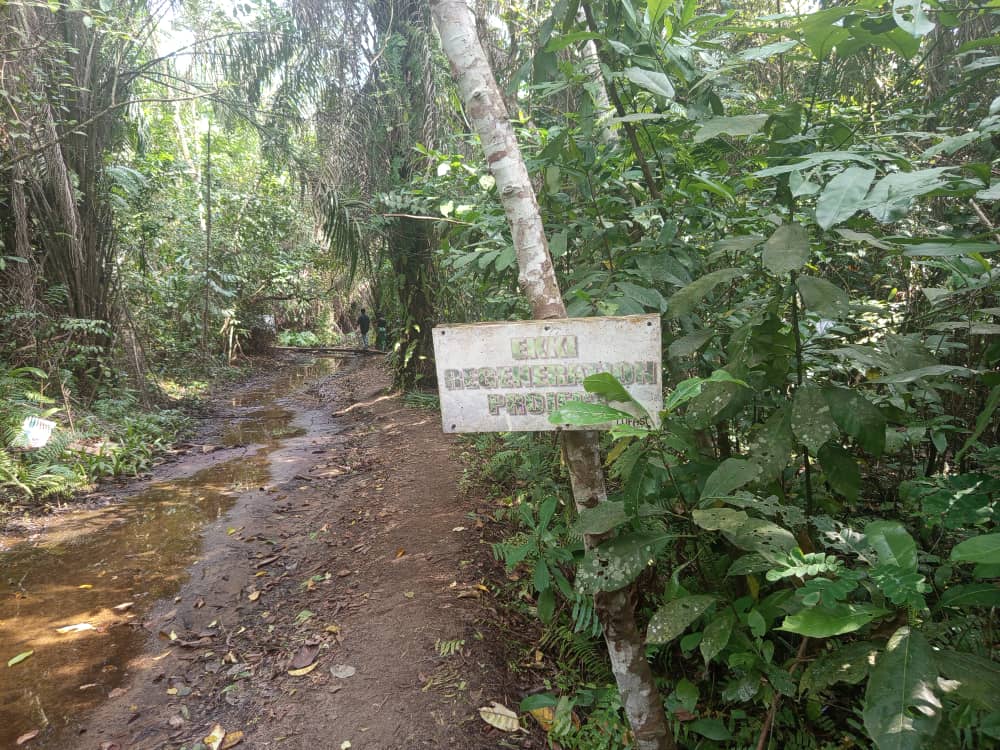
In terms of support and investment, there is not much of that coming in at this stage. We have had a little bit of support for some tree planting projects and so on, which is very easy for us to do, but it hasn’t been what it needs to be and what we hope it shall be, not just for us. Particularly the tree planting, you hear about other countries planting tens of millions of trees on a yearly basis. What are we planting? It is encouraging to see that Lagos State is picking up on it this year. We would love to see a lot more support. We also have a part of LUFASI that promotes organic and local agriculture, aquaculture. We would love to see more support on that too. It’s not nearly enough, but we are just thankful that at least the patronage of the place is helping to take care of the running cost.
Nigeria is a party to the Convention on Biological Diversity, which has also been domesticated through the National Biodiversity Strategy and Action Plan (NBSAP). Yet, the country has lost over 90 per cent of its original forest cover, according to the Nigerian Conservation Foundation. As someone in the practice of biodiversity conservation, what can be done to reverse this trend?
To have lost that much, these are horrendous figures because when we are talking of biodiversity, we are talking of the very web of life. And as we all know, spider’s web is quite an amazing structure. You can remove one strand, you can remove another strand, but eventually, there is one more strand you’ll remove and the whole web will collapse. And this is where we are headed, not just in Nigeria or the African continent but also in other parts of the world. We are pushing the web of life to collapse, and it is absolutely shocking and very worrisome that we are doing this. A lot of it is done because of mismanagement, greed and selfishness, and this really has to stop.
We are trying to persuade the leaders of the various faith groups and denominations to take this up and preach creation care and nurturing nature from their pulpits. How can you profess to love the creator who in his scripture has mandated you to be a steward, a khalifa, of creation and you are doing the exact opposite? There is a fundamental hypocrisy there, maybe born out of ignorance. So we are now trying to dispel the cloud of ignorance that might be there and let people know that this is totally unacceptable; that we are destroying the miracle of creation that makes this planet so special.
Planet Earth is like a diamond in the sky. It is heaven’s poetry to us and it is what our children and grandchildren will be relying on. But we are destroying it and we are reaching a critical point in the breakdown of biodiversity, in the destruction of the various elements of the planet. We are reaching a critical point whereby we will not be able to reverse the process because it would become self-sustaining. When you tear down the forests, eventually the forests which are wonderful sequesters of Co2, one of the main culprits, will start emitting Co2. It’s already happening in certain areas, in certain forests. We really need to work against this.
I have confidence that the leaders of the various faith groups and denominations, once they come into the reality of what is going on, they will be able to preach it effectively from their pulpits and our people will listen to them, and we’ll have the kind of radical change that we need to stop this breakdown and deterioration of our wonderful and miraculous biodiversity systems.
How have faith-based organisations responded to this message?
We are getting a good response, especially from the Catholic community. They are quite strong on it because the leadership of the Catholic Church has been strong on it. Pope Francis – who took the name Francis to align himself with Francis of Assisi – considered the climate crisis an urgent structural sin and a “road to death”. The local Catholic Church is doing that as well. We call them to do lectures. Some of the leadership of the Muslim community have also done some lectures on it. They are very intelligent people. Some of them are really wonderful good people who just want to help humanity.
So for us, it is a matter of helping them to appreciate how fundamentally important this is. And this is what gives me a lot of hope for Nigeria because we are a very religious, God-conscious people; we all know that there is a supreme entity, that we are spirit souls, not just this body. Once we can get that across to the leadership, they will surely be able to inspire their followers, and we could have a massive leap forward for Nigeria being a strong advocate for conservation and for sustainable development, and particularly for Goal 13. If we can’t get Goal 13 (Climate Action) right, then all the other goals will become totally unachievable.
[give_form id="20698"]


1 thought on “LUFASI Park Has Been Effective As a Biodiversity Protection Area, Says Majekodunmi”