csrreporters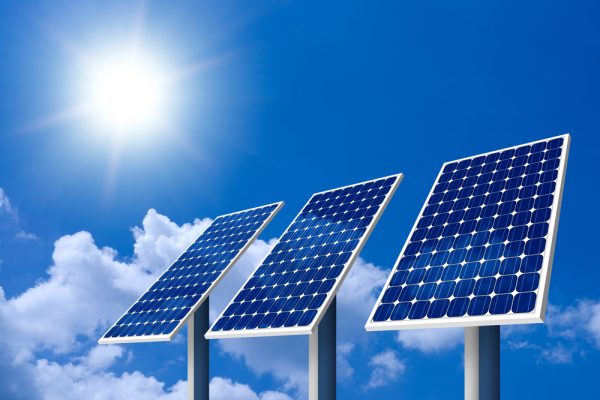
Nigeria’s push towards cleaner and more affordable energy is also setting the stage for significant economic growth, as the Federal Government partners with private investors to localise battery production, expand renewable energy, and accelerate compressed natural gas adoption.
At the launch of a mobile solar generator and youth bootcamp in Abuja, the CEO of the Energy Commission of Nigeria, Mustapha Abdullahi, said the government is taking decisive steps to transform Nigeria from an importer of solar components and lithium batteries into a producer. With lithium reserves across almost every state, he stressed that localising technology production will not only reduce import dependence but also create jobs, attract investment, and open new industrial opportunities.
“We are taking practical steps to build factories in Nigeria and scale production. The moment we achieve mass production, the government will move to ban imports of lithium batteries and solar panels, because our youths and investors will already be producing them here,” Abdullahi said.
Already, the Energy Commission has a pilot solar plant producing 10,000 kWh annually. Plans are underway to scale this with global partners who have signed agreements to set up factories locally.
The private sector is also driving innovation. Citibim Nigeria unveiled a mobile solar generator designed to ease reliance on petrol generators while creating new income streams for small businesses. CEO Abdul Gbadamosi explained that users can generate earnings similar to POS merchants by renting energy capsules to neighbours, earning up to N30,000 monthly. “This is energy as a business model, where clean power fuels both livelihoods and growth,” he noted.
On the natural gas front, the Presidential Compressed Natural Gas Initiative (PICNG) has already converted 100,000 vehicles to CNG, with a target of one million by 2027. Investment Facilitation Coordinator, Jide Awolowo, disclosed that the initiative has attracted over $1bn in private investments, created over 300 conversion centres, and is expected to provide thousands of new jobs as more centres are built.
Officials emphasized that these efforts are not only about sustainability but also about building an economy powered by local industries, skilled workers, and innovative entrepreneurs. The combined push into lithium batteries, solar, and CNG is expected to reduce energy costs, strengthen Nigeria’s industrial base, and position the country as a leader in Africa’s green economy.
[give_form id="20698"]