Nigeria’s Food Security Push: Why Better Coordination Matters for Farmers and Households
 ONYINYECHI NWAIGBA
Nigeria’s food security challenge cannot be solved by increasing agricultural production alone. Farmers also need reliable access to financing, quality inputs, infrastructure, modern farming technologies and markets that allow them to earn sustainable incomes.
These interconnected challenges have placed greater attention on how agricultural policies are developed, funded and implemented across the country.
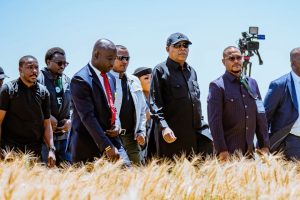
On October 5, 2026, the Federal Government, state governments, non-state actors and development partners, including Germany, renewed their commitment to improving coordination across Nigeria’s agricultural sector. The discussions took place at the Annual Community of Practice Meeting in Maiduguri, Borno State, organised by the Federal Ministry of Agriculture and Food Security in collaboration with the Borno State Government and other stakeholders.
The meeting focused on strengthening agricultural production, improving investment and financing, advancing food and nutrition security, and building more resilient food systems.
At the centre of the discussions was a critical question: how can national agricultural priorities translate into meaningful improvements for farmers and the communities that depend on them?
Why Coordination Matters for Nigeria’s Food System
Agriculture is influenced by decisions made at different levels of government. While the Federal Government establishes national priorities, state governments play an important role in implementing agricultural programmes and responding to the needs of local farming communities.
When these efforts are poorly coordinated, resources may be wasted, programmes may overlap, and farmers may struggle to access the support intended for them.
Speaking at the meeting, Minister of Agriculture and Food Security, Abubakar Kyari, stressed the importance of aligning federal and state policies, improving the use of reliable data, coordinating investments and establishing clear responsibilities for implementation.
The objective is to build a more connected agricultural system in which national plans and state-level action reinforce one another.
For farmers, this coordination should mean more than consistent government messaging. It should translate into accessible agricultural extension services, better rural infrastructure, improved access to credit, quality seeds and fertilisers, and technologies that reduce the cost and difficulty of farming.
For households, the expected benefits include a more reliable food supply and progress towards making nutritious food more accessible and affordable.
These outcomes, however, depend on how effectively policies are implemented and whether the resources allocated to them reach the people who need them.
Germany’s Support and the Kampala Agenda
The renewed commitment is linked to the Comprehensive Africa Agriculture Development Programme (CAADP) Kampala Declaration and its Strategy and Action Plan for 2026–2035.
The framework provides a continental direction for transforming Africa’s agrifood systems, with priorities that include sustainable agricultural production, investment, food and nutrition security, trade, inclusion, resilience and governance.
Nigeria has also developed and validated a 10-year National Agrifood System Strategy and Action Plan to guide the implementation of its commitments under the framework.
Germany is supporting Nigeria’s efforts through the Sustainable Agricultural Systems and Policies project, known as AgSys. The programme is intended to strengthen agricultural policy processes, improve coordination between institutions, support state-level implementation and encourage the participation of civil society.
Dr Karin Jansen, Head of Development Cooperation at the German Embassy in Nigeria, identified coordination, policy alignment, state-level implementation, monitoring and accountability as important areas of support.
The programme also includes efforts to strengthen agricultural planning in selected states and improve the use of evidence in assessing progress.
These measures recognise that agricultural transformation requires more than announcing policies. Governments need the institutional capacity, funding arrangements and monitoring systems to ensure that commitments produce measurable results.
The Implications for Farmers and Rural Communities
For smallholder farmers and rural communities, the value of agricultural reform is ultimately determined by what changes in their daily lives.
Access to financing, for instance, can help farmers purchase inputs, invest in equipment and expand production. However, the availability of credit alone is not enough if borrowing costs are prohibitive or repayment conditions do not reflect the realities of agricultural production.
Similarly, improved seeds and fertilisers can support productivity, but their benefits may be undermined by poor roads, inadequate storage facilities, limited irrigation and difficulties getting produce to market.
Post-harvest losses are another important concern. Food that is produced but spoils before reaching consumers represents lost income for farmers and fewer resources available within the food supply chain.
The Federal Government has therefore urged states to align their agricultural development plans with national priorities, including rural infrastructure, agricultural extension services, access to credit and quality inputs, labour-saving technologies, post-harvest loss reduction and climate-resilient farming.
If these priorities are implemented effectively, they could strengthen agricultural businesses, improve farmers’ earning potential and support more reliable food distribution.
They could also create opportunities for agricultural cooperatives, processors, storage operators, transport businesses and other participants in the food value chain.
However, these benefits should be treated as intended outcomes rather than results already achieved through the latest meeting.
Climate Resilience Must Be Part of the Solution
Food security is also closely connected to environmental sustainability.
Changing rainfall patterns, flooding, drought and other climate-related pressures can disrupt planting seasons, reduce yields and increase uncertainty for farming communities. Farmers who depend heavily on rainfall are particularly vulnerable when seasonal conditions become unpredictable.
Climate-resilient agriculture can help reduce some of these risks through approaches such as improved water management, irrigation, sustainable soil management, suitable crop varieties and better access to agricultural information.
The Kampala framework’s emphasis on resilience and sustainable production is therefore relevant to both agricultural productivity and the long-term stability of food systems.
For Nigeria, aligning agricultural development with climate priorities could help ensure that efforts to increase production do not overlook the environmental conditions on which future harvests depend.
It also highlights the importance of cooperation between agriculture, environmental management, water resources and rural development institutions.
From Policy Commitments to Measurable Results
While stronger coordination is an important step, the success of Nigeria’s food security efforts will depend on implementation.
The meeting in Maiduguri provides a platform for governments and development partners to align priorities. The next stage is ensuring that these priorities are reflected in budgets, programmes, timelines and measurable outcomes at the state and community levels.
Monitoring and accountability will be particularly important. Governments and their partners need reliable evidence showing whether agricultural support reaches intended beneficiaries, whether projects are completed as planned and whether interventions improve production and livelihoods.
Useful indicators could include changes in farmers’ access to financing and agricultural inputs, reductions in post-harvest losses, improvements in rural infrastructure, increased resilience to climate-related shocks and changes in household access to nutritious food.
The involvement of farmers, civil society organisations, researchers and private-sector participants can also help ensure that agricultural policies respond to conditions on the ground.
For communities, the ultimate measure of progress is not the number of meetings held or commitments announced. It is whether farmers can produce more sustainably, earn better incomes and reach markets, while households experience more reliable access to food at prices they can afford.
The Bigger Picture
Nigeria’s renewed engagement with Germany and other development partners reflects a broader recognition that food security requires coordinated action across institutions, sectors and levels of government.
The challenge now is to connect agricultural policy with the practical realities of farming, food distribution, environmental sustainability and household welfare.
If the commitments made through the Kampala Agenda translate into effective implementation, they could help strengthen Nigeria’s food system and support more resilient rural livelihoods.
But lasting progress will depend on consistent funding, clear responsibilities, transparent monitoring and evidence that the benefits are reaching farmers and communities.
Ultimately, food security is not simply an agricultural target. It is a development priority that affects livelihoods, nutrition, economic stability and the well-being of millions of Nigerians.
DON’T JUST ANNOUNCE YOUR IMPACT. PROVE IT.
CSR REPORTERS helps organisations verify, assess, document and communicate the real impact of their CSR and sustainability initiatives.
Project Verification | Beneficiary Feedback | Impact Assessment | Impact Storytelling | Stakeholder Engagement
Have an initiative worth documenting? Let us verify it. Document it. Tell the story.
Talk to CSR REPORTERS
enquiries@csrreporters.com
📞 Call/WhatsApp: 0803 401 2198 | 0903 329 6374 | 0905 024 4468 | 0803 209 8499
www.csrreporters.com