ROSEMARY IMOBHIO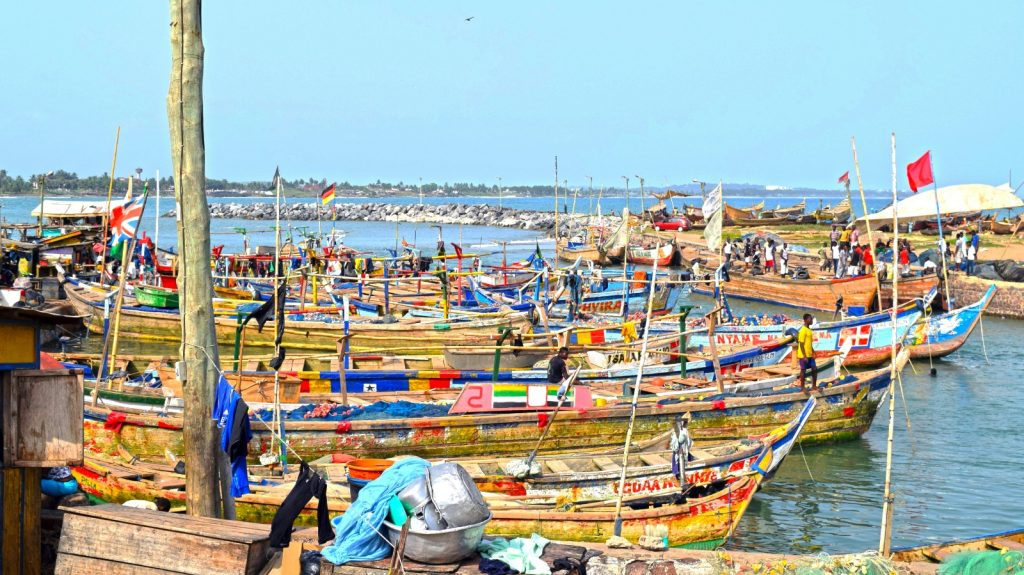
Ghana did something this year that Nigeria has never managed in more than six decades as a coastal nation. It has drawn a legal boundary around a piece of ocean. Inside that boundary, the fish, the turtles, and the mangroves are now off limits to destruction.
In April, Vice President Naana Jane Opoku-Agyemang stood in the fishing town of Busua. There, she announced the country’s first Marine Protected Area at Greater Cape Three Points. For West Africa, where coastal economies and ocean health are closely linked, the timing matters.
Ghana’s fishing communities are now adjusting to a new era of ocean governance. Meanwhile, Nigeria’s fishers are still watching their catches shrink. Their mangroves keep vanishing, and government agencies still argue over who controls the sea. This is not only a Ghana story. It is, in many respects, a preview of decisions Nigeria has postponed for years.
Inside Ghana’s New Marine Protected Area
The new protected zone covers roughly 700 square kilometres of ocean and coastline. It stretches between the towns of Ampatano and Domunli in Ghana’s Western Region. The area sits within the Ahanta West District, home to 21 coastal communities. Fishing defines life in nearly all of them.
According to Ghana’s Ministry of Fisheries and Aquaculture, officials chose the site for a clear reason. It serves as a critical spawning and nursery ground for small pelagic species. Sardines, anchovies, and mackerel breed there before scattering across the wider Gulf of Guinea.
These are the very fish that supply much of West Africa’s dinner-table protein. In addition, the zone shelters endangered sea turtles and marine mammals. Fragile reefs and wetlands there also buffer the shoreline against erosion.
The declaration followed Cabinet approval in October 2025. It also followed more than fifteen years of scientific study and advocacy. Officials consulted traditional rulers, fishers, and civil society groups throughout that process.
Rather than locking the entire area away from human use, Ghana took a different approach. The MPA combines no-take core zones with multiple-use areas where regulated fishing can continue. Officials expect fish populations to recover within the core zones first. From there, they should spill over into surrounding waters.
That spillover effect could eventually benefit fishers well beyond the protected boundary. The Environmental Justice Foundation has praised the initiative. It places Ghana among the few West African nations now turning ocean protection promises into enforceable policy.
Fifteen Years in the Making
Ghana’s path to this single declaration says as much as the declaration itself. For more than a decade, small pelagic fish such as sardinella have been in steady decline. Sardinella is a dietary staple for millions of West Africans. Overfishing, fleet overcapacity, and illegal fishing all drove that decline.
Consequently, successive Ghanaian governments faced mounting pressure from scientists and fishing communities to act. Rather than rushing a decision, the Ministry of Fisheries and Aquaculture spent years on groundwork. It built scientific assessments and held consultations before bringing the proposal to Cabinet.
That patience appears deliberate. A protected area imposed without community buy-in tends to collapse once enforcement attention shifts elsewhere. Ghanaian officials seem keenly aware of that risk.
This slow, evidence-led process also aligns Ghana with the global 30×30 target. That target sits under the UN Convention on Biological Diversity. It calls for protecting 30 percent of the world’s ocean by 2030. Still, alignment with a global target is not the real story here. The real story is that Ghana built local legitimacy first. The international framework followed only afterward.
A Coastline Nigeria Knows Too Well
Nigeria’s coastal crisis is, in many ways, a harsher version of the one Ghana just confronted. Along the Niger Delta and the wider Atlantic coastline, decades of oil exploration have left lasting scars. Mangrove forests, fish breeding grounds, and water quality have all suffered.
According to USAID estimates, Nigeria has lost roughly 35 percent of its mangroves over the past twenty years. That loss is eroding the very nurseries young fish depend on. Meanwhile, illegal foreign trawlers compete with artisanal fishers for the same shrinking stocks. Oil spills, too, continue to poison creeks that communities have fished for generations.
Nigeria is also Africa’s largest fish consumer. More than ten million people work directly or indirectly in its fisheries sector. As a result, the stakes of inaction are arguably higher here than almost anywhere else on the continent.
Yet unlike Ghana, Nigeria still has no legally designated Marine Protected Area. This is despite an 852-kilometre coastline and a maritime domain covering more than 300,000 square kilometres. Several Nigerian officials have acknowledged this gap publicly over the years. Acknowledgment alone, however, has not translated into a single declared MPA.
The Policy Gap Holding Nigeria Back
Part of the problem lies in institutional confusion rather than a lack of awareness. Nigeria does not yet have a designated Marine Spatial Planning Authority. That body would normally coordinate ocean zoning, conservation, and enforcement. Without it, different ministries and agencies often pursue overlapping mandates instead of one unified strategy.
Nigeria created the Ministry of Marine and Blue Economy in 2023. It has reported strong progress on port modernisation, seafarer training, and shipping infrastructure. However, conservation milestones such as MPA designation have not featured prominently among its tracked targets.
This is precisely the gap Ghana’s experience exposes. Ghana treated marine protection as a foundational pillar of its blue economy strategy. Nigeria’s blue economy push, by contrast, has so far leaned heavily toward infrastructure and logistics.
Therefore, even as both countries chase similar blue economy goals, their priorities diverge sharply. Only one of them has built ecological protection into the foundation rather than bolting it on later.
Lessons in Community-Led Conservation
Perhaps the clearest lesson from Cape Three Points concerns who gets a seat at the table. Ghana’s fifteen-year consultation process deliberately included traditional rulers, local fishers, academics, and civil society groups. That inclusion happened long before the legal declaration. It matters because enforcement ultimately depends on the people who live beside the water. Distant regulators cannot do that job alone.
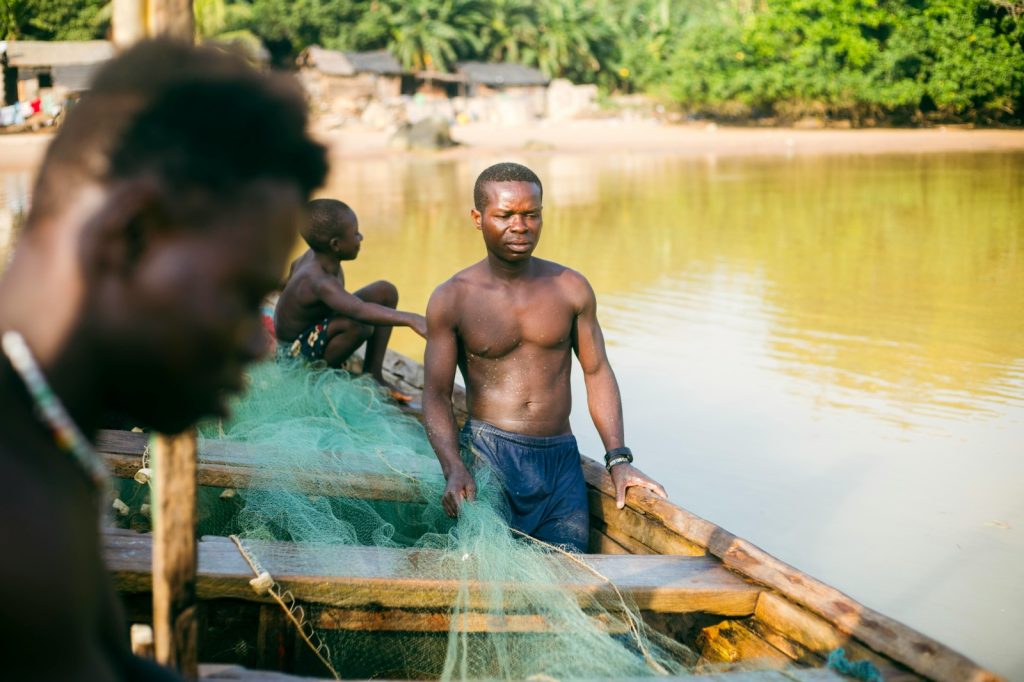
An expert CSR Reporters spoke to argues that Nigerian conservation outcomes improve significantly when coastal communities become partners rather than obstacles. Fishing communities along Nigeria’s coastline hold generations of ecological knowledge. That knowledge could strengthen fisheries management considerably.
Yet government approaches often remain top-down. A recent Greenpeace report on global ocean justice raises a related warning. Protected areas designed without community participation often become what conservationists call paper parks. These are zones that exist on official documents but provide little real protection on the water.
If Nigeria eventually creates its first MPA, community involvement will decide its fate. Without it, the area risks becoming another paper park.
Food Security in a Warming Ocean
Beyond governance, there is a harder number underlying all of this. Under a high-emissions climate scenario, the World Bank projects something alarming. Nigeria’s fish resources could shrink by 53 percent by 2050.
Warming waters are pushing many species toward cooler latitudes. Fish remains a primary source of affordable protein for tens of millions of Nigerian households. That projection should alarm policymakers well beyond the environment ministry.
Marine Protected Areas will not single-handedly reverse climate change. However, they do something climate policy alone cannot. They give depleted fish populations a defined space to recover and reproduce.
In this sense, Ghana’s MPA works simultaneously as a conservation tool, a food security measure, and a climate adaptation strategy. Nigeria’s coastal communities are already battling erosion, flooding, and pollution. A similar layer of protection would help them face that pressure with an actual ecological buffer.
A Regional Test for West Africa’s Oceans
Nigeria’s choices also matter beyond its own coastline. Fisheries and aquaculture account for roughly 15 percent of GDP across the Economic Community of West African States. The FAO reports that fishers have already overexploited more than half the region’s stocks.
Recognising this shared vulnerability, the European Union, IUCN, and the Fisheries Committee for the West Central Gulf of Guinea responded. They recently launched a 59 million euro programme. It covers thirteen West African coastal nations, including both Ghana and Nigeria. Its goal is to curb illegal fishing and restore marine ecosystems.
Fish stocks, after all, do not respect national borders. A spillover effect from Ghana’s protected waters could benefit Nigerian fishers operating nearby. Likewise, Nigeria’s continued inaction could undercut regional recovery efforts elsewhere.
Today, African leaders are gathering in Mombasa for the first Our Ocean Conference held on the continent. Ghana arrives with a tangible achievement to show. Nigeria arrives with targets, ministries, and ambition. It still lacks the one thing that would prove any of it is more than rhetoric. That missing piece is a protected stretch of its own ocean.
The Choice Ahead
Ghana took fifteen years to get here. Even now, conservationists caution that the real test lies in enforcement, not declaration. Nigeria does not need to copy Ghana’s timeline, but it does need to start somewhere. The fishers of the Niger Delta, the markets of Lagos, and the food security of an entire nation may depend on the answer. Should Nigeria establish stronger Marine Protected Areas to safeguard its coastal future?
Follow CSR Reporters for more insightful stories on sustainability, governance, and Africa’s transition toward a more resilient and responsible future.
[give_form id="20698"]