csrreporters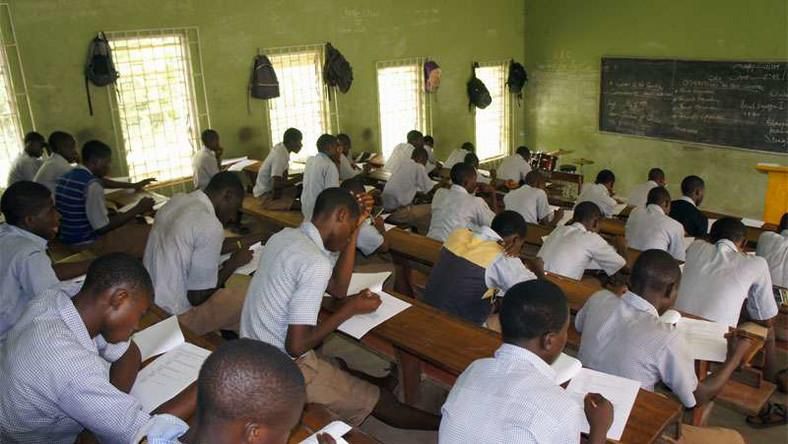
Across Nigeria, Education’s Quiet Transformation
Education is undergoing a profound shift. It is no longer simply a public good or social equalizer; it is increasingly becoming a financial threshold that determines who stays in school and who quietly drops behind.
What is emerging is not a sudden crisis, but a structural shift: education in Nigeria is becoming conditional on household income stability.
For millions of families, schooling is no longer a fixed annual commitment. It has become a recurring negotiation between survival and aspiration. Each term brings a new calculation not just about quality or preference, but about affordability under rising economic pressure.
This is the reality beneath the headlines on inflation: the cost of education is rising in a system where incomes are not keeping pace, and the consequences are quietly reshaping inequality.
A Systemic Cost Increase Hidden in Plain Sight
The rising cost of education in Nigeria is often discussed in fragments tuition adjustments, transport fares, or levies. But taken together, these represent a broader structural inflation within the education system itself.
Families now face a layered and compounding cost structure that includes:
- incremental tuition increases across sessions
- compulsory development and administrative levies
- rising transportation costs driven by fuel instability
- increased cost of uniforms, books, and learning materials
- additional informal charges across institutions
Individually, these costs appear manageable. Collectively, they reflect a system where education expenses are no longer stable or predictable.
The deeper issue is not just rising costs, but the loss of cost certainty. Education is becoming financially volatile — mirroring the wider economy.
Households Under Continuous Financial Pressure
For many Nigerian households, the impact is no longer occasional, it is structural and recurring.
Parents are increasingly forced into decisions that were once rare:
- delaying fee payments across terms
- moving children between schools based on affordability
- temporarily withdrawing students during financial shocks
- negotiating instalment-based payments as standard practice
- prioritising survival needs over uninterrupted schooling
These coping mechanisms are becoming normalized. But normalization does not reduce the impact, it hides it.
Education is gradually shifting from a stable system of progression to a fragile system of continuity. And when continuity is disrupted, learning outcomes inevitably suffer, even if enrolment figures remain unchanged.
The Quiet Rise of Interrupted Education
Nigeria’s longstanding challenge with out-of-school children is well documented. However, the current economic environment is producing a more subtle form of exclusion — one that does not always appear in official statistics.
Instead of permanent dropout, the system increasingly sees:
- intermittent attendance patterns
- repeated school switching within cycles
- delayed progression due to fee interruptions
- overcrowding in lower-cost schools absorbing displaced learners
This represents a shift in the nature of educational exclusion. Children are not always leaving school entirely — but many are losing the stability required for consistent learning.
In effect, access exists, but continuity is weakening. And in education systems, continuity is what determines outcomes.
Private Schools as Pressure Buffers and New Cost Frontiers
As public education systems face capacity and funding constraints, private schools including low-cost community institutions have become the default alternative for many families.
But this shift has created a structural contradiction.
Private schools are absorbing overflow from public system limitations, effectively functioning as a parallel public system. Yet they are also under significant financial pressure.
Rising operational costs including energy, staffing, and infrastructure maintenance are forcing private institutions to adjust fees upward or introduce new charges. As CSR Reporters highlighted in NGO Boosts Affordable Education with Financing, Quality Assurance Reforms, private schools are struggling to balance affordability with sustainability.
This creates a cascading effect: public system gaps increase demand for private schools, while private school cost pressures reduce affordability. The result is not balance, but strain across both systems.
Beyond Tuition: The True Cost of Education
A critical distortion in public understanding is the assumption that tuition represents the total cost of education.
In reality, tuition is only one component of a much broader financial ecosystem. Households are simultaneously managing:
- daily transport costs influenced by fuel volatility
- feeding expenses during school hours
- examination and administrative charges
- periodic replacement of uniforms and materials
- rising digital learning costs in some institutions
These layered costs mean that even when tuition remains relatively stable, overall expenditure continues to rise.
Education is no longer insulated from macroeconomic conditions. It is directly shaped by them.
A Structural Inequality Problem, Not a Household Issue
The implications of rising education costs extend beyond individual families. They point to a deeper structural issue: education is increasingly mirroring economic inequality rather than correcting it.
When continuity in schooling depends on financial resilience, inequality becomes embedded in the learning process itself.
This produces long-term consequences:
- unequal learning stability across income groups
- widening performance gaps driven by access consistency
- reduced social mobility over time
- increasing stratification of outcomes
Education, which should function as a stabilising force, begins to reflect the instability of the economy around it. That shift is subtle, but significant.
System Pressure, Not Individual Failure
It is important to locate this issue correctly. Rising education costs are not primarily the result of household mismanagement or individual failure.
They are the outcome of intersecting structural pressures:
- persistent inflation eroding purchasing power
- energy costs increasing school expenses
- foreign exchange volatility affecting inputs
- uneven public investment in infrastructure
- rising demand for private education due to public gaps
Together, these pressures create a widening gap between income growth and education costs.
Households are adapting but adaptation has limits. Beyond those limits, exclusion becomes economic rather than policy driven.
Conclusion: When Access Exists but Stability Fails
The rising cost of education in Nigeria is not simply an affordability concern. It is a structural shift in how access to opportunity is defined.
What is emerging is a system where education remains technically accessible, but increasingly unstable for a large segment of households.
This distinction is critical. Because in education, access without continuity is incomplete access.
And when continuity becomes conditional on financial resilience, education begins to lose its equalising function — not suddenly, but gradually and quietly.
The real challenge is no longer only about getting children into school. It is about ensuring they can remain there long enough for education to deliver what it is meant to deliver: equal opportunity, not inherited disadvantage.
According to UNICEF Nigeria’s Education Overview, rising costs and uneven access are already reshaping inequality across the system underscoring the urgency of addressing affordability as a structural issue, not just a household struggle.
[give_form id="20698"]