csrreporters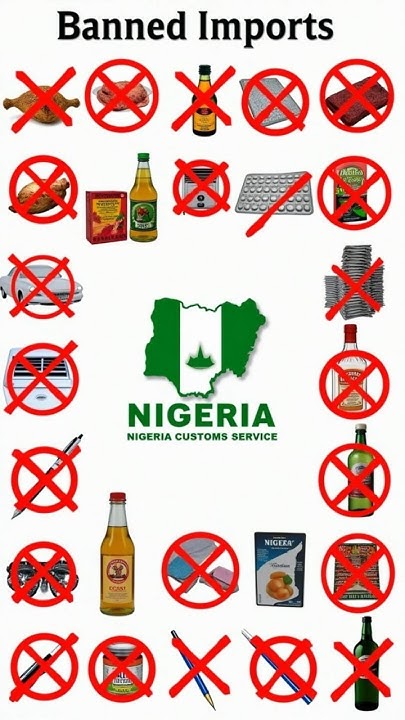
What Nigeria Bans From Its Borders — And Why It Actually Matters for the Economy
Nigeria’s import prohibition list does not make for exciting reading. It is a dry document — pages of HS codes, regulatory caveats, and customs classifications that most people will never scroll through in their lifetime. But hidden inside that bureaucratic language is something worth paying close attention to: a deliberate, if imperfect, attempt to reshape what Nigeria produces, who benefits from that production, and how the country positions itself economically for the decades ahead.
Understanding what Nigeria bans from importation — and more importantly, why — offers a sharper lens on the country’s industrial ambitions, its sustainability priorities, and the uncomfortable gaps between policy intent and enforcement reality.
The Two-Track System: What Nigeria Refuses at the Border
Nigeria’s import controls operate on two distinct tracks. The first is administered by the Nigeria Customs Service (NCS), which maintains a formal Import Prohibition List covering goods that cannot enter the country under any circumstances. The second runs through the Central Bank of Nigeria (CBN), which restricts access to official foreign exchange for importers of certain goods — effectively making those imports prohibitively expensive without technically banning them outright.
Together, these two mechanisms shape a significant portion of what arrives at Nigerian ports. The NCS list covers everything from agricultural commodities to pharmaceutical products to cultural materials. The CBN list — which at last count covered more than 40 product categories — adds another layer of restriction through price rather than prohibition.
Food and Agriculture: Protecting What Nigeria Already Grows
The most commercially significant items on the prohibition list sit in the food and agriculture category. Refined vegetable oils and fats, cane and beet sugar in retail packs, cocoa butter and cocoa powder, spaghetti and noodles, tomato paste in retail packaging, fruit juices, and flavoured non-alcoholic beverages are all banned from importation.
Each of these bans tells a story.
Nigeria is one of the world’s largest producers of cassava and one of Africa’s top tomato growers. It has a palm oil sector with enormous unrealised potential. Yet for years, cheap imports — particularly from Asia and Europe — undercut domestic producers who lacked the processing infrastructure to compete on price. The import ban on finished food products is, in theory, a correction: it removes the competition, forcing the local market to buy Nigerian-processed goods.
The ban on cocoa butter and powder is particularly instructive. Nigeria is a major cocoa producer — but has historically exported raw cocoa beans and imported the value-added derivatives back at considerably higher prices. Banning those derivatives is a nudge toward building domestic grinding and processing capacity. It is the kind of upstream-downstream logic that underpins serious industrial policy.
Pharmaceuticals: A Public Health Argument Wrapped in Trade Policy
The pharmaceutical restrictions generate more controversy than most items on the list. Common medications — paracetamol, chloroquine, cotrimoxazole, multivitamins, aspirin, magnesium trisilicate, and intravenous fluids — are banned from importation unless formally approved through NAFDAC registration.
To critics, banning routine medications in a country that still struggles with drug accessibility looks, at best, counterintuitive and, at worst, dangerous. But the argument from public health regulators is more defensible than it first appears. Nigeria has been a dumping ground for substandard, expired, and counterfeit drugs — a problem that has cost lives in ways that rarely make headlines. NAFDAC registration exists as a quality gate, not a market closure. The ban, in this framing, is about what enters unverified, not what enters at all.
The counterpoint, of course, is enforcement. Registration processes can be slow, opaque, or subject to regulatory bottlenecks. When access to approved medications is constrained by supply-side failures, the import ban can contribute to the very drug shortages it nominally exists to prevent.
Pharmaceuticals: A Public Health Argument Wrapped in Trade Policy
The pharmaceutical restrictions generate more controversy than most items on the list. Common medications — paracetamol, chloroquine, cotrimoxazole, multivitamins, aspirin, magnesium trisilicate, and intravenous fluids — are banned from importation unless formally approved through NAFDAC registration.
To critics, banning routine medications in a country that still struggles with drug accessibility looks, at best, counterintuitive and, at worst, dangerous. But the argument from public health regulators is more defensible than it first appears. Nigeria has been a dumping ground for substandard, expired, and counterfeit drugs — a problem that has cost lives in ways that rarely make headlines. NAFDAC registration exists as a quality gate, not a market closure. The ban, in this framing, is about what enters unverified, not what enters at all.
The counterpoint, of course, is enforcement. Registration processes can be slow, opaque, or subject to regulatory bottlenecks. When access to approved medications is constrained by supply-side failures, the import ban can contribute to the very drug shortages it nominally exists to prevent.
Weapons, Hazardous Materials, and Cultural Protections
Some items on Nigeria’s absolute prohibition list exist for reasons that transcend economics. Materials deemed likely to incite violence or offend religious sensibilities — including goods bearing Quranic inscriptions on inappropriate products — are banned. Obscene and indecent printed material is prohibited. Implements for reloading cartridges are barred. Exhausted tea — that is, tea stripped of its active properties and mixed with other substances to simulate quality — is also on the list, a protection against consumer fraud as much as anything else.
These are not industrial policy measures. They reflect a set of social and cultural guardrails that most governments, to varying degrees, embed in their trade frameworks.
Weapons, Hazardous Materials, and Cultural Protections
Some items on Nigeria’s absolute prohibition list exist for reasons that transcend economics. Materials deemed likely to incite violence or offend religious sensibilities — including goods bearing Quranic inscriptions on inappropriate products — are banned. Obscene and indecent printed material is prohibited. Implements for reloading cartridges are barred. Exhausted tea — that is, tea stripped of its active properties and mixed with other substances to simulate quality — is also on the list, a protection against consumer fraud as much as anything else.
These are not industrial policy measures. They reflect a set of social and cultural guardrails that most governments, to varying degrees, embed in their trade frameworks.
The Enforcement Problem: Policy on Paper and Policy in Reality
None of this works as designed if goods simply enter through unofficial channels. And the evidence suggests that a substantial proportion does.
In the first quarter of 2025 alone, Nigeria Customs seized 135,000 bags of rice worth approximately ₦939 million, petroleum products worth ₦43 million, narcotics, and wildlife products valued at over ₦6.6 billion. At Lagos airport, more than 1,600 parrots and canaries were intercepted for illegal wildlife trafficking, lacking the required CITES permits.
These are not isolated incidents. They are a snapshot of the scale at which the import prohibition framework is circumvented — through land borders, port corruption, and falsified documentation. The seized goods represent the fraction that enforcement agencies managed to catch. The much larger question is what moves through undetected.
For Nigerian manufacturers who invested in local capacity on the basis of these protections, the enforcement gap is not an abstract policy problem. It is a direct commercial threat.
What This Means for Corporate Responsibility and ESG
For companies operating in Nigeria — whether as manufacturers, distributors, retailers, or investors — the import prohibition list carries direct compliance implications that belong squarely in the ESG conversation.
Supply chain due diligence requires knowing whether sourced goods or raw materials are subject to restriction. Distributing or processing restricted goods without proper authorisation exposes companies to seizure, financial penalties, and reputational damage that can take years to repair. NAFDAC-related violations, in particular, carry significant public health liabilities.
At the same time, the prohibitions create legitimate market opportunities for companies willing to build local processing capacity. The tomato value chain, the dairy sector, the textile industry — each represents a space where domestic investment aligned with the import ban framework can attract policy support, buyer preference, and, increasingly, ESG credit.
The CBN’s backward integration model for dairy is instructive here: companies that demonstrate genuine commitment to local sourcing and processing earn regulatory accommodation. That is not a bad deal.
The Bigger Picture: Import Substitution in the Age of Sustainability
Nigeria’s import ban framework is, at its core, a form of import substitution industrialisation — a development strategy with a long and contested history in economic literature. Done well, it creates the breathing room for domestic industries to grow, invest, and eventually compete. Done poorly, it creates protected monopolies, consumer price inflation, and industries that never mature beyond their infancy.
The sustainability dimension is underappreciated. Every import ban on a good that Nigeria can produce domestically is, in principle, an investment in local employment, reduced transport emissions from cross-border trade, and economic resilience against the kind of global supply chain disruptions that the COVID-19 pandemic made viscerally real.
What Nigeria’s import prohibition framework needs is not more items on the list. It needs better enforcement, more transparent administration, and stronger linkage to industrial development programmes that actually build the domestic capacity the bans assume already exists.
The border is only as useful as what is built behind it.
CSR Reporters covers corporate responsibility, sustainability, and governance across Nigeria and Africa. For enquiries, rankings submissions, or editorial contributions, visit csrreporters.com.
[give_form id="20698"]