


 ROSEMARY IMOBHIO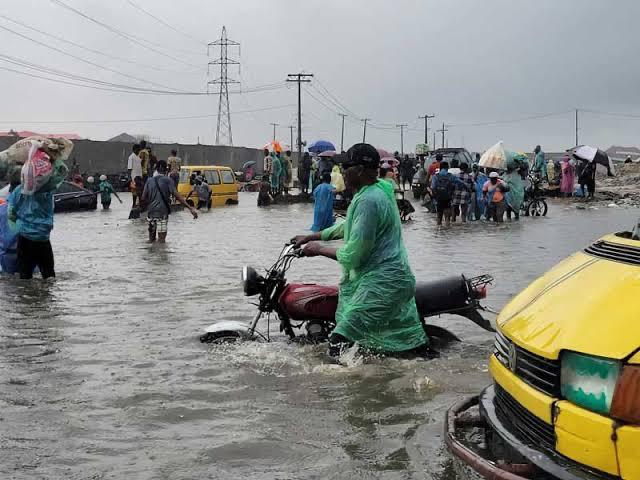
Heavy rainfall submerged parts of Lagos early this week. Familiar streets turned into rivers, and thousands of commuters were stranded for hours. Victoria Island, Lekki, Ikeja, Gbagada, Mushin, and Mafoluku were among the worst-affected areas.
Videos of stalled vehicles and waist-deep water spread quickly across social media. Businesses in Yaba, Oshodi and Ikorodu delayed opening. Tricycle and bus operators suspended services, and residents waded through flooded roads just to reach work.
Lagos State officials described the episode as a flash flood. They said an unusually intense burst of rainfall had overwhelmed drainage systems within hours. Meanwhile, the state government pointed to blocked drainage channels and indiscriminate waste disposal as factors that worsened the flooding. It has since approved the dredging of 28 additional waterways.
However, this was not an isolated event. Flooding has become a recurring feature of Lagos life, and increasingly, of life across Nigeria. Therefore, the country must begin treating floods as governance, environmental and business risks, not merely as weather events.
This deep dive examines what the recent flooding reveals about climate vulnerability, waste management failures and corporate preparedness. It also asks what Corporate Nigeria must do differently as the risks intensify.
The Flood Was About More Than Rain
Officials were quick to frame the flooding as an extreme weather event. In a narrow sense, they were correct. The Nigerian Meteorological Agency’s 2026 Seasonal Climate Prediction had already warned of variable rainfall. Nimet also predicted a longer rainy season across Lagos and twelve other states. It flagged warmer temperatures nationwide. Consequently, the intensity of the downpour was not entirely unforeseen.
Still, rainfall alone does not explain why ordinary streets became impassable within an hour. Lagos Commissioner for Environment and Water Resources, Tokunbo Wahab, acknowledged that blocked drains, wetland reclamation and construction on drainage channels compounded the damage. In other words, poor urban planning and weak enforcement turned a heavy downpour into a citywide emergency.
Nigeria’s Annual Flood Outlook has separately identified more than a thousand communities across 176 local government areas as being at risk this year. That figure underscores how widespread the vulnerability has become. Additionally, decades of unregulated development on wetlands and floodplains have stripped Lagos of natural drainage capacity. As a result, even moderate rainfall now produces flooding that once required far heavier storms.
Rain may trigger floods, but poor waste management often turns heavy rainfall into a disaster.
Plastic bottles, sachets and dumped refuse routinely clog drainage channels across the city. Officials have repeatedly linked this practice to the severity of recent flooding. Indeed, waste disposal has quietly become one of the clearest indicators of a city’s climate resilience. A blocked drain behaves the same way during a storm, regardless of how much rain falls above it.
Why Waste Management Is Also a Corporate Responsibility Issue
Waste management in Lagos is not solely a household problem. Manufacturers, retailers and consumer goods companies generate enormous volumes of packaging. Much of that packaging eventually ends up in drains, canals and waterways. Therefore, the question of who bears responsibility has grown more relevant across the private sector.
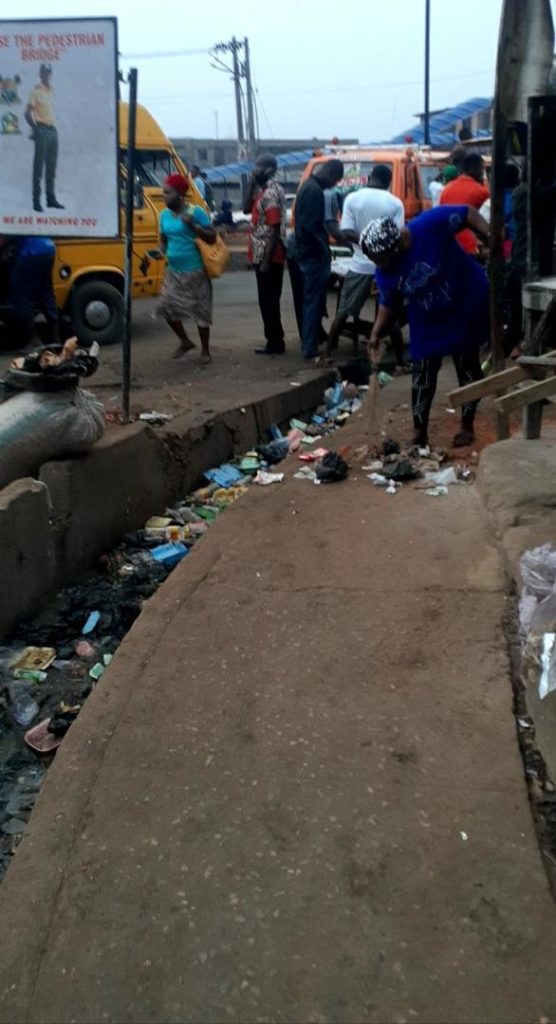
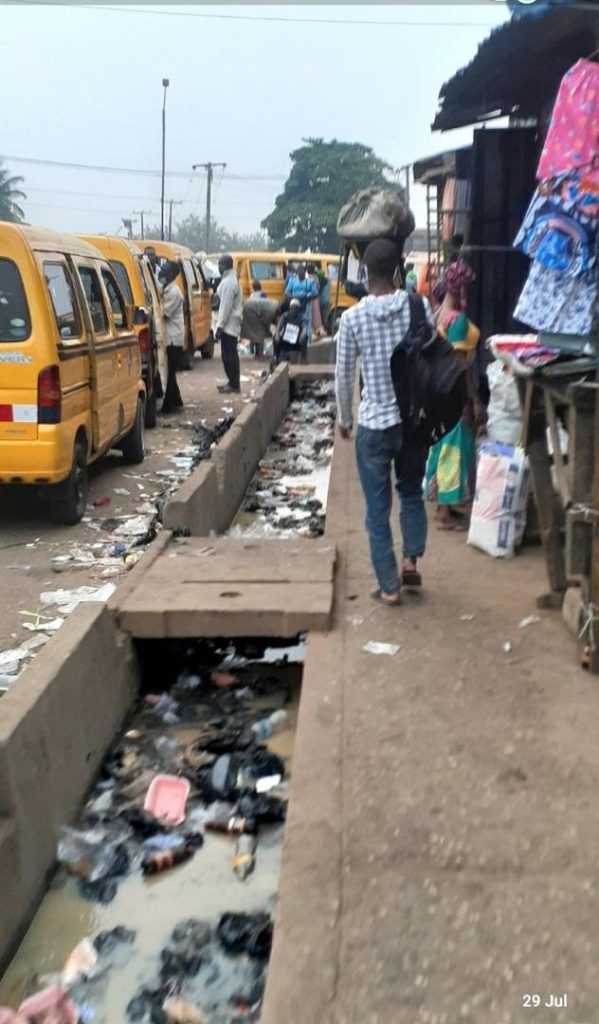
Some companies are reducing packaging weight or switching to recyclable materials. Yet these efforts remain limited relative to the scale of plastic waste generated nationwide. Furthermore, few manufacturers have invested meaningfully in take-back schemes. Extended producer responsibility programmes that keep packaging out of drains remain rare.
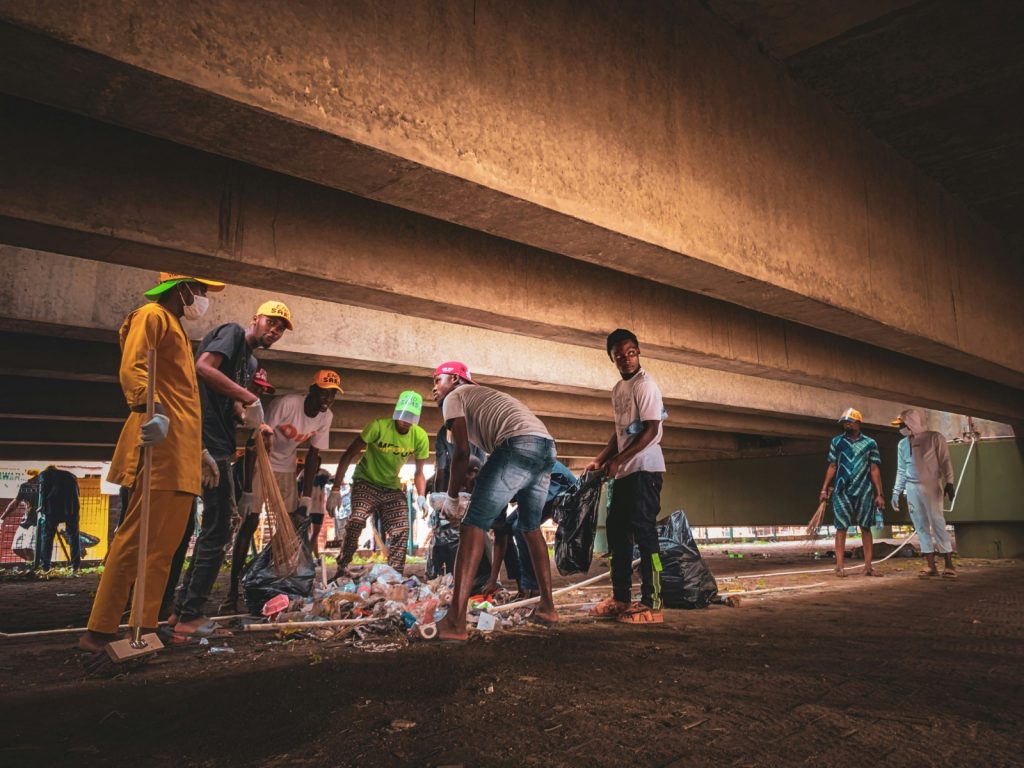
CSR Reporters has previously examined how circular economy initiatives across the continent struggle with weak enforcement. The Lagos flooding reinforces that same pattern. In contrast, a small number of FMCG and beverage companies have begun funding community clean-up programmes. Some now support recycling collection points in flood-prone neighbourhoods. Nonetheless, these remain scattered pilot projects rather than systemic interventions.
The private sector could contribute far more. It could support municipal waste collection infrastructure and sponsor drainage clearance in host communities. It could also embed circular economy principles into product design from the outset. Ultimately, cleaner cities and reduced flood risk depend as much on corporate packaging decisions as on government dredging schedules.
Floods Are Now a Business Risk
Flooding no longer belongs solely in the disaster relief column of a sustainability report. Employee safety is an immediate concern. Staff who cannot reach offices or factories translate directly into lost productivity. Supply chains face similar exposure. Flooded roads delay the movement of goods and raw materials along the Lagos-Ibadan and Lagos-Abeokuta corridors.
Meanwhile, agricultural production suffers some of the heaviest losses. Flooding in 2024 alone displaced roughly one million people. It also destroyed 1.3 million hectares of crops nationwide. Infrastructure damage compounds these losses further. Insurance costs are beginning to reflect the trend, as insurers reassess exposure in flood-prone commercial districts.
Consumer spending also weakens when households divert income toward flood recovery instead of goods and services. According to the International Monetary Fund (IMF), disaster relief spending in Nigeria could reach one and a half percent of GDP. Adaptation investment needs could rise to three percent of GDP, by the government’s own estimates.
Sectors including agriculture, banking, manufacturing, telecommunications, insurance and fast-moving consumer goods are particularly exposed. Each depends heavily on physical infrastructure, logistics networks and consumer purchasing power. Consequently, climate disasters can no longer sit in the peripheral corporate social responsibility column. They belong on the same risk register as currency volatility or regulatory change.
What Climate Preparedness Looks Like
Preparedness looks less dramatic than disaster response, yet it delivers far greater long-term value. Globally, companies are increasingly conducting climate risk assessments. These assessments map physical exposure across assets and supply chains before disaster strikes. The World Economic Forum estimates that every dollar invested in climate adaptation can generate up to nineteen dollars in avoided losses. Few other risk management investments can match that return.
Insurance giant Swiss Re, for example, has funded coastal wetland restoration in the Gulf of Mexico. The project specifically reduces storm surge and flooding risk to insured assets. Similarly, food and beverage manufacturers such as Nestlé, PepsiCo and Unilever have long prioritised water stewardship programmes. These programmes protect both watersheds and supply chain continuity.
Early warning technology is also advancing rapidly. AI-driven river monitoring systems in parts of Europe now alert officials before water levels become critical. In Nigeria, the private sector could similarly invest in flood mapping and drainage infrastructure. It could fund community-level early warning tools rather than waiting for state dredging programmes alone.
Community adaptation projects offer another avenue for building resilience. Elevated walkways and localised stormwater management are two examples. Above all, preparedness requires treating climate risk as a planning discipline, not an occasional donation line item.
From Disaster Relief to Climate Resilience
Corporate responsibility in Nigeria has long leaned toward reactive gestures. Food donations, cash contributions and emergency relief materials tend to follow flooding once the damage is already done. These interventions matter, and they should continue. However, they address symptoms rather than causes.
| Reactive CSR | Resilience-Based CSR |
| Food donations | Flood defences |
| Cash donations | Community preparedness |
| Relief materials | Early warning systems |
| Emergency interventions | Climate adaptation projects |
| Investments in waste management | |
| Environmental education initiatives |
Helping communities prepare for disasters may ultimately prove more impactful than responding after devastation occurs. This holds true both for lives protected and costs avoided. Moreover, resilience-based approaches tend to build deeper trust between companies and host communities than one-off donations ever could. A company that funds drainage clearance every dry season sends a different message than one that arrives with relief packages afterward.
What Corporate Nigeria Should Do Next
1. Conduct climate risk assessments that map exposure to flooding and extreme weather across facilities and supply chains.
2. Invest in resilient infrastructure, including elevated storage, reinforced drainage and backup logistics routes.
3. Support vulnerable communities directly, particularly those in flood-prone areas near operations.
4. Partner with governments and civil society organisations to extend the reach of interventions.
5. Fund better waste management systems, since packaging waste links corporate activity to drainage failure.
6. Include climate adaptation strategies explicitly in sustainability reports, rather than folding them into general environmental commitments.
7. Develop employee disaster response systems that protect staff safety during extreme weather.
8. Build long-term resilience programmes in host communities, sustained over multiple rainy seasons rather than a single donation cycle.
Conclusion
The recent flooding may have carried the label of a flash flood, but its underlying causes are anything but sudden. Years of poor waste management and inadequate planning have created conditions where heavy rainfall can quickly become a disaster. Insufficient investment in resilience has compounded the problem further.
For Corporate Nigeria, environmental responsibility and climate resilience are becoming inseparable. Companies that continue to treat flooding as an occasional emergency requiring donations will keep absorbing the same losses year after year. Those that instead build climate risk into strategic planning will be better positioned for the next downpour. Investing in waste management and community preparedness now will matter more than reacting later.
Lagos will likely flood again before the next dry season begins, and so will other Nigerian cities. Nonetheless, the scale of future damage is not predetermined. It will depend on decisions made now, by government agencies dredging waterways and by businesses weighing whether resilience belongs in core strategy. Increasingly, that choice is one that markets, investors and communities will notice.
[give_form id="20698"]

1 thought on “Why Nigeria’s Flood Crisis Demands Better Corporate Preparedness”