


Nigeria Wagers on Youth to Unlock Blue Economy Riches
 ROSEMARY IMOBHIO
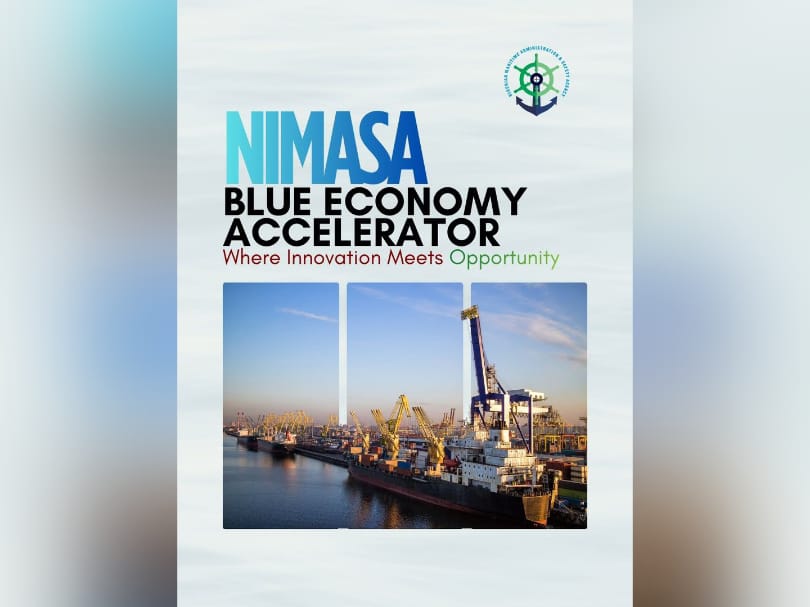
For decades, Nigeria’s coastline, rivers and creeks were treated mainly as shipping lanes and oil fields. That framing is shifting. Through the Nigerian Maritime Administration and Safety Agency, the government has introduced the Blue Economy Accelerator Programme.
This is a scheme built to identify and scale startups working on marine and maritime challenges. Officials expect at least 150 applications from innovators at home and in the diaspora for its first cohort. On paper, this looks like routine government news. Underneath, it is a bet that young Nigerians, not just federal budgets, will determine whether the Nigeria blue economy becomes a genuine growth engine or remains an underused asset along the Gulf of Guinea.
Why Nigeria Is Investing in Youth Innovation
NIMASA Director-General Dr Dayo Mobereola has framed the accelerator as a platform where structured business development support, mentorship from industry veterans and technical guidance help convert raw ideas into commercially viable ventures addressing real problems in the sector. That framing matters because Nigeria’s maritime potential has long outpaced its execution.
The Ministry of Marine and Blue Economy estimates the Nigeria blue economy could be worth around $3 trillion. The maritime sector alone is capable of adding more than $100 billion annually to GDP if fully developed. Meanwhile, global projections suggest ocean-linked industries could exceed $34 trillion a year. They could also support roughly 300 million jobs worldwide by 2030.
Consequently, the logic behind targeting youth is straightforward. Nigeria has one of the world’s largest youth populations, most of them digitally literate and underemployed. Pairing that demographic with an industry desperate for fresh thinking, whether in logistics software, marine waste management or aquaculture technology, is less charity than strategy.
Additionally, youth-led innovation tends to move faster than bureaucratic reform. This is precisely what a sector historically slowed by fragmented regulation and weak data needs.
More Than a Government Programme
It would be easy to read this as another ceremonial launch. However, the accelerator sits alongside other NIMASA youth initiatives. These include the Nigerian Seafarers Development Programme, skills acquisition centres across the six geopolitical zones and university-based maritime institutes. Together they suggest an attempt at building a pipeline rather than a one-off event.
Mobereola has said the accelerator supports the vision of the Federal Ministry of Marine and Blue Economy to unlock the sector through innovation and entrepreneurship, not merely regulation.
Still, pipelines only matter if they produce outcomes. Ordinary Nigerians should care because a functioning blue economy touches food security through fisheries, transport costs through port efficiency and coastal livelihoods through cleaner waterways. If young entrepreneurs can build viable businesses around these problems, the benefits extend well beyond Lagos boardrooms. They’ll go into fishing communities, small ports and inland waterway towns where formal jobs remain scarce.
Opportunities for Startups and Investors
For entrepreneurs, the accelerator opens doors to mentorship, technical guidance and, according to NIMASA, access to potential investors. These are precisely the ingredients early-stage maritime ventures usually lack. Focus areas likely to attract attention include sustainable fisheries, green shipping, vessel decarbonisation, ocean renewable energy, marine biotechnology and smart port technology. Each represents a market where Nigeria currently imports expertise or equipment rather than building local capacity.
Investors, meanwhile, have reason to watch closely. Nigeria’s blue circular economy, covering everything from plastic waste recovery along the coast to logistics innovation in cabotage shipping, remains largely untapped by venture capital. Early movers who back credible startups now could gain a foothold in a market officials project will only grow more valuable as reforms mature and port performance improves.
Nigeria’s ports have already shown measurable gains, with Tin Can Island and Apapa ranked among the world’s most improved terminals in a recent World Bank assessment. A signal that the operating environment is not static.
Why This Matters for Sustainable Development
Beyond commerce, the accelerator connects to broader sustainability goals. Investing in youth-led marine ventures speaks directly to decent work and economic growth. It also affects industry innovation, climate action and life below water, the concerns at the heart of Sustainable Development Goals 8, 9, 13 and 14.
Startups tackling marine waste, for instance, address both pollution and job creation simultaneously. Similarly, aquaculture ventures can strengthen food security while easing pressure on wild fish stocks depleted by overfishing and coastal degradation.
This is also where CSR intersects with core business strategy. Companies operating in shipping, logistics or coastal industries increasingly face pressure to demonstrate environmental stewardship, not as a public relations exercise but as a licence to operate. Supporting youth innovation in marine conservation and climate resilience gives private firms a credible, measurable way to align commercial interests with responsible practice, rather than issuing another glossy sustainability report.
Challenges That Could Shape Success
Nevertheless, accelerators are notoriously difficult to execute well. Nigeria’s startup ecosystem already struggles with funding gaps once initial mentorship ends. And maritime ventures often require more capital than typical tech startups because of vessels, equipment and regulatory compliance costs. Survival rates for early-stage businesses in Nigeria remain low industry-wide, and there is no indication yet that this programme will beat those odds.
Public-private partnerships will likely determine outcomes. Without committed investors following through after the mentorship phase, promising ideas risk stalling at the prototype stage.
Equally important is accountability. NIMASA and the ministry will need transparent criteria for selecting participants and honest reporting on how many startups survive, scale or fail. This will mean more, rather than only celebrating the number of applications received. Success in Nigeria’s public sector has often been measured by announcements rather than verified results. This is a pattern this initiative must avoid if it hopes to build lasting credibility.
Measuring What Comes Next
What would genuine success look like a few years from now? It would mean measurable numbers. A defined count of startups that moved from accelerator cohort to functioning business, jobs created in fisheries, logistics or marine technology. It would also mean actual private capital committed to graduates, and demonstrable environmental improvements such as reduced marine waste or expanded sustainable aquaculture output. It would mean transparent, published data rather than anecdotal success stories.
The Nigeria blue economy has never lacked ambition or rhetoric about its trillion-dollar potential. What it has lacked is a track record of converting policy statements into scalable enterprises. The Blue Economy Accelerator Programme gives Nigeria a fresh opportunity to close that gap, provided funding follows mentorship, oversight follows launch events, and young innovators are judged not by how many applied, but by how many built something that lasted.
Stay ahead of Africa’s sustainability conversation. Follow CSR Reporters for the latest news, in-depth analysis and opportunities in CSR, ESG, climate action and responsible business.
[give_form id="20698"]


1 thought on “Nigeria Wagers on Youth to Unlock Blue Economy Riches”