ROSEMARY IMOBHIO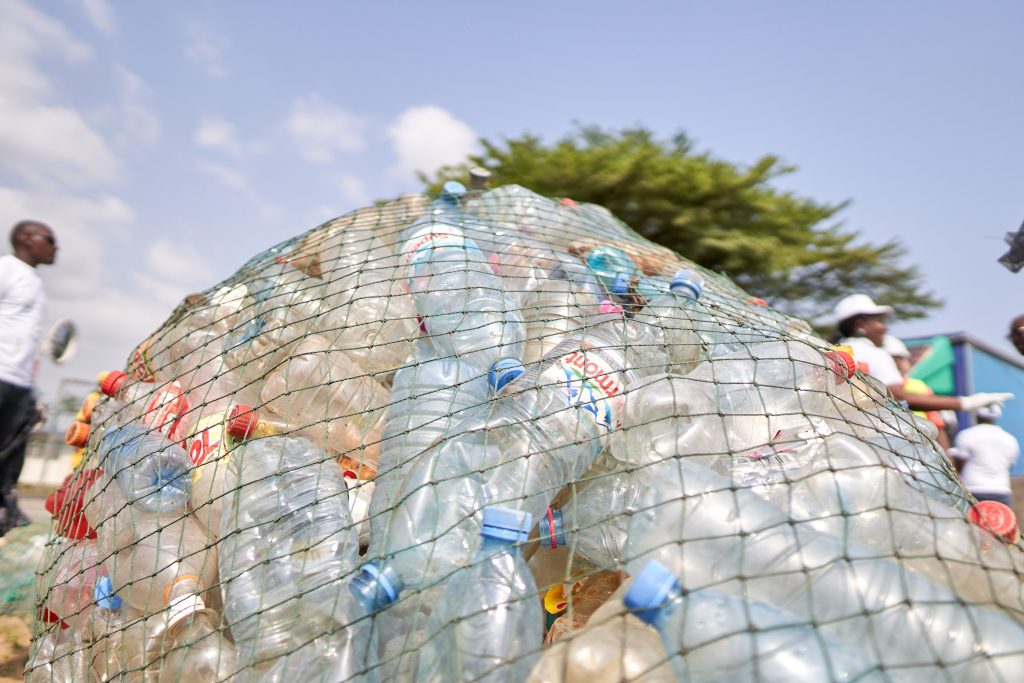
Angola has moved past the announcement stage of its single-use plastics regulation. In 2026, enforcement begins, and businesses now face a genuinely different reality. They can comply with Presidential Decree No. 170/25 or risk fines, seized goods and reputational damage. This is not a story about a law being signed. It is a story about a government choosing to make that law bite.
For years, Angola’s plastic policy existed mostly on paper. Producers kept manufacturing lightweight bags, retailers kept handing out disposable cutlery, and enforcement remained theoretical. That changed once the phased bans embedded in the decree began taking effect, backed by a national clean-up campaign.
Provincial briefings for retailers and fines that can reach 30 million kwanzas. This shift matters more than the original signing did, since laws without enforcement rarely change corporate behaviour.
From Policy to Enforcement
Presidential Decree No. 170/25 was published in September 2025. It approved Angola’s regulation on the production, import, marketing and use of single-use plastic products. It sits inside a wider framework.
This is the 2025–2027 National Action Plan for the Phased Elimination of Single-Use Plastics, known locally as PLANEPP. It was itself approved through a separate presidential decree earlier in 2025. PLANEPP was always designed around three phases. Preparation throughout 2025, execution beginning in 2026, and consolidation by 2027. That timeline is precisely why this year counts as the pivotal one. Preparation is finished. Implementation has started.
Angola generates roughly 4,500 tonnes of plastic waste daily, according to the plan’s own diagnosis. Yet only around 10 percent gets recycled. Most of the country’s plastic manufacturing, 47 of 56 licensed factories, sits in Luanda province. This explains why early enforcement activity has concentrated there.
In September, authorities began prohibiting the import, production and sale of ultra-light plastic bags under 50 microns thick. It did this along with prohibitions on plastic straws and cotton swabs. Officials marked the moment with a national clean-up and awareness campaign launched at Praia das Conchas on the Mussulo peninsula, led by the Secretary of State for the Environment.
Provincial governments, including Malanje, have since briefed supermarkets, convenience stores and bakeries on their obligations. Angola also hosted the Third Africa Blue Economy Week this July. There, African Union member states adopted the Luanda Declaration on the African Blue Economy, committing the continent to move from ocean strategy toward measurable delivery, a theme mirroring what Angola now attempts domestically with plastics.
Five New Responsibilities for Businesses
The regulation does not simply ban products. It restructures how companies across several sectors must operate, and each obligation carries its own commercial logic. So what can businesses do to get on board:
1. Replace targeted single-use plastics with approved alternatives
Businesses must replace targeted single-use items with approved alternatives. Ultra-thin bags, straws and cotton swabs are already restricted. Disposable plastic cups, plates, cutlery and PET bottles under 500ml face a full ban from September 2028.
Manufacturers must retool production lines or risk obsolescence. Retailers and hospitality operators must source reusable or biodegradable substitutes before shelves run short.
2. Secure biodegradability certification for approved packaging
Producers and importers bringing biodegradable or compostable packaging into the market must secure proper certification. Without it, these products fall back under the general ban rather than qualifying as exempt alternatives. A supplier’s marketing claim of being “eco-friendly” no longer suffices; documentation must exist and hold up under inspection.
3. Take on public awareness and consumer education duties
Companies carry public awareness and consumer education responsibilities. Retailers and FMCG brands are expected to inform shoppers about approved alternatives and responsible disposal, not simply pull products from shelves silently. This effectively turns private companies into partners in a national behaviour-change campaign.
4. Cooperate with regulators and disclose plastic management data
Businesses must cooperate with regulators and supply information on how they manage plastic throughout their operations. This includes sourcing, packaging composition and waste handling. It pushes environmental compliance out of the sustainability report and into routine regulatory correspondence.
5. Absorb the financial and reputational risk of non-compliance
Non-compliance now carries real financial and reputational stakes. Fines can reach 30 million kwanzas, and prohibited imports can be forfeited to the state outright. For importers and supply chains serving Angola, that risk calculus changes considerably once enforcement, not just legislation, becomes credible.

Why Some Industries Are Exempt
Healthcare, oil and gas, fisheries, cosmetics, agriculture, construction and personal hygiene products remain outside the regulation’s direct scope, governed instead by separate legislation. Packaging used to transport bulk food or animal-origin products is similarly excluded, largely for hygiene and food-safety reasons.
These carve-outs are not a sign of weaker ambition. Angola’s economy depends heavily on oil and gas and agriculture. Abrupt restrictions in those sectors could disrupt supply chains delivering essential goods, medical materials or food.
The exemptions instead buy time for sector-specific rules to be developed without halting core economic activity, while the general regulation targets the plastics most easily and quickly replaced, bags, straws, cutlery and disposable tableware.
What This Means for CSR Across Africa
Angola’s shift from paper policy to active enforcement reflects a pattern spreading across the continent. Kenya’s 2017 plastic bag ban was once celebrated as one of the world’s toughest. Yet recent reporting shows enforcement gaps have allowed informal plastic bag use to creep back. Particularly where local waste infrastructure lagged behind the law.
Rwanda, by contrast, built its ban around consistent enforcement and community engagement. It is frequently cited as a comparatively cleaner outcome. South Africa has leaned on extended producer responsibility rules. It requires companies to help finance collection and recycling. Though campaigners argue it still needs a firmer bag ban to match regional peers.
Angola’s approach borrows lessons from all three: phased bans similar to Kenya’s, certification rules resembling extended producer responsibility logic, and a public education push echoing Rwanda’s community model.
For businesses, the broader implication is that environmental compliance is becoming inseparable from corporate governance across Africa. Circular economy expectations, responsible procurement standards and mandatory environmental reporting are converging. This makes it harder to treat sustainability as a voluntary talking point.
Investors evaluating African markets increasingly expect firms to demonstrate genuine compliance, which raises the cost of greenwashing considerably.
A New Era of Corporate Environmental Accountability
Angola’s plastic regulation is not simply a ban on disposable packaging. It marks a broader transition from voluntary CSR toward legally enforceable environmental duty, backed by fines, forfeiture and active provincial monitoring. Companies that once treated sustainability commitments as public relations exercises now face a regulator willing to inspect, penalise and publicise non-compliance.
For businesses across Africa watching Angola’s experience unfold, the lesson is straightforward. Governments are no longer content to leave environmental responsibility to corporate goodwill.
As more countries embed circular economy principles directly into binding law, companies that build compliance capacity early, rather than scrambling once enforcement begins, will be better positioned to operate, invest and compete across the continent’s fast-changing regulatory landscape.
[give_form id="20698"]