CSR Reporters Editorial Team
THE VERDICT | Who Kept their Word. Who Did not
Every week, The Verdict places two African institutions side by side — not to flatter or to condemn, but to measure. One earns commendation because its promises survived contact with evidence. The other earns a call-out because the distance between its rhetoric and its record has grown too wide to ignore. This volume travels from the granite hills of South Africa’s Eastern Cape, where a restoration project has turned climate finance into visible, growing land, to the Chalbi Desert of northern Kenya, where a community’s decades-old wounds are only now reaching a courtroom. Both stories are, in their own way, about what happens when accountability is deferred — and what it costs, or earns, when it finally arrives.
THE COMMENDED
Imperative Turns Climate Capital Into Living Ground in South Africa’s Eastern Cape
Sector: Ecosystem Restoration & Blended Finance | Country: South Africa
In a sustainability landscape crowded with pledges, Imperative has done something rarer: it has converted a climate commitment into hectares of restored, carbon-sequestering land, backed by capital that can be traced, audited, and repeated. The company has secured $91 million in blended financing — a structure that pairs public and philanthropic funds with private investment to absorb early-stage risk — to advance Phase 2 of its Spekboom Ecosystem Restoration Project in South Africa’s Eastern Cape.
Spekboom, a hardy, indigenous succulent capable of storing exceptional volumes of carbon relative to its size, has become the backbone of one of the continent’s more credible nature-based climate solutions. Where much of Africa’s ESG conversation remains trapped in disclosure frameworks and pledge inventories, this project offers something The Verdict’s editorial standard values above all else: a measurable, physical outcome that a community, a regulator, or a skeptical journalist can go and inspect.
“The test of a climate commitment is not the press release. It is whether the ground itself looks different a year later.”
Blended finance of this scale remains difficult to mobilise in Africa, where sustainability projects routinely stall for lack of bankable structures and patient capital. That Imperative has now reached final investment decision on a second phase — rather than resting on a pilot — signals a discipline that CSR Reporters has found lacking in comparable announcements elsewhere on the continent this year. It also strengthens South Africa’s position as a proving ground for ecosystem restoration finance at a moment when the country’s broader sustainable finance architecture is under increasing regulatory scrutiny.
The commendation here is deliberately narrow: it is for demonstrated capital deployment and a verifiable restoration outcome, not a verdict on Imperative’s entire operating footprint, which CSR Reporters has not independently audited in full. Should future phases fail to sustain the pace or transparency of this one, that verdict can and will be revisited. Accountability, as this column insists every fortnight, runs in both directions.
THE CALL-OUT
BP Faces a Reckoning in Kargi, Kenya, Over Decades-Old Toxic Waste Allegations
Sector: Oil & Gas | Country: Kenya
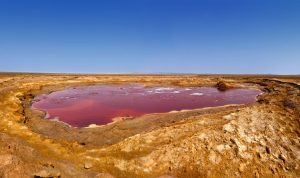
In the Chalbi Desert of Marsabit County, northern Kenya, residents of Kargi village describe cancer as the community’s defining affliction — a disease they say has claimed men, women, and children with a frequency no small settlement should endure. The alleged source, according to a lawsuit now proceeding through Kenya’s courts, traces back more than four decades to exploratory drilling conducted by Amoco Corporation, the American oil company BP acquired in a $48 billion deal in 1998.
Court filings describe toxic and hazardous drilling waste allegedly dumped into unlined pits or left exposed at the surface after nearly a dozen dry wells were abandoned in the 1980s. In February 2026, 299 petitioners formally filed their case before Kenya’s Environment and Land Court in Isiolo. In April, a Kenyan High Court ruled that the matter could proceed as a group lawsuit — a procedural milestone that allows the community to finally present its evidence in open court, after decades in which no formal reckoning occurred.
“A liability inherited is still a liability owed. Forty years of silence is not the same as forty years of innocence.”
CSR Reporters is explicit about what is established fact here and what remains contested: the allegations of contamination and the causal link to the cancer cluster are, at this stage, claims before a court, not adjudicated findings, and BP has not been shown in available reporting to have publicly conceded liability. What is not contested is the multi-decade gap between the alleged conduct, the corporate acquisition that inherited its consequences, and the community’s first real opportunity to be heard in a courtroom. That gap — between when harm is alleged to have occurred and when accountability mechanisms activate — is precisely the accountability deficit this column exists to interrogate.
The call-out, then, is not a verdict on guilt. It is a call-out of the pattern: a multinational that acquired a legacy asset in 1998 has had twenty-eight years to investigate, remediate, or engage the Kargi community proactively, and it took a court order to force the matter into public accountability. CSR Reporters will track the proceedings in Isiolo and update this record as the evidence — on both sides — becomes public.
THE VERDICT’S TAKE
Placed together, Imperative and BP tell a single story about the shape of African accountability in 2026: capital and consequence both move slowly, but only one of them moves on a company’s own initiative. Restoration finance in the Eastern Cape shows what proactive accountability looks like when it works. Kargi shows what reactive accountability costs when institutions wait for a courtroom to force their hand. The measure of responsible leadership, as always, is not what an institution says when the cameras are present — it is what it does in the years no one is watching.
| ACCOUNTABILITY IS NOT A HEADLINE. IT IS A HABIT. CSR Reporters tracks the gap between what African institutions promise and what they deliver — through independent journalism, ESG advisory, impact intelligence, and the Sustainability in Africa. Have a verdict-worthy story, a correction, or a company to nominate for commendation? Write to us at editor@csrreporters.com. |