LAGOS WASTE MANAGEMENT: 8 THINGS INDIVIDUALS CAN DO TO HELP KEEP OUR STREETS CLEANER
 ONYINYECHI NWAIGBA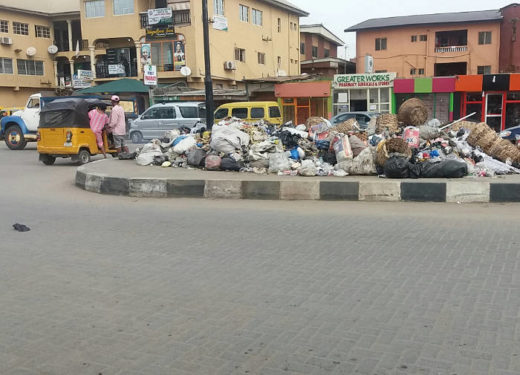
Waste is difficult to ignore in Lagos right now.
Across different parts of the city, growing piles of refuse have become increasingly visible along roadsides and in public spaces, raising concerns about sanitation, environmental health, flooding and the overall quality of urban life.
The situation has also renewed an important conversation: while government agencies, waste-management operators and other institutions have a major responsibility for effective waste collection and disposal, what can individuals do to avoid making the problem worse?
The answer is not that residents can solve Lagos’ waste management challenges on their own. Waste management requires functioning infrastructure, reliable collection systems, enforcement, public education and coordinated action.
However, individual behavior still matters.
Every bag of waste that is properly stored instead of dumped on a roadside, every plastic bottle kept out of a drainage channel and every recyclable material separated from general waste represents one less contribution to an already strained system.
Here are eight practical things individuals can do.
1. DON’T ADD YOUR WASTE TO EXISTING PILES
One of the easiest mistakes to make when waste is already accumulating is to assume that an existing pile is an acceptable place to dispose of more waste.
It isn’t.
A pile of refuse on the roadside should not become an unofficial dumping point simply because waste has already been dumped there.
Adding more waste increases the volume that eventually has to be cleared and can allow rubbish to spread into roads, walkways and surrounding communities.
If regular collection is delayed, residents should keep their waste securely contained and follow available official disposal arrangements rather than adding it to an existing roadside pile.
2. KEEP WASTE OUT OF DRAINS
A plastic bag may look small when it is thrown into a drainage channel.
But thousands of small pieces of waste can create a much bigger problem.
Plastics, food packaging, bottles and other materials can obstruct drainage channels and prevent water from flowing freely. During heavy rainfall, blocked drains can contribute to water logging and flooding.
Keeping waste out of drains is therefore not only about cleanliness.
It is also about protecting communities from avoidable environmental and public-health risks.
Your drain is not a dustbin.
3. REDUCE THE AMOUNT OF WASTE YOU GENERATE
Waste management does not begin when something reaches the bin.
It begins with what we buy.
Individuals can reduce waste by avoiding unnecessary purchases, choosing reusable products where practical, carrying reusable shopping bags and avoiding excessive packaging when alternatives are available.
Before throwing something away, consider three questions:
Can I reduce it? Can I reuse it? Can I repair it?
The less waste households generate, the less pressure is placed on collection and disposal systems.
4. SEPARATE RECYCLABLE MATERIALS
Not everything that leaves your home has to become mixed waste.
Depending on the recycling services available in your area, materials such as plastic bottles, paper, cardboard, glass and metals can often be separated for recovery.
Separating recyclables at the point where waste is generated makes it easier for recyclable materials to be recovered and processed.
It can also help reduce the amount of material eventually sent to landfills or other disposal sites.
For households, this can be as simple as having a separate bag or container for recyclable materials.
5. DON’T BURN HOUSEHOLD WASTE IN THE OPEN
When waste piles up, burning it may appear to be a quick solution.
But open burning of household waste can create another environmental problem.
Burning plastics and mixed waste can release smoke and pollutants into the surrounding environment and expose nearby residents to unhealthy air.
Instead of turning a waste problem into an air-pollution problem, residents should use appropriate collection and disposal options available to them.
6. STORE WASTE PROPERLY UNTIL IT IS COLLECTED
When waste collection is delayed, how waste is stored at home matters.
Waste should be properly bagged or placed in suitable covered containers to prevent it from spilling, attracting animals or being scattered by wind and rain.
This becomes particularly important during periods of heavy rainfall.
A securely stored bag of waste is far less likely to end up blocking a drainage channel or spreading across a street than waste left exposed outdoors.
Good waste management therefore starts before the waste leaves the household.
7. MAKE WASTE MANAGEMENT A HOUSEHOLD HABIT
Waste management becomes easier when it is treated as a shared responsibility within the home.
Parents can teach children not to litter. Families can establish simple systems for separating recyclables. Housemates can agree on where and when waste should be stored for collection.
These may seem like small actions, but habits repeated across thousands of households can influence the amount of waste entering public spaces.
Environmental responsibility is not something that has to begin with a large campaign.
It can begin in the kitchen, office, school or compound.
8. REPORT AND SPEAK UP ABOUT ILLEGAL DUMPING
Where appropriate reporting channels exist, residents can report persistent illegal dumping or waste-management issues to the relevant authorities.
Communities can also use neighborhood associations, resident groups and other appropriate platforms to encourage better waste practices.
However, reporting should go alongside responsible personal behavior.
It is difficult to demand cleaner public spaces while continuing to dispose of personal waste irresponsibly.
INDIVIDUAL ACTION IS NOT THE WHOLE SOLUTION
It is important to acknowledge that asking residents to dispose of waste responsibly does not remove the responsibility of institutions.
Lagos’ waste-management challenges are complex.
Effective waste management requires adequate collection infrastructure, reliable services, proper disposal facilities, recycling systems, enforcement, public education and coordination between different stakeholders.
Residents should not be expected to solve systemic problems simply through individual action.
But individual responsibility still has a place within the bigger picture.
A functioning waste-management system works better when residents do not deliberately add to the burden through indiscriminate dumping, littering or the obstruction of drainage channels.
A CLEANER LAGOS REQUIRES SHARED RESPONSIBILITY
The current waste situation is a reminder that environmental sustainability is not only about major policies, corporate sustainability reports or large-scale projects.
It is also about everyday decisions.
Where we put our waste.
How much waste we generate.
What we reuse.
What we recycle.
What we teach our children.
And whether we choose to protect or neglect the spaces we all share.
Government agencies and waste-management operators must continue working towards effective collection and disposal systems. Businesses also have a role in reducing packaging waste, improving resource efficiency and supporting circular-economy solutions.
But residents have a role too.
Don’t add to the pile. Don’t throw waste into drains. Reduce what you can. Separate what you can recycle. Store waste properly. And dispose of it responsibly.
No single action will solve Lagos’ waste-management challenges.
But when millions of everyday decisions begin moving in the same direction, they can help create cleaner, safer and more sustainable communities.
Read also: Waste Trucks Stranded? Why Is Lagos Garbage Piling Up Again?
[give_form id="20698"]