BATN Foundation Launches 22,000-Tree Afforestation Project to Boost Climate Resilience and Rural Livelihoods in Northern Nigeria
 ONYINYECHI NWAIGBA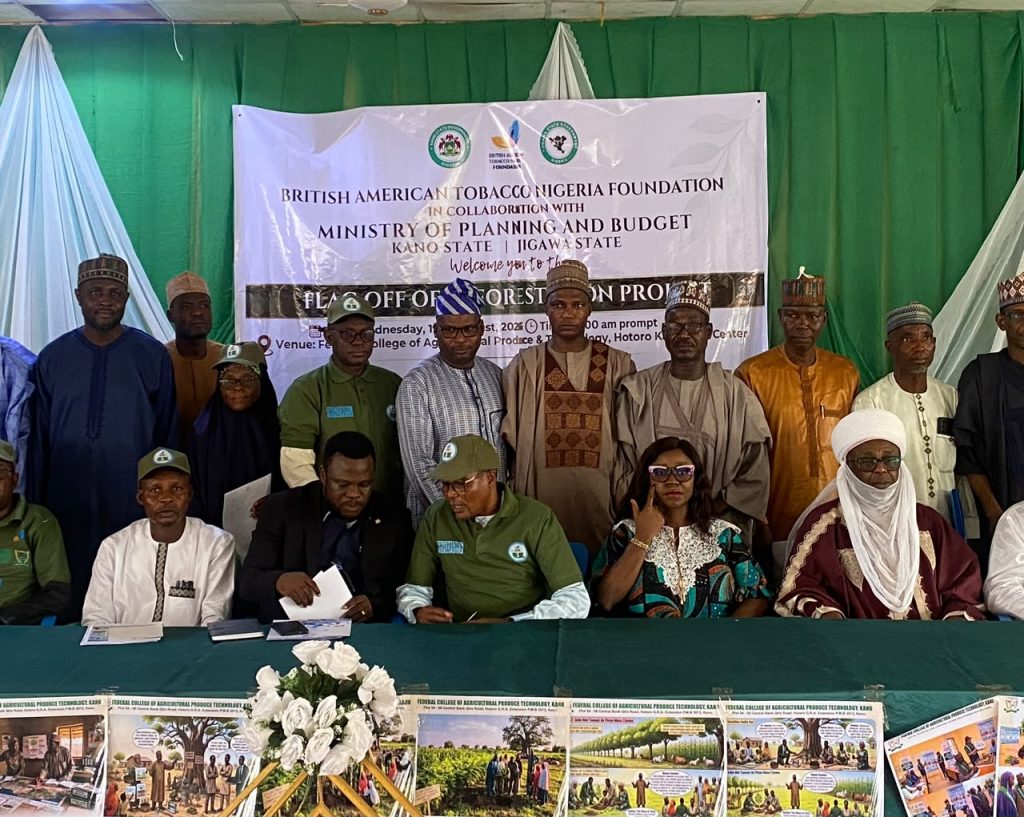
The British American Tobacco Nigeria Foundation (BATN Foundation) has commenced a 22,000-tree afforestation and natural resource management project across selected communities in Kano and Jigawa States, in a strategic intervention designed to combat desertification, restore degraded landscapes, improve biodiversity, and strengthen the resilience of rural communities to the growing impacts of climate change.
The initiative, implemented in partnership with the Federal College of Agricultural Produce Technology (FCAPT), and Green Legacy, was formally flagged off in Kano in the presence of government officials, development partners, traditional institutions, community representatives, environmental practitioners and members of the media. Attendees included Alhaji Nasiru Wada, Magajin Garin Kano and Board Director, BATN Foundation; Mrs Ruth Owojaiye, Board Director, BATN Foundation; Dr Salisu Salisu, Provost of FCAPT; Oludare Odusanya, General Manager, BATN Foundation; representatives of the Kano and Jigawa State Ministry of Environment and Ministry of Planning and Budget; traditional leaders; community representatives; and members of the press.
The project will facilitate the planting of economic tree species across 11 local government areas in Kano and Jigawa States, combining environmental restoration with income-generating opportunities for rural households. The species include date palm, mango, guava, tamarind, baobab and neem, selected for their economic value as well as their ability to improve soil quality, enhance biodiversity and contribute to climate resilience.
Speaking at the event, Mrs Ruth Owojaiye, Board Director, BATN Foundation, said the project reflects the Foundation’s commitment to addressing environmental challenges while improving livelihoods in rural communities.
“This project is not just about planting trees. It is about planting hope, restoring our environment, strengthening rural livelihoods and reaffirming our shared responsibility to protect the future of our communities.”
According to her, communities across Northern Nigeria continue to face growing environmental pressures, including declining soil fertility, changing weather patterns, desertification and reduced agricultural productivity.
“The realities of climate change are already being felt in many of our communities. Our response must therefore be practical, collaborative and sustainable. Through this intervention, we are investing not only in the environment but also in the future economic wellbeing of the people who depend on it.”
Owojaiye noted that BATN Foundation has invested over ₦4 billion in agricultural and rural development interventions over the last two decades, implementing more than 300 projects and impacting over 1.7 million beneficiaries across Nigeria.
Also speaking, Alhaji Nasiru Wada, Magajin Garin Kano and Board Director, BATN Foundation, described the initiative as an investment in future generations.
“A tree is an unusual kind of investment. It returns value quietly for decades through cleaner air, stronger soil, food, shade and income. What we are doing today is an environmental action, but it is also a decision taken on behalf of future generations.”
He urged communities and stakeholders to take ownership of the project, stressing that the success of the initiative would ultimately depend on the survival and growth of the trees long after the ceremony.
Providing details of the project, the Technical Lead for the Project from FCAPT, Dr Tayo Oni explained that the initiative has already commenced in several locations, with thousands of seedlings distributed to beneficiary communities and transplanting.
He added that sustainability had been built into the project’s design from inception through the training of 22 Community Forest Ambassadors, drawn from participating local government areas to support sensitisation, distribution, monitoring and community ownership.
“We have deliberately identified and trained community champions who will help ensure that these trees survive and continue to deliver value for their communities. This project is about building a culture of environmental stewardship that lasts beyond today.”
In his remarks, Dr Salisu Salisu, Provost of the Federal College of Agricultural Produce Technology, described the intervention as a timely response to the environmental challenges confronting the region.
He announced that FCAPT contributed an additional 2,000 seedlings to support the programme and expressed confidence that the project could achieve a minimum survival rate of 95 percent through sustained monitoring and community engagement.
“The work does not end with today’s flag-off, the real success of this project will be measured by how many of these trees survive, mature and continue to provide value to communities many years from now.”
Speaking on behalf of the Kano State Government, Abbas Iliyasu Karaye, Director of Monitoring and Evaluation, Ministry of Planning and Budget, commended BATN Foundation and its partners for complementing government efforts to address environmental degradation across the state.
Karaye described the initiative as fully aligned with the state’s environmental sustainability priorities and praised its focus on economic tree species that provide both environmental and livelihood benefits.
“This initiative aligns with our development priorities as a state. It addresses climate resilience, environmental restoration and economic empowerment simultaneously. What makes it particularly commendable is that it goes beyond planting trees to creating long-term value for communities.”
He revealed that the positive reception and anticipated impact of the project had strengthened government commitment toward afforestation and environmental restoration programmes.
“The acceptance of this project by communities and stakeholders reinforces the need to expand afforestation efforts across the state. As a government, we are already considering additional support for tree-planting initiatives and environmental restoration activities in our 2027 planning and budget framework to sustain and scale initiatives such as this.”
Stakeholders at the event agreed that the intervention demonstrates the power of collaboration among government, academic institutions, development organisations, private sector entities and local communities in addressing climate-related challenges.
As the first seedlings were planted to mark the official commencement of the project, participants expressed optimism that the initiative would continue to grow in scale and impact, creating greener landscapes, stronger rural economies and more climate resilient communities across Kano, Jigawa and the wider North-West region.
[give_form id="20698"]