CSR Reporters Editorial Team
THE VERDICT | Who Kept their Word. Who Did not – Volume 12
Every week, The Verdict places one act of institutional integrity beside one act of institutional failure — not to flatter, and not to shame a person, but to test how corporate conduct in Africa measures up against the standards it claims to keep. This week’s pairing spans two very different commodities: capital and copper.
COMMEND
South Africa — Absa Group & Standard Bank
In the 2026 Sustainable Finance Awards, Global Finance Magazine recognised Absa for arranging roughly half of the R9.4 billion debt package behind the Red Sands Battery Energy Storage System — set to become the largest standalone BESS in South Africa once operational, structured under the country’s Battery Energy Storage Independent Power Producer Procurement Programme. Standard Bank was recognised in the same cycle for a R6.1 billion debt package supporting the 505MW Khauta solar facility, including plans for its own battery storage component.
What earns this a commendation is not the size of the numbers but the architecture behind them: instruments listed on the Johannesburg Stock Exchange’s Sustainability Segment, aligned to King IV governance requirements and TCFD-consistent disclosure, and verified through an independent, third-party awards process rather than self-reported claims. Red Sands’ revenue model is also worth noting — it is structured around availability rather than dispatched energy, a design choice that reduces the incentive to overstate output. This is what bankable climate finance looks like when it is built to be checked, not just believed.
CALL-OUT
Democratic Republic of Congo — CMOC Group (Tenke Fungurume Mining)
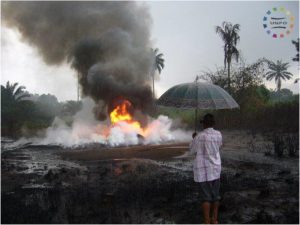
A peer-reviewed study published in June 2026 documented widespread air and water pollution, and contaminated sediments, around the major copper-cobalt mining sites of DRC’s Lualaba province — including Tenke Fungurume Mining, majority-owned by China’s CMOC Group. The findings echo a 19-month field investigation by RAID and AFREWATCH, spanning 25 villages and 144 resident interviews, which found serious health consequences reported by communities living near these sites, particularly children.
This is not a call-out of any individual, and it does not allege that theft or informal mining played no role in the DRC’s broader pollution burden — that context is real and well documented. The institutional failure is narrower and more specific: independent, peer-reviewed environmental monitoring exists and shows sustained contamination in communities encircling industrial-scale operations, and the response gap between that evidence and public accountability from the operators concerned remains wide. The DRC supplies roughly three-quarters of the world’s cobalt, feeding the same energy transition that Africa’s green finance instruments — like the ones commended above — are meant to serve. A supply chain cannot claim sustainability at one end while externalising its costs at the other.
The Verdict pairs these two stories deliberately. Africa’s climate finance architecture is only as credible as the mineral and energy value chains it ultimately depends on.
Where does your organisation stand?
CSR Reporters works with corporates, investors, and institutions to build sustainability strategies that are credible, context-aware, and built to withstand scrutiny — not just publish well. To commission an independent impact assessment, ESG advisory engagement, or accountability review, reach out to CSR Reporters’ structured impact services team.
[give_form id="20698"]