Eche Munonye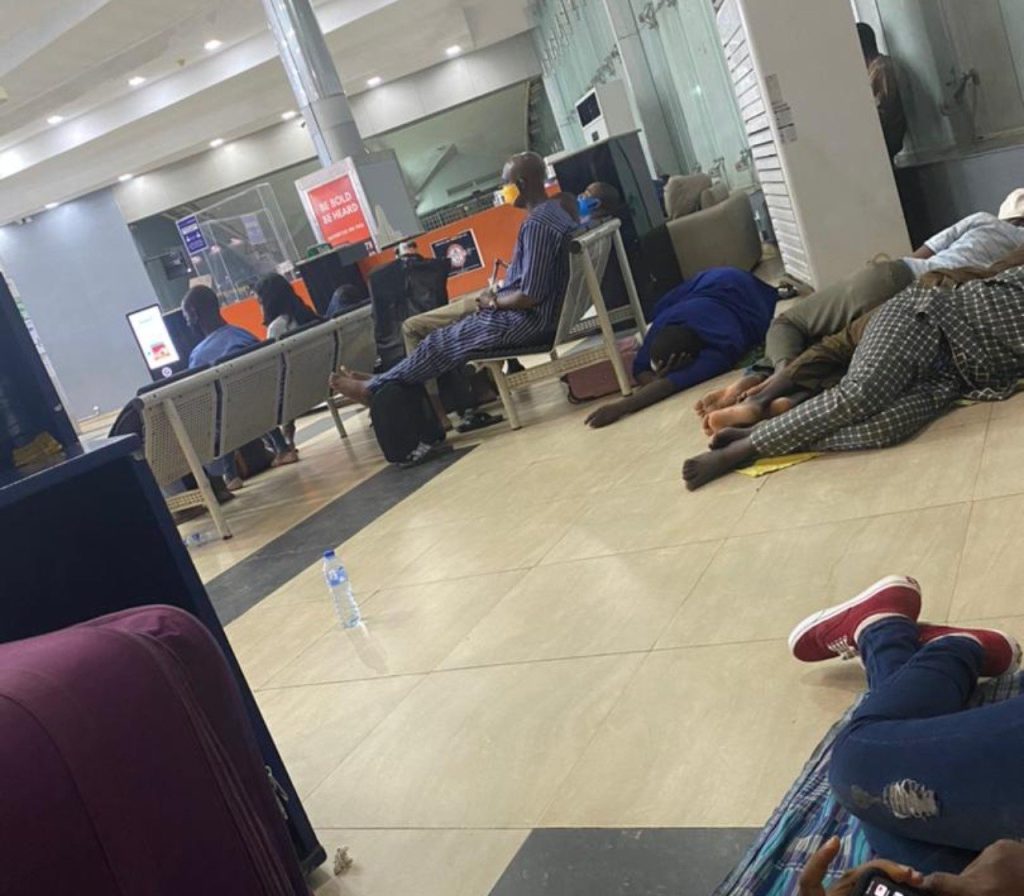
The Law Exists. So Does the Silence: Air Peace and Nigeria's Enforcement Gap
Ask a stranded Air Peace passenger why they haven’t demanded compensation, and most will tell you the same thing: there’s no law protecting them. It’s an understandable conclusion — it’s also wrong. Nigeria has a consumer protection framework for air travel. What it doesn’t have, in any way passengers can feel, is enforcement.
That distinction matters, because it changes what accountability should look like. This isn’t a story about a legal vacuum. It’s a story about a law that sits on the shelf while an airline’s largest customers absorb the cost of its operational strain — ten-hour waits for one-hour flights, minimal communication, and little consequence for the carrier.
A pattern, not an incident
Air Peace’s 2026 has been defined by recurring disruption. In May, following a wave of complaints, the Nigerian Civil Aviation Authority’s Director General publicly directed the airline to scale down operations to match its available fleet, citing chronic delays and cancellations. Air Peace responded that safety, not fleet shortages, was driving the disruptions, pointing to incidents like a bird strike that grounded a flight and rippled across its network.
The pattern continued. In April, a nationwide aviation fuel shortage forced widespread delays across its schedule. In July, the airline blamed ground-handling damage from a NAHCO vehicle for further disruptions. In August, a labour picket at Lagos and Abuja terminals grounded more than seventy flights. Each incident had a different proximate cause — fuel, maintenance, a labour dispute, a ground-handling accident. Together, they describe an airline whose operational resilience has not kept pace with its market dominance, and a flying public with no reliable channel to hold it accountable when things go wrong.
Coverage of these disruptions has repeatedly surfaced the same passenger complaint: not the delay itself, but the silence around it. Travelers stranded for hours with no real-time updates, no clear timeline, and no visible remedy.
The regulation nobody feels
Here is what most passengers don’t know: Part 19 of the Nigerian Civil Aviation Regulations already obligates airlines to act when this happens. A delay of two to four hours requires refreshments and communication by phone, text, and email. Past six hours, airlines are required to provide hotel accommodation and transport. Cancellations without at least 24 hours’ notice can trigger compensation of around a quarter of the ticket price for domestic flights. The Federal Competition and Consumer Protection Act adds a broader layer — rights to clear information, fair treatment, and redress that apply to airlines as much as any other business.
On paper, a passenger held at the airport for ten hours is not without options. In practice, almost none exercise them. Awareness of Part 19 is low, the complaint process runs through a portal and an email address most travelers have never heard of, and enforcement action against airlines has been rare enough that it does not function as a deterrent. NCAA’s own public statements — regulators repeatedly “urging” better communication, “warning” of monitoring, “affirming” that compensation exists — describe a regulator that talks about the rules more often than it applies them.
That gap between an entitlement on paper and a remedy in practice is, functionally, the same as having no law at all. It just comes with the added indignity of being told your rights exist while nobody helps you exercise them.
Where the accountability actually sits
This is not a call-out of individual staff doing their best at a departure gate during a fuel shortage. It is a call-out of an institutional failure that runs in two directions at once. Air Peace, as Nigeria’s largest domestic carrier, has scaled its market share faster than its capacity to absorb operational shocks — and has too often met the resulting passenger harm with explanation rather than remedy. The NCAA, as the regulator holding the actual enforcement power under Part 19, has issued directives and warnings but little visible sanction, leaving compliance largely voluntary for an airline with outsized market power and, so far, limited incentive to change.
Real accountability here looks like three things: an airline that pays out compensation as a matter of course rather than public pressure, a regulator that publishes enforcement actions and penalties with the same visibility it gives its warnings, and a consumer protection process simple enough that a stranded traveler can use it from the departure lounge, not just a lawyer after the fact.
Until then, “there’s no law” will keep being the story passengers tell themselves — not because it’s true, but because a law nobody enforces might as well not exist.
CSR Reporters tracks the gap between regulatory frameworks and lived accountability across Africa’s key sectors. Organizations seeking to close that gap — through credible disclosure, consumer-facing accountability practices, or independent impact assessment — can engage CSR Reporters’ advisory and intelligence services.
[give_form id="20698"]