100 Days to the Polls: What Nigeria’s Petrol Discount Gets Right, What It Hides, and Who Really Pays
 Eche Munonye, Founder and Chief Strategist, CSR Reporters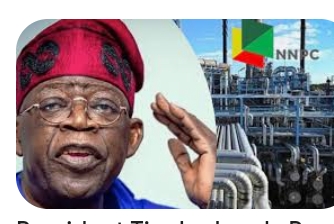
100 Days to the Polls: What Nigeria's Petrol Discount Gets Right, What It Hides, and Who Really Pays
On Thursday 8 October 2026, Finance Minister Taiwo Oyedele announced a 30-day discount on petrol sold at NNPC stations, with priority for public transporters. INEC has set the presidential election for 16 January 2027. That is exactly 100 days after the announcement.
Few Nigerians need convincing that the timing is awkward. The harder task is to separate what is documented from what is assumed. This article does that. It credits the parts of the package that deserve credit, names the gaps that the government has yet to close, and asks the question every relief measure must answer: who pays?
What was announced
The government says NNPC will sell petrol “at cost” for 30 days “in the first instance,” and that this is a margin discount, not a return to subsidy. The cost, the minister says, is borne by NNPC Retail through a smaller profit margin, not by the federal budget or the Federation Account. He has also said retail margins account for less than 5% of the pump price.
The discount sits inside a wider package. The government is negotiating a ceiling of ₦1,350 per litre on the ex-gantry or landing cost of petrol, reviewed monthly. Refiners and importers would absorb costs above the ceiling and recover them later when conditions improve. The government also plans forward sales of crude to domestic refineries and says proceeds from taxes on price gouging will fund transport support or vouchers for urban minimum-wage earners.
The backdrop is real. By the government’s own account, petrol has risen from about ₦830 to about ₦1,400 a litre as crude moved up from around $70 a barrel. NNPC’s listed prices are ₦1,355 in Lagos and Rivers and ₦1,370 in Abuja.
What deserves credit
A mechanism, not just a gesture. A landing-cost ceiling with monthly review is an attempt to smooth price swings without freezing prices. Whatever one thinks of its details, it is a design, and designs can be examined.
A built-in end date. “Thirty days in the first instance” creates a moment of accountability. Open-ended relief is how Nigeria ended up with a subsidy that consumed budgets for years.
A named vulnerable group. Directing relief to public transporters, and promising vouchers for minimum-wage earners, acknowledges that fuel prices reach households mainly through fares and food.
An honest framing of the choice. The minister has argued that removing the subsidy in 2023 prevented higher global crude prices from hurting Nigerians even more. One can disagree with that, but it is a position stated openly.
What does not add up
The discount has no published size. Neither the ministry nor NNPC has published the discount per litre or announced a new pump price. A relief measure whose value is unstated cannot be judged by those it is meant to help.
The arithmetic limits it. If retail margins are under 5% of the pump price, as the minister says, then a discount funded entirely from margin cannot exceed roughly ₦70 on a ₦1,400 litre. That is our own calculation from the minister’s figure. It compares with labour’s demand for a price below ₦1,000 and one lawyer’s proposal of ₦400 off a litre. The measure may be useful, but it is small, and it should be described as small.
The dates are muddled. NNPC’s chief executive says discounting began around 1 October. The government announced the package on 8 October. NNPC separately ran a ₦66-per-litre Independence Day promotion, originally for 1 to 7 October, and has now extended it to 31 October. Citizens cannot tell which discount they are getting, from when, or at what price.
Eligibility is vague. “Priority for public transporters” has no published rules for identifying them at the pump. Without a mechanism, relief meant for bus operators can reach anyone who queues first.
The supply chain is unexplained. The minister says NNPC buys from the Dangote Refinery and other suppliers at prevailing market prices. Critics note the government has not said whether any supplier has agreed to a discount. If not, someone absorbs the difference.
Who actually pays?
The government’s answer is “NNPC Retail, not the public purse.” That answer is incomplete.
- NNPC, and therefore its owner. NNPC is a publicly owned company. When it forgoes margin, it earns less, which can reduce its profit, retained earnings and future dividends. The cost is less visible than a budget line. It is still a cost, and critics argue NNPC’s profits belong to the Federation.
- Refiners and importers, for now. Under the ceiling, they carry the shortfall and recover it later. If recovery happens when prices ease, consumers may repay it through prices after the relief is forgotten. That is our inference, not a documented plan, but it is exactly the question the government should answer.
- Taxpayers, through the voucher scheme, if the gouging-tax proceeds fall short of what the vouchers cost.
The point is simple. “Sell at cost” changes the label, not the existence of a bill. As one commentator put it, the key issue is not what the policy is called but who bears the cost and who receives the benefit.
Why now?
There are documented reasons and inferred ones, and they should be kept apart.
Documented: fuel prices rose sharply; the government says earlier measures did not fully ease the pressure; opposition candidates are campaigning on cheaper fuel, and Atiku Abubakar has said he would restore a petrol subsidy; and the election is 100 days away.
Inferred: that the timing reveals the real purpose. Opposition parties and many Nigerians say so, and the Obidient Movement called it an “election year Greek gift.” The inference is reasonable, but a policy can be both electorally convenient and substantively useful. The test is whether the numbers are published and the relief lasts beyond polling day.
The contradictions worth naming
We prefer to place statements side by side and let readers judge.
On “not a subsidy.” The minister says: “it’s not a subsidy; the government is just saying we sell to you at cost.” One economist responded that it is “a form of subsidy anyway,” though not a blanket one. Both can be partly right. The government should say plainly who forgoes what.
On fiscal discipline. Officials defend the 2023 subsidy removal as protecting the economy. That case is weakened if a state-owned company is then instructed to absorb costs without disclosing the amount.
On the opposition. The criticism cuts both ways. Candidates who demand deeper cuts or a restored subsidy owe voters the same figures: what it costs, who funds it, and for how long. Relief that is promised without a price tag is also a political product.
What Nigerians should demand
- The discount per litre and the actual pump price, published by NNPC.
- The price NNPC pays suppliers, and who absorbs any difference.
- A public estimate of the cost to NNPC’s earnings and, through it, to the Federation.
- Published rules for how public transporters are identified, and evidence of fare reductions.
- A clear statement of what happens on day 31, and whether any deferred recovery under the price ceiling will fall after the election.
- Quarterly reporting on the gouging-tax proceeds and the vouchers they fund.
The verdict
The package contains a real idea, the landing-cost ceiling, wrapped in an announcement that withholds the numbers needed to judge it. The discount is likely small, the dates are confused, and the answer to “who pays?” is incomplete.
None of that proves bad faith. It does prove that 100 days before an election, the burden of proof sits with the government. Relief that cannot be measured cannot be trusted, and relief that cannot be trusted will be read as politics. If the government wants it read as policy, it should publish the figures.