ROSEMARY IMOBHIO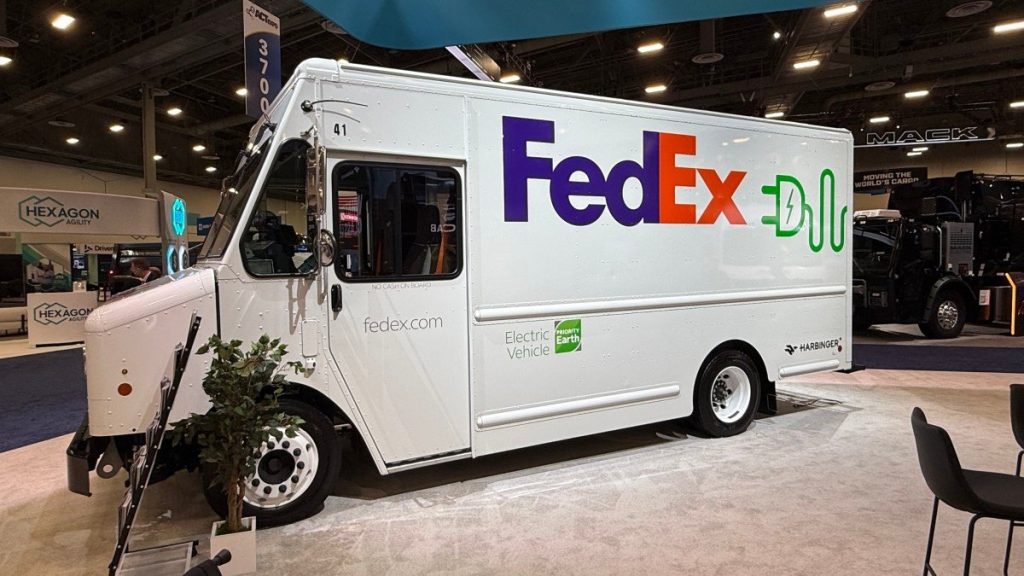
FedEx has ordered 2,000 all-electric medium-duty trucks from Harbinger in a deal worth more than $300 million. Deliveries are due by the end of 2027, for pickup and delivery work across the United States and Canada. This is a fleet order, not a trial, and it follows an initial purchase of 53 vehicles.
Context helps, though. FedEx’s annual report counts nearly 9,500 electric vehicles in a global fleet of more than 180,000 motorised vehicles. Electrification is moving, but it is early. For African businesses, the sharper question is what this means where fuel, power and finance work very differently.
The Truck Is Becoming Part of the ESG Conversation
Companies that own their trucks report the diesel they burn as direct emissions, known as Scope 1. Fuel also drives most of a truck’s footprint. The International Council on Clean Transportation (ICCT) found that fuel use accounts for over 90 per cent of lifetime emissions in diesel and natural gas trucks.
Fuel is a cost issue as well. Dangote Cement’s head of transport says it makes up roughly 60 per cent of the company’s transport costs. One fleet decision therefore lands in the sustainability report and the budget at once.
Nigeria Is Taking a Different Route
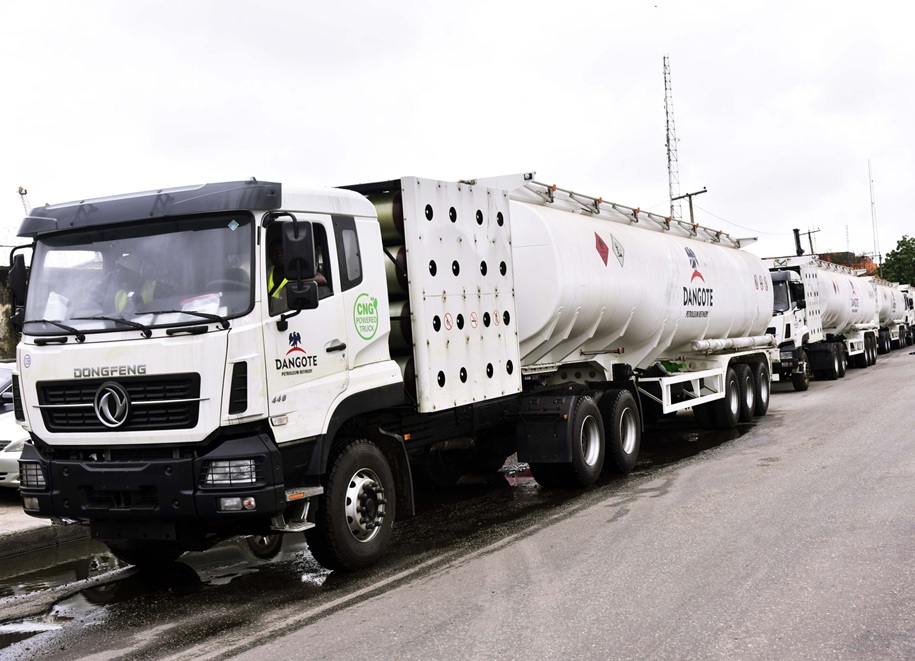
Dangote Cement has leaned on gas. At its September Capital Markets Day, the company set a target of 8,000 CNG and electric trucks by 2027. By its own figures, about 3,400 CNG trucks were deployed in 2025. Roughly 3,000 more are planned for Nigeria this year, with over 900 already received.
It also plans about 155 electric trucks across its pan-African operations in 2026. Its own compression and refuelling infrastructure has supply capacity above one million standard cubic metres a day.
Management argues CNG offers fuel savings of about 60 per cent against diesel, and that domestic gas reduces exposure to imported fuel and currency swings. Those are company claims. The timeline has also stretched.
In 2025, the company spoke of converting more than 7,000 trucks by the end of 2026. Its latest presentation targets a fully CNG truck fleet in Nigeria by 2027, excluding the Gboko plant.
Read Also: From ₦17,000 to ₦4,000: How CNG Could Change the Economics of Running a Tricycle Business
CNG Is a Transition, Not the Finish Line
CNG and electric trucks are not equivalent. Natural gas is a fossil fuel. It has a lower carbon content than diesel, but methane leaking along the supply chain can erase much of the gain.
ICCT’s US-based analysis estimated a saving of about 6 per cent at a 1.8 per cent leakage rate, and a worse outcome than diesel above 2.5 per cent. Its earlier European study put battery-electric trucks 63 per cent below diesel. An electric truck is only as clean as the power feeding it.
Dangote’s plan treats both fuels as part of one roadmap. Its wider goal is a 20 per cent cut in Scope 1 and 2 emissions intensity by 2030, against 2021. Trucks are one lever among several. Supporters of gas fleets say the infrastructure could later carry biomethane. Critics warn of technology lock-in.
Africa Has an Infrastructure Problem to Solve
Neither path builds itself. Nigeria’s national grid collapsed on 23 January 2026, with generation falling to zero. The grid had failed at least 16 times across 2024 and 2025. Heavy-truck charging needs dependable, high-capacity power.
In South Africa, a developer has been building off-grid solar charging sites on the N3 freight corridor, citing an unreliable grid. It also lists import duties, certification and scarce truck supply as hurdles. Each site costs about $1.25 million. In Kenya, high purchase prices, thin charging networks and range worries keep freight operators largely tied to diesel.
Gas has gaps of its own. Nigeria’s Presidency reports over 90 CNG stations and 120,000 converted vehicles. The regulator’s August factsheet counted 176 stations and 78,900 conversions.
Officials hope to activate the first of 500 new stations by the end of October. A new truck without the network behind it delivers only part of a transition.
One African Market Cannot Stand for the Whole Continent
Egypt shows a gas-led path at national scale. Its natural gas vehicle programme has run since 1995. A Cabinet statement in November 2024 cited 805 stations and 562,000 conversions.
Ethiopia went the other way. It banned petrol and diesel vehicle imports in January 2024. Officials say electric vehicles now make up nearly 6 per cent of vehicles, helped by hydropower. Yet reporting in June noted that around half of Ethiopians still live without electricity.
The IEA says Egypt, Morocco and South Africa together made up nearly 70 per cent of African EV sales. The continent holds several energy systems, not one.
The Business Case Behind the Transition
Money runs through every example. Harbinger estimates fuel savings of $20,000 per truck each year, a figure tied to North American fleets.
Dangote’s CNG savings are also company figures. The company projects $700 million to $750 million in cost savings from 2026 to 2030 across initiatives that include CNG and electric trucks. Kenyan fleet owners reportedly see electric trucks as protection against fuel price shocks, despite higher upfront costs.
Independent cost data for African freight was hard to find, so most savings claims here come from the companies themselves. Fleet planning adds another layer. Harbinger designs its trucks for a 20-year life, so purchases made now shape fuel exposure and emissions for a long time.
FedEx’s own annual report describes pairing the right vehicle with the right route. That idea travels well.
African companies face different grids, gas supplies, financing costs and road conditions. They will weigh cleaner fleet technologies against those realities. The commercial transport transition is already underway. How it fits each business’s infrastructure, economics and sustainability goals is still being worked out, route by route.
For more reporting on how African businesses are rethinking logistics, energy and emissions, stay with CSR Reporters.
[give_form id="20698"]