Eche Munonye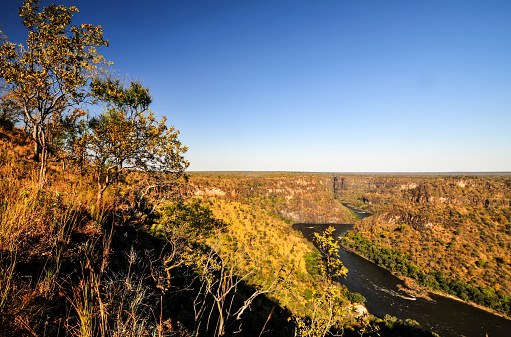
After 50 Years, Can $440 Million Finally Make the Batoka Gorge Work?
Zambia and Zimbabwe have committed $440 million in public equity toward the $4.2 billion hydropower project. But after decades of delays, the harder question is whether money alone can overcome the governance, climate and implementation risks that have kept Batoka Gorge on the drawing board.
The Batoka Gorge Hydro-Electric Scheme was first conceived in 1972, following a study commissioned by the predecessor to the joint body that still oversees it today. Half a century later, in early 2026, Zambia and Zimbabwe each committed $220 million in public equity — a combined $440 million — to finally move the long-delayed project toward formal procurement. It is the first time either government has put public equity into the scheme in its five-decade history. The commitment is genuine progress. It is also, on closer inspection, a governance experiment as much as a financing one: an attempt to fix a project that has repeatedly failed not for lack of engineering feasibility, but for lack of a financing and governance structure capable of surviving contract disputes, pandemic disruption, and shifting political priorities across two national governments.
The project and the numbers
Batoka Gorge sits on the Zambezi River, roughly 47 kilometres downstream of Victoria Falls — a site chosen for its hydrological potential and proximity to existing regional transmission infrastructure, but also a location adjacent to a UNESCO World Heritage site, which carries its own environmental and reputational sensitivities. The proposed plant would have an installed capacity of 2,400 megawatts, split evenly to supply 1,200 MW to each country, reinforcing national grids in both Zambia and Zimbabwe and contributing power to the wider Southern African Power Pool.
The total estimated project cost stands at $4.2 billion. The newly committed $440 million in public equity — $220 million from each government’s 2026 budget cycle — covers only a fraction of that total, meaning the project’s ultimate success depends heavily on mobilizing the remaining roughly $3.76 billion through a combination of concessional finance, export credit support, and independent power producer participation, all still under discussion rather than secured.
Why this financing structure represents a real shift
The significance of the $440 million commitment lies less in its absolute size — modest relative to the project’s total cost — and more in what it represents structurally. Previous attempts to finance Batoka Gorge relied on a debt-only model, an approach that produced a 2019 contract award that subsequently collapsed amid disputes. The current approach explicitly shifts toward a public-private partnership structure exploring equity partnerships as a way of improving the project’s bankability — the industry term for a project’s capacity to attract commercial lenders and investors based on the credibility of its revenue and repayment structure.
This shift matters because it represents an admission, implicit in the change of approach, that the earlier debt-only model was not simply unlucky in its 2019 outcome, but structurally unsuited to a project of this scale and complexity, spanning two sovereign governments with potentially different fiscal priorities and risk tolerances. By putting public equity on the table for the first time, Zambia and Zimbabwe are signalling a level of committed ownership intended to reassure private capital that both governments have genuine skin in the game — not merely a request for external financiers to assume all project risk.
The institutional architecture
The Zambezi River Authority (ZRA) — the binational body that also manages the existing Kariba Dam complex — sits at the center of this revived effort. Its Council of Ministers, comprising two ministers each from Zambia and Zimbabwe, approved the $220 million-per-country equity contributions at its 43rd meeting in December 2025, alongside the establishment of a resource-mobilization committee led by the finance ministers of both countries, tasked with raising the remaining capital required for the publicly owned dam infrastructure component of the project.
A market-sounding session held at the Africa Energy Forum in June 2026 represented preparation for the formal procurement process now underway, with financial, technical, and legal advisors already appointed and engineering, feasibility, and environmental studies ongoing. The project’s revised timeline reportedly reflects an agreement reached between Presidents Emmerson Mnangagwa and Hakainde Hichilema at a Bi-National Commission meeting, with both leaders directing that implementation be accelerated.
The governance risk the financing shift doesn’t resolve
Even a well-designed public-private-partnership structure with genuine government equity cannot, on its own, resolve every risk that has historically stalled Batoka Gorge. Chief among the remaining structural questions is how a binational authority — accountable to two separate national governments, each with its own budget cycle, political calendar, and potentially divergent energy priorities — manages the inevitable disagreements that arise over a multi-decade infrastructure project of this scale: how costs, delays, and revenue are allocated between the two countries; how disputes over the choice of private partners or financing terms are resolved when the two governments’ preferences diverge; and how continuity is maintained if political leadership changes in either country before the project reaches completion.
These are not hypothetical concerns. The project’s history already includes a collapsed 2019 contract award attributed to a dispute over which private developer should be selected — evidence that binational governance friction, not merely financing structure, has been a genuine obstacle in the past. A shift from debt-only to equity-inclusive financing addresses the bankability problem; it does not automatically address the binational decision-making problem that contributed to the earlier collapse.
The climate risk baked into the business case
A further complication, distinct from financing and governance, is hydrological. Both governments and the project’s own risk planning increasingly have to account for declining water levels in the Lower Zambezi, a trend energy planners link to drought patterns intensified by El Niño and broader climate change. This matters acutely for a hydropower project of Batoka Gorge’s scale, because a plant’s actual generation capacity — and therefore its revenue, and therefore its ability to service the debt and equity now being mobilized — depends directly on sustained river flow.
A $4.2 billion infrastructure bet premised on 2,400 MW of firm generation capacity needs bankability assumptions that account realistically for a drought-affected hydrological future, not simply historical average flow data that may no longer reflect the Zambezi basin’s actual long-term trajectory. If the project’s financial models understate this risk to make the bankability case more attractive to investors in the near term, the consequence would fall not on the financiers who structured the deal, but on Zambian and Zimbabwean electricity consumers and the state utilities left holding underperforming generation assets a decade from now.
What accountability would look like going forward
For Batoka Gorge’s revival to represent a genuine governance improvement rather than simply a larger financial bet on an unchanged risk profile, several things would need to be made transparent and verifiable as the project proceeds. The allocation mechanism for costs, delays, and revenue between Zambia and Zimbabwe needs to be clearly codified and made public, so that future disputes have a pre-agreed resolution framework rather than repeating the ad hoc contract-award collapse of 2019. The project’s hydrological risk modelling — specifically, how it accounts for declining Zambezi flow trends — needs independent review and public disclosure, given the direct link between river flow and the project’s core revenue assumptions. And the resource-mobilization committee’s progress toward the remaining $3.76 billion in required financing needs regular, public reporting, so that citizens and civil society in both countries can track whether the project is actually progressing toward bankable close, rather than remaining perpetually “under discussion.”
The measure that matters
The real test of the 2026 revival will not be whether the $440 million in public equity is successfully disbursed — that is a comparatively low bar, given both governments have already budgeted for it. The genuine test is whether the resource-mobilization committee secures binding commitments for the remaining roughly $3.76 billion within a reasonable timeframe, whether the binational governance structure survives the inevitable disagreements that a project of this scale will generate without repeating the 2019 contract-collapse pattern, and whether the eventual financing agreements demonstrably account for a drought-affected hydrological future rather than historical flow assumptions convenient for near-term bankability. Batoka Gorge has been “close” to happening for fifty years. The equity commitment made in 2026 is a genuine and measurable step forward — but the project’s history counsels against mistaking a financing structure change for a resolved risk profile.
[give_form id="20698"]